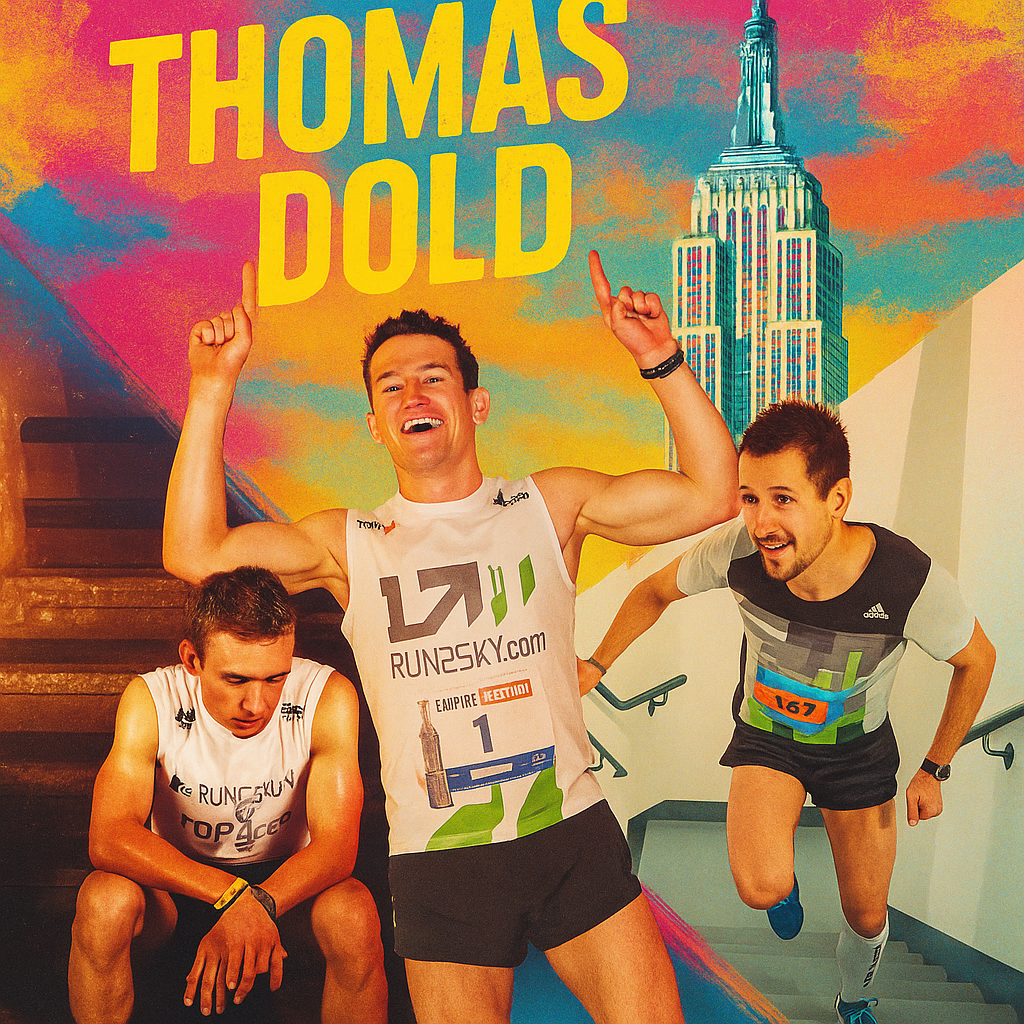
When it comes to scaling skyscrapers, few names resonate as powerfully as Thomas Dold. This German phenom isn’t just a runner; he’s a seven-time consecutive champion of the legendary Empire State Building Run-Up and boasts an impressive record of victories in tower running events worldwide.
Having delved into his unparalleled career and his book “Step Up: The Ultimate Stair Running Training Book,” it’s clear Dold’s success isn’t just about raw power, but a nuanced approach to an incredibly demanding sport.
Forget generic running advice. Here are five of Dold’s most impactful and specific tower running tips that can truly elevate your vertical game:
1. Train on Real Stairs: This is non-negotiable. Dold is adamant: while flat running builds endurance, effective stair running training demands actual stairs within a building. The unique steepness, the varying lengths of flights, and the crucial transitions between landings require highly specific muscle engagement and coordination that cannot be replicated elsewhere. Beyond just running, focus on perfecting your footwork. Dold advises concentrating on the ball of your foot, actively lifting your heel toward the next step. This technique is vital for efficient upward propulsion and maintaining a steady rhythm in the often-tight confines of a stairwell.
2. Cultivate Unshakeable Mental Fortitude: Physical preparation is critical, but Dold, a coach to Olympic athletes, unequivocally states that true potential is unlocked through mental strength. He knows the moment: around the 30th floor in a tall race, even elite runners are at maximum heart rate, pushing past intense lactic acid build-up. This is where the mind takes over. Dold’s training emphasizes maintaining focus and motivation to push beyond that agonizing halfway point, recognizing that the battle is as much psychological as it is physical. It’s about developing the unwavering resolve to keep moving upwards despite the pain.
3. Embrace the Race Day Bottleneck: Adapt, Don’t Fight Tower races notoriously begin with a chaotic surge. Runners are often funneling into a single, average-sized door leading into the stairwell, creating a significant bottleneck. Dold’s practical advice is to anticipate this initial congestion. While it might feel frustrating, he observes that the pack typically thins out after the first 10 floors, allowing runners to settle into their individual rhythms. The key is not to expend precious energy fighting for position in the opening few floors, but rather to adapt to the flow and establish your sustainable cadence once clearer space emerges.
4. Race Strategy: Experience Trumps Memorization Forget obsessing over every turn and landing. Dold’s perspective on race strategy is refreshingly direct: “At the end of the day, the best strategy is usually just to try to run to the top as quickly as you can”. He emphasizes that a runner’s true edge comes not from intricate knowledge of the building’s layout, but from the lessons learned through sheer effort and race experience. This means trusting your training, listening to your body, and executing your best effort from start to finish, adapting to the unfolding challenge rather than a preconceived plan.
5. Diversify Your Training: While specific stair training is vital, Dold’s own athletic background highlights the benefits of a well-rounded approach. As a world record holder in backwards running, Dold exemplifies pushing physical boundaries in unconventional ways. While not directly a stair tip, this implies that complementing intense stair sessions with varied cross-training, strength work, and perhaps even unconventional disciplines, can build overall fitness, prevent burnout, and develop unique muscle groups, all contributing to better performance on the stairs. It’s about building a robust, adaptable athletic foundation.
By integrating these potent principles from Thomas Dold, runners can significantly step up their own stair running performance and conquer those formidable vertical challenges.
You might also be interested in:
 Tower Running UK