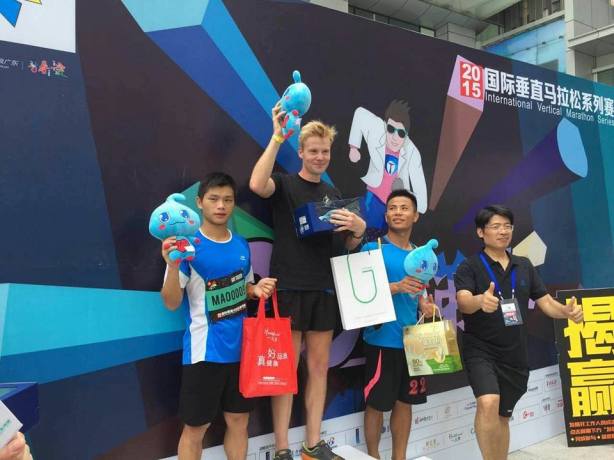
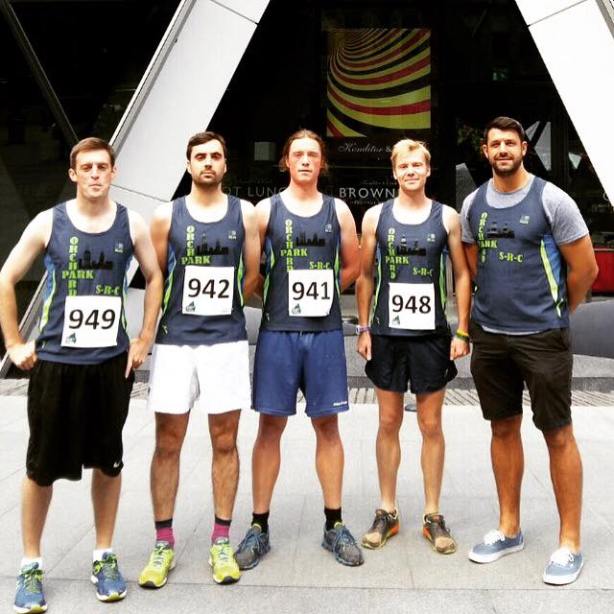
In less than 48 hours time the 2018 tower running world champion will be crowned. Who will it be?

2015 world champion and current world number one Piotr ‘Showtime’ Lobodzinski is the understandable pre-race favourite. In March, the Polish star took victory at La Verticale de la Tour Eiffel, holding off the challenge from most of the same top-level rivals he’ll face in Taipei on Saturday. In fact, Lobodzinski finished a fairly comfortable 15 seconds ahead of second place Christian Riedl in Paris.

The best in the world have been fairly quiet since that talent-stacked race in March. Jakob Mayer, Frank Carreno and Tomas Celko were in Valtellina last month taking on the 2,700-step course there, but Riedl, Bourne and Lobodzinski have kept a fairly low profile as they prepared for this weekend’s championship.

Based solely on recent form, and specifically the result from Paris, picking Lobodzinski to retain his world title appears to be the smart bet. The Pole seems to be in almost unbeatable form.

But taking a look at results going back the last few years, it starts to look a lot less straightforward.

Who can beat Lobodzinski?
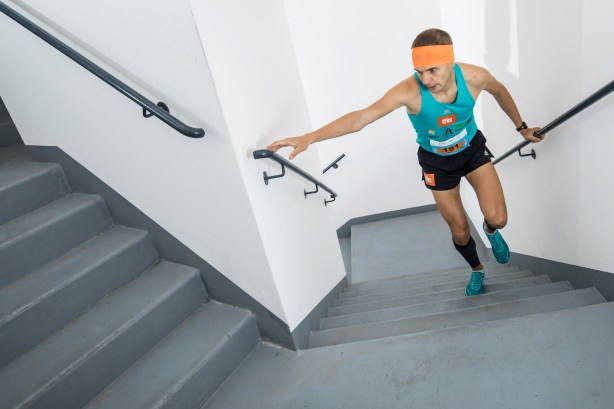
lobodzinski-c2a9iancorless-com_c2a9iancorless-com_vwc_vertigo2017

The World Championship format consists of two races. Race one is up 824 steps of Taipei 101 and race two, 90 minutes later, will be a full run of the tower up 91 floors/2,046 steps. Points will be assigned to the top 50 and the person with the most combined points after the two races will be world champion. If points are tied after the two rounds, highest finishing position in race two will determine the overall winner.

With the most prestigious races on the tower running circuit happening at towers with more than 1,500 steps it’s not so easy to find shorter events where the world’s elite have gone head-to-head. But there have been some races that give an indication of how the top male stair climbers fare against each other in shorter races.

The Rondo 1 event in Warsaw, Poland is run over 836-steps/38 floors; very close to the distance of race one at the World Championship. Back in February, Lobodzinski took a fairly comfortable win there, finishing 11 seconds ahead of Germany’s Christian ‘The Eclipse’ Riedl.

But go a bit further back to the Grand Prix of Europe races in Vienna and Brno in September 2017 and Showtime looks a lot more mortal over the shorter distance.

At the 779-step Danube Tower in Vienna, Lobodzinski beat ‘The Zilina Avalanche’ Tomas Celko by just one second. The following day in Brno, Czech Republic, at the 700-step AZ Tower, it was Celko who came out on top, finishing three seconds ahead of Showtime.

Mark Bourne tends not to compete at shorter distances, purely because the towers with races in Australia and Asia are massive. Estimating how he might do over 824 steps is an all-important unknown.

But Lobodzinski can be taken on the short course. Celko and Riedl will be pushing him hard for sure, and he is in no way guaranteed maximum points in that first race. On the long course, his dominance is a bit more established and he is very rarely beaten. But Bourne can beat him over that distance and he has done it several times before.

Bourne vs Lobodzinski: a recent history

These two have clashed multiple times, and the Australian has probably beaten Lobodzinski in the mega-towers more times than any other stair climber on the circuit has managed to do (to be fair, very few have).

In April 2017 the pair faced off at the 1st Lotte World Tower Skyrun in Seoul, Korea. The race at the fifth tallest building in the world goes up 2,917 steps. Bourne kept Lobodzinski in second place there, finishing 14 seconds ahead of him.

mark-bourne_lwt-sky-run_17

Mark Bourne wins the Lotte World Tower Sky Run 2017

Then in October 2017, Bourne took victory ahead of Showtime when they raced at Two Shanghai IFC in China. That was over 1,958 steps and Bourne won by nine seconds.

Three weeks later they met again at the 1,621-step Harukas Tower in Osaka, Japan, and Lobodzinski exacted revenge on ‘The Canberra Assassin’, finishing 13 seconds ahead.

Two weeks after that, it was Lobodzinski again who took the spoils, this time at the mammoth 3,398-stair Shanghai Tower, the second-tallest building in the world. Bourne was pushed back into third by Christian Riedl.

La Verticale de la Tour Eiffel in March was the last time the pair met. Lobodzinski made it four wins in a row at the iconic Parisian landmark, while Bourne finished in fourth.
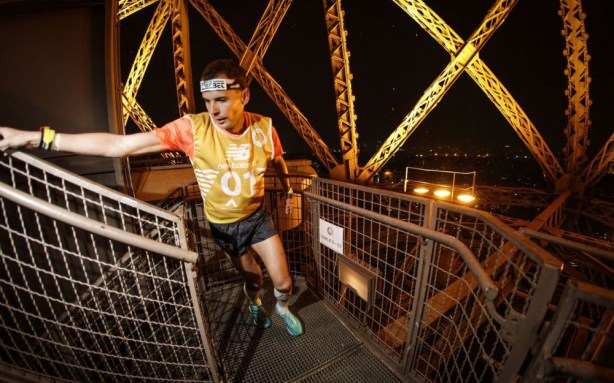
7611975_b3cd436c-290c-11e8-8762-ff73745f8155-1_1000x625

Lobodzinski on his way to winning La Verticale de la Tour Eiffel 2018

So, despite Lobodzinski having the upper hand in their last three races, Bourne has shown on multiple occasions that he is more than a match. He has the ability to win the full-length race on Saturday.

How do they compare at Taipei 101?

taipei-101-tower

If we go back a little further and compare the two at Taipei 101, we add another potentially significant element to the discussion.

In 2013 Bourne beat Lobodzinski by 20 seconds on his way to setting the third fastest time ever clocked at the tower. Riedl was third.

In 2014, the podium looked exactly the same. This time, though, Lobodzinski had significantly narrowed the gap and was only four seconds behind Bourne.

Bourne was missing from the race in 2015, and Lobodzinski took his first and only win at the venue.

Neither man was there in 2016, and Bourne returned last year to take victory, with Lobodzinski absent.

So, between the two, Bourne has the fastest time at the World Championship venue and the most recent win. This is sure to give him the confidence to look beyond the most recent results between them at other towers.

If Bourne can stay within touching distance of Showtime in the shorter distance race, i.e. no more than one place behind him, then he will put himself in genuine contention for seriously competing for the title in the final race on Saturday morning.

Like us on Facebook for updates on upcoming events and tower running news from the UK and around the world.
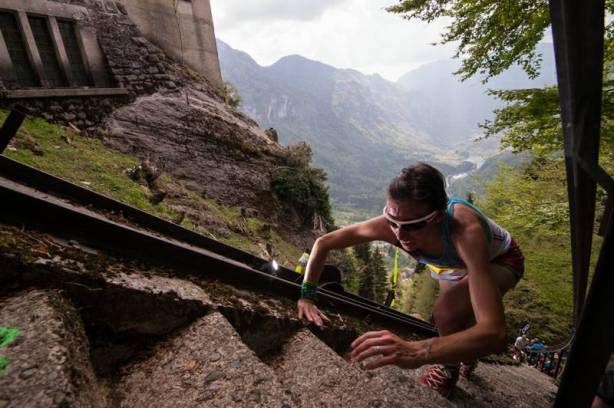
Italian mountain running legend Valentina Belotti will attempt to add a tower running world championship title to her long list of achievements when she races at Taipei 101 on Saturday.

The in-form Belotti returns to the venue where she won from 2011-2014, with the hopes of mounting a challenge against race favourite Suzy Walsham.

A four-time medallist at the World Mountain Running Championships (one gold and three silver), Belotti’s participation in tower running events has been sporadic in the last four years.

But she returned to winning ways this past weekend, taking victory at the second edition of the 535 in Condotta event in Moio de’ Calvi, Italy.

31453853_966875873462440_4806928866562015232_n

Belotti on her way to victory at 535 in Condotta (photo by Demis Milesi)


The course is very similar to that at the popular Valtellina Tube event and consists of a continuous staircase, 1.25km long, 2,527 steps straight up, with a 535m height gain.

Belotti finished the race in 20.53, ahead of Nives Carobbio (22.30) and Cecilia Pedroni (22.44).

The course at Moio de’ Calvi has very deep steps and an almost 80% incline at its maximum point, plus a 75% incline for the final 400m. That’s perfect preparation for the notoriously tall steps at Taipei 101.

Belotti is one of only two women to have run Taipei 101 in under 13 minutes. She set her fastest time of 12.54 back in 2013, although she hasn’t competed at the venue since she won in 2014.

But despite her absence from the competitive tower running scene in recent seasons, this performance on a particularly demanding course, plus her extensive experience in Taipei, puts her firmly in the mix for any discussion about who might come out on top at Saturday’s World Championship.

Even with reigning world champion Andrea Mayr out of the championship through injury, it will definitely not be plain sailing for Suzy Walsham. The Australian world number one will have to be at her very best to hold off strong challenges from Belotti, the Czech Republic’s Zuzana Krchova and American Cindy Harris.

Like us on Facebook for updates on upcoming events and tower running news from the UK and around the world.

The tower running World Championship 2018 is almost here. On Saturday 5th May, the world’s best tower runners will do battle on the stairs of Taipei 101 to decide who will be crowned world champion.

We take a look at the venue, the course records, previous winners and the World Championship race format to keep you in the know ahead of Saturday’s big event.

The venue

f15f7b57ab31c217f471c6712a2654e0-taipei-101

Formerly the world’s tallest building, Taipei 101 stands just over 509m tall. With the completion of the Burj Khalifa in 2010 it was knocked to second tallest building in the world, and in the years since then it has been eclipsed by eight other super towers. It’s worth having a read of the Wikipedia entry for Taipei 101, as it’s a very interesting building from an architectural and engineering standpoint and has also been internationally recognised for its ‘green’ credentials and sustainability efforts over the years. It’s a really prestigious venue for the World Championship.

The race stairwell is right-turning and has 2,046 steps, spread over 91 floors (of the building’s eponymous 101). The bulk of the steps at the building are notoriously tall. Somewhat uniquely, the landings include two additional steps between flights; so you reach the top of one flight, pivot 90°, take a step up, pivot again 90° and go up the next flight. That unfamiliar step layout is sure to throw a few racers out of their rhythm on race day and previous race experience in the tower will likely be a factor in the final standings.

Australia’s Alice McNamara won the Taipei 101 Run Up in 2016 and spoke about her experience there:

‘Taipei 101 has the challenge of a very steep, continuous staircase…there are no landings, just a 10-2-7-2 stair configuration all the way up. It is almost like climbing a steep spiral staircase on the 2 stair “landings” so it was very important to use the handrail on my right hand side to partially pull myself up.’

American stair climb legend, Kristin Renshaw (nee Frey), detailed her experience of the race in 2012 where she finished third, and the stairs sound pretty imposing when you read her description:

‘When I hit the monster steps, I knew it! They were exponentially larger than the ones we started climbing [on the lower floors of Taipei 101]; these steps were taller than any I’d ever encountered. I thought the steps in my training building were of decent size, especially the last two floors where they get taller and steeper, and Sears is known for having some giant steps, but those paled in comparison to the steps in the 101 tower.’

Course records

Taipei 101 got straight onto stair climb events when it opened, hosting its first race on Sunday 20th November 2005, less than a year after officially opening to the public.

The current men’s and women’s course records were set that day in 2005 and no one has come particularly close to beating them in the intervening years.

Former competitive cyclist Paul Crake (AUS) set the men’s record of 10.29. There’s an excellent interview with him on YouTube, which we highly recommend, where he talks about his life before and after the accident that left him paralysed.

Paul Crake 2005

Australian Paul Crake setting the course record in 2005 at the inaugural Taipei 101 Run Up

It’s important to put Crake’s record time at Taipei 101 into context for those perhaps unfamiliar with his tower running accomplishments. In 2015 world number one Piotr Lobodzinski won at Taipei in 11.08 and in 2016, current world number two, Frank Carreno won the race in 11.47.

Australia’s Mark Bourne (current world number five and last year’s winner) has come closest to Crake, taking victory in 2013 in a time of 10.52 and in 2014 in 10.54. Former world number one, and seven time ESBRU winner, Thomas Dold (GER) managed to finish in 10.58 at the 2008 event, while Piotr Lobodzinski also managed a sub-11 time of 10.58 in 2014, when finishing second behind Bourne.

Impressive as they are, those sub-11 times are still quite some way off the incredible record set by Crake.

201705060024t0001

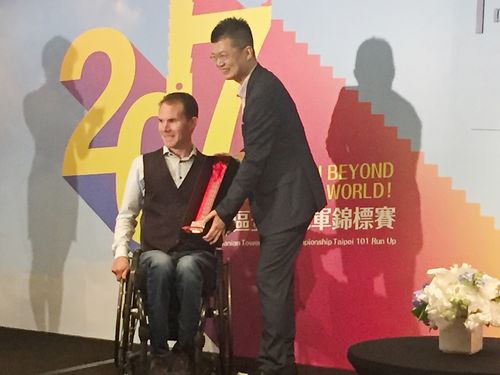
Course record holder Paul Crake (left) received a lifetime achievement award at the Taipei 101 Run Up 2017

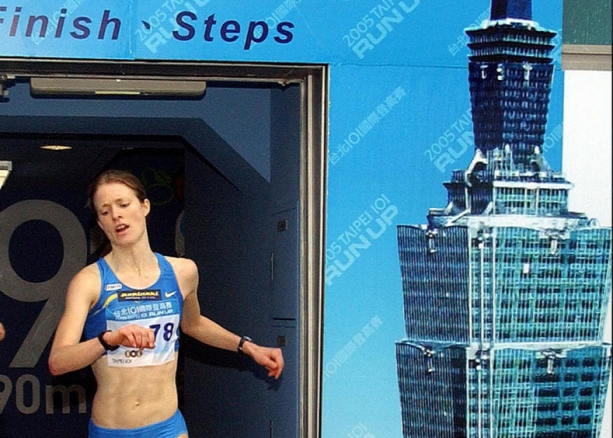
Reigning world champion Andrea Mayr, who sadly is out of this year’s event, set the women’s record of 12.38. In a similar way to Crake, Mayr’s time has remained largely unrivalled since 2005, and she is one of only two women to have gone under 13 minutes in the event’s history.

Mayr also clocked 12.54 in 2007, while Italian Valentina Belotti managed 12.54 on her way to winning in 2013.

Andrea Mayr

Andrea Mayr sets the women’s course record of 12.38 in 2005.

Taipei 101 Run Up winners: 2005-2017
  • 2005  Paul Crake (AUS) 10.29 and Andrea Mayr (AUT) 12.38
  • 2006 – Paul Crake (AUS) 10.31 and Andrea Mayr (AUT) 13.28
  • 2007  Marco De Gasperi (ITA) 11.39 and Andrea Mayr (AUT) 12.54
  • 2008  Thomas Dold (GER) 10.53 and Jenny Hsiao-yu Li (TWN) 14.53
  • 2009 – Thomas Dold (GER) 11.05 and Suzy Walsham (AUS) 14.20
  • 2010 – Marco De Gasperi (ITA) 11.09 and Melissa Moon (NZL) 14.16
  • 2011 – Thomas Dold (GER) 11.19 and Valentina Belotti (ITA) 13.51
  • 2012 – Mark Bourne (AUS) 11.26 and Valentina Belotti (ITA) 13.21
  • 2013 – Mark Bourne (AUS) 10.52 and Valentina Belotti (ITA) 12.54
  • 2014 – Mark Bourne (AUS) 10.54 and Valentina Belotti (ITA) 13.22
  • 2015 – Piotr Lobodzinski (POL) 11.08 and Suzy Walsham (AUS) 13.16
  • 2016 – Frank Carreño (COL) 11.47 and Alice McNamara (AUS) 14.23
  • 2017 – Mark Bourne (AUS) 11.24 and Suzy Walsham (AUS) 13.36
Race format

The World Championship event will be played out over two races, with the climber scoring the most points from the two races combined becoming the 2018 world champion.

The first heat will be a shorter race up to the 35th floor (824 steps). That will start at 7.30am local time (12.30am UK time), with runners being set off every 30 seconds. All TWA registered stair climbers in attendance will take part. Points will be assigned to the top 50 finishers in the male and female categories.

The final will start at 8.30am local time, and will be a full run up 2,046 steps to the the top of the tower. Again, runners will be set off at 30-second intervals and points will be assigned to the top 50 finishers in the male and female categories.

This new race format is a marked shift from the 2015 World Championship. At that event in Doha, Qatar the final was limited to the top 30 finishers in the male and female divisions in the first heat, which unlike this event was open to all. What’s more, finishing positions in the second heat that year determined start positions on an F1-style grid format in the final the following day.

11067494_365667263629430_8982257902173686231_n

Piotr Lobodzinski takes off from pole position on the grid at the 2015 tower running World Championship in Doha, Qatar

The grid was set 150m back from the tower entrance and athletes had to run in to the stairwell. This allowed for a few position changes before the athletes even hit the stairs, which didn’t sit well with some.

Obviously, logistics mean that the event at Taipei 101 needs to be done and dusted on the Saturday, but the very limited recovery period (90 minutes) between the first round and final seems unduly harsh on the competitors. The short recovery period is certainly going to unstick some of them, and make their second climb unpleasant. It would be fairer to have the final at the very end of the day’s events, after all the non-elite and corporate teams have finished.

The removal of a pre-run into the tower is welcomed, though. As purists, we think all races should start as close to the stairs as possible.

We won’t get into a full discussion of what we consider all the pros and cons of the differing race formats, but we do think there should be a move towards uniformity at future championships, where possible. But of course the World Championship is very much in its infancy and some experimentation with the format is to be expected at this stage.

The World Championship was initially scheduled for 2017 in China, with the plan for the tower running World Championship to follow the biennial pattern of its track and field cousin. Last year’s very late cancellation was a bitter disappointment for fans, but the Taipei 101 race is sure to be an excellent one and we are super hyped for this exciting event.

Will Showtime Lobodzinski retain his world title or can Mark Bourne take victory for a record fifth time at Taipei 101? With reigning world champion Andrea Mayr out of the event, is there anyone left to pose a significant challenge to the almost invincible Suzy Walsham?

Keep an eye out later this week for our guide to the top athletes taking part in the 2018 tower running World Championship.

Like us on Facebook for updates on upcoming events and tower running news from the UK and around the world.
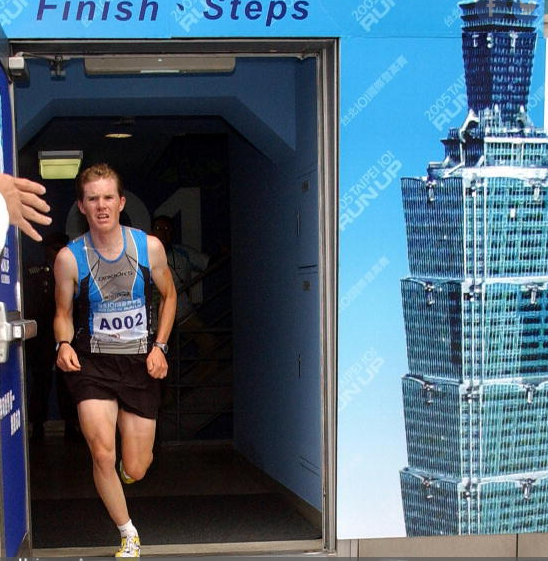
The 2015 world tower running champion Andrea Mayr has been forced to withdraw from this weekend’s World Championship event at Tapei 101 due to injury.

The Austrian sustained an ankle injury back in February, and has now confirmed her withdrawal from the biggest event of the season.

The Olympic marathoner has been largely absent from the tower running circuit since she took victory at the inaugural World Championship in 2015, but was primed to return to defend her title at Taipei 101 on 5 May.

Mayr, who set the Taipei 101 course record of 12.38 back in 2005, was hotly anticipated to provide current world number one Suzy Walsham with her toughest challenge.

1st-winner-womens-category-2

Andrea Mayr winning the inaugural tower running World Championship in 2015

Of the remaining women set to line out in Taiwan, only Czech athlete Zuzana Krchova has recently beaten Walsham. Krchova took victory over her at the Towerrunning Tour 2017 Final in January, which was at the 1,210-step Beichen Plaza in Changsha, China. She also won the Rondo 1 event in Poland, back in March, among a highly-competitive field of European athletes.

Krchova is obviously an accomplished and formidable tower runner, but how she will fair at the considerably taller 2,046-step Taipei 101 is to be seen.

The highly-experienced Walsham has raced and won at the tower multiple times and, with obvious disappointment at Mayr’s injury aside, will surely now be brimming with confidence. The absence of Japan’s Yuri Yoshizumi, another of the few women to have ever beaten Walsham, will be a further boost to the race favourite.

The second tower running World Championship will take place at Taipei 101 on Saturday 5 May 2018. Keep an eye out next week for our in-depth guide to the event.

Like us on Facebook for updates on upcoming events and tower running news from the UK and around the world.
April’s a relatively quiet month for UK tower running, with just the Care International event at the Leadenhall Building in London taking place on Saturday 14th.

But globally there have been lots of races so far this month, with events in Estonia, Italy and the USA among others, showcasing the truly international face of competitive stair running.

Read on for our pick of the stair climbing results from around the world this April, and find out the latest nicknames on the circuit.

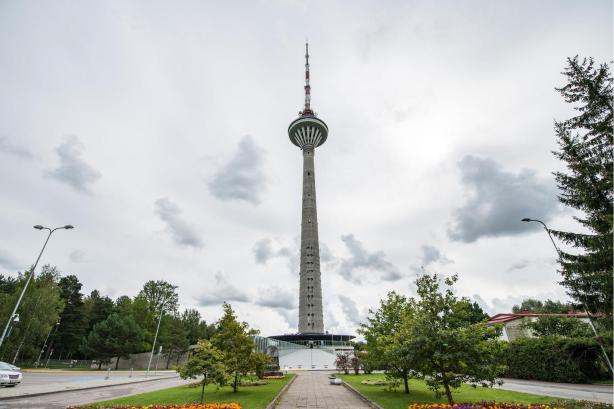
April 1st – Estonian Towerrunning Championships 2018, TV Tower, Tallinn

tonutunnel_teletorn__ttp1734_

Rauno ‘Ebajalg’ Tiits secured victory at the inaugural Estonian Tower Running Championship with a blistering run to the top of the 870-step TV Tower in the Estonian capital.

His winning time of 4.35 was also a new course record. Fans of UK tower running will be familiar with the name Tiits, as the Estonian took the win at last November’s double-run event at London’s Broadgate Tower ahead of some of the top UK stair climbers.

In second place was Poland’s Arkadiusz ‘Street Fighter’ Karbowy, another familiar name to those who follow UK stair climbing. His lightning quick time of 4.46 (the only other sub-five minute finish on the day) will come as no surprise to those who’ve seen him flying up the Tower Wing of Guy’s Hospital during training.

Rimo ‘Special Sauce’ Tiim finished third in 5.04.

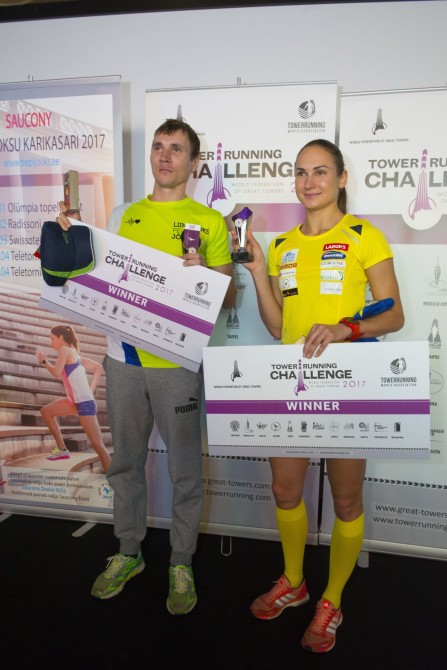
In the women’s division it was a more one-sided affair with Estonian sporting star Kaisa ‘The Gift’ Kukk winning in an unrivalled 5.46.

dsc0112-447x670

The newly crowned Estonian tower running champions, Rauno Tiits and Kaisa Kukk.

Kukk is no stranger to sporting success. A sub-three hour marathoner, she has multiple wins in a wide range of race distances under her belt and so her transition to tower running success was no doubt expected among the Estonian athletic community.

It’s her second win of the season already, and we expect big things from Kukk if she makes stair climbing her focus. On a separate note, she’s also our tower running WCW this week. Fire!

Her nearest challenge came from Poland’s Ilona ‘Leg Breaker’ Gradus, winner of the Marriott Everest Run in Warsaw back in February, and a top ten finisher at other Polish events already this year. She hit the top step in 6.39, some way back from Kukk.

Liina ‘The DJ’ Volmerson, winner of the Saucony Trekking Championship stair race series in 2017 (alongside Rauno Tiits), finished third in 7.03.

The experience and pedigree of Kukk’s rivals makes her overwhelming winning margin all the more impressive.

Full results here.


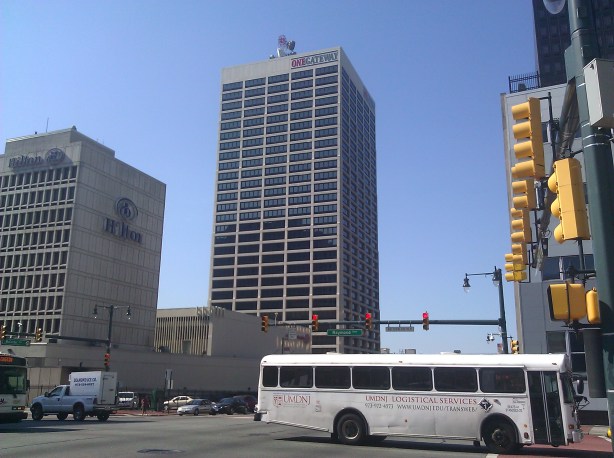
April 7th – Fight for Air Climb Newark 2018, One Gateway Center, New Jersey

one_gateway_center_newark_nj

“The Beast from the East” Stephen Marsalese made light work of it at the ALA Fight for Air Climb in Newark.

The stair climbing veteran, and perennial podium finisher around the East Coast events, was the only person to go under the coveted three-minute mark as he scaled the 504 steps of One Gateway Center in 2.48.

His Tower Masters team mate, 63-year old Mark ‘The Immortal Whisper’ Greenlee, was behind him in 3.18, improving on his fifth place finish from last year. Last year’s fourth placed finisher, Ted ‘Uber Jock’ Enoch, took third this time around in a time of 3.32.56

Special mention to the speedy 13 year old who finished in fourth place in 3.32.81 – missing out on a podium spot by the very narrowest of margins. He’s so exquisitely named he needs no adornments from us. Fly Talon Falcone, fly!!

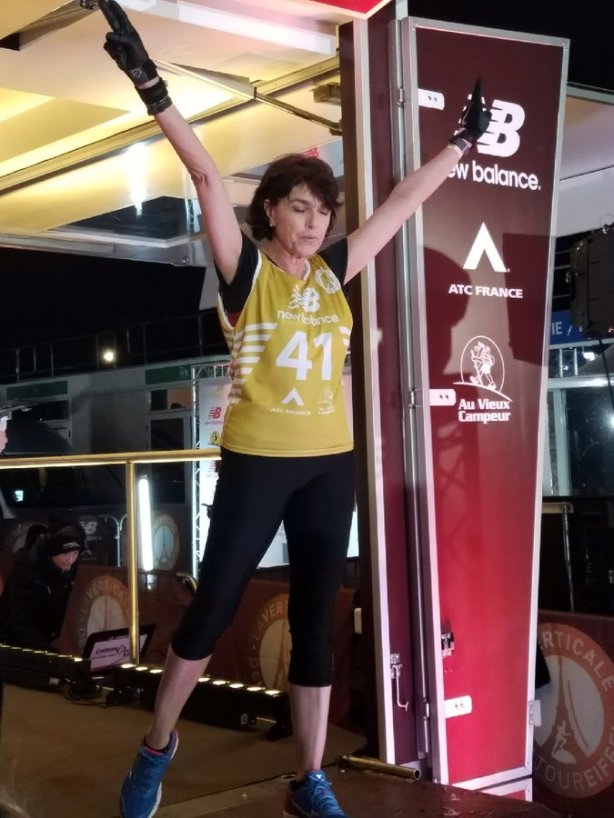
‘Champagne’ Sally Kalksma made it a double win for the Tower Masters team as she returned to winning ways following her international adventures last month at La Verticale de la Tour Eiffel in Paris.

dixon-422630-e-wp-content-uploads-2018-03-1073203_533b877f747c936

Sally Kalksma at the start line of La Verticale de la Tour Eiffel 2018

Kalksma clocked 4.39 to secure the win from Mary ‘Warlord’ Cataudella (5:02) and Nina ‘The Mason’ Mikkilineni (5.06). Full results available here.

30221734_10216148340650371_1277218841700597760_n

Kalksma and Marsalese celebrate their wins (bottom) and pose with fellow Tower Master runners.

April 7th – Ginormous Climb 2018 – 200 Clarendon (John Hancock Tower), Boston

john-hancock-tower

Ginormous is an underrated and underused word, but we’re glad to see the organisers of this event, at Boston’s John Hancock Tower, have kept it front and centre for five years now.

Historically this race has attracted some big tower running names, such as Tim Donahue, but they were absent this time around.

Still, close to 400 racers turned up to climb the 1,220 stairs (61 floors) and they produced solid battles for top spot in the men’s and women’s divisions.

When the dust had settled it was Kai ‘The All Seeing Eye’ Van Horn who stood victorious with a winning time of 8.18.

11 seconds back was Samuel ‘All that glitters is not’ Goldman, while Brendan ‘The Allston Accelerator’ Harrison took third in 8.37.

The women’s division was far closer, with just ten seconds separating the top three. Elizabeth ‘Easy Work’ Burke won in a time of 10.58, with Jennifer ‘Little Bitty’ Previti right behind in 10.59. Maegan ‘Smooth Mover’ Hoover completed the trio with her 11.08 finish.

Full results here.

April 7th – Valtellina Vertical Tube Race 2018, Italy

emmie-colling-and-phil-gale-inov-8-blog-on-valtellina-tube-race-1-831x560

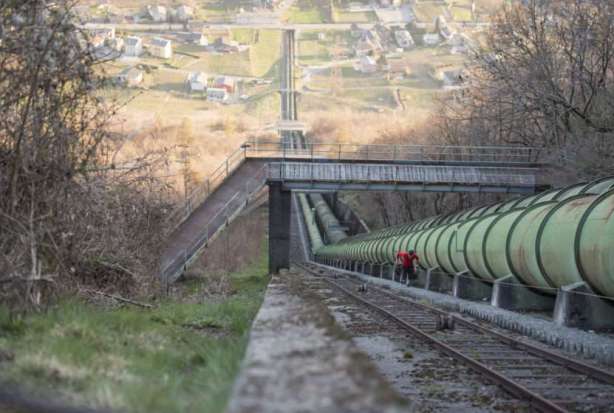
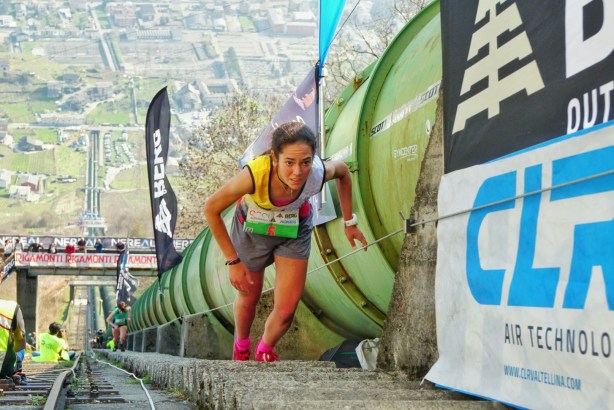
We love this event. It’s the one event we make sure to scour the results of every year, and we have since it began back in 2015. The reason is because it gives a perfect opportunity to see how top tower runners match up against some of the world’s best mountain runners and vertical km specialists, in what is a bit of a hybrid event.

The course is a kilometer long outdoor staircase (2,700 steps) that runs straight up a mountain, alongside a hydroelectric tube that lends the event its name. So it’s technically a stair race, but so different from what tower runners are used to – no turns or railings, and outdoors – that whatever technical/strategic advantages they might have had are removed and it comes down to a straight battle of strength and endurance.

It’s one of the only races – bar arguably La Verticale de la Tour Eiffel, which also includes high-level mountain runners – that you can get an idea of how the world’s elite stair climbers match up with elites from other disciplines when pitted head-to-head. For context, reigning world tower running champion Piotr Lobodzinski finished in fifth place in 2016 with a time of 14.55.

It also has a place in our heart as it’s the one international event where a British athlete has the course record. Emmie Collinge set the staggering women’s course record of 16.10 in 2016. She is the only woman to have ever run the course in under 17 minutes, managing it at the event’s first edition in 2015, too, when she finished in 16.25.

We caught up with Collinge after that debut win in 2015, and commented then that she could be the new force on the global tower running scene if she wanted to be. But alas her participation in stair races has been limited to those two stunning runs at Valtellina.

Anyway, on to the action from this year’s edition.

In the men’s event the field was understandably made up of mainly Italian competitors. But there was a decent spread of well-known tower runners and elite mountain runners from other countries in attendance, too, which included ‘Fearless’ Frank Carreno, Tomas ‘The Zilina Avalanche’ Celko and Jacob Mayer. Unfortunately there wasn’t a single British male representative at the event.

Last year’s winner, Italian Hannes Perkmann, secured victory once more with a time of 14.10, a five second improvement on his winning time in 2017. It was also the second-fastest time ever, just eight seconds off the course record of 14.02 set by Bernard Dematteis.

Perkmann is part of the Italian mountain running team and specialises in longer distance events.

Fellow Italian Alberto Vender made a massive leap from his ninth-place last year to take second place in a time of 14.44. He chopped a whopping 38 seconds off his PB in the process.

Emanuele ‘Il Guerriero’ Manzi – one of the event organisers, mountain runner and top-level tower runner – made it an all-Italian podium. He made it his third podium finish at the event (he finished sixth in 2017), finishing in his fastest ever time of 14.46.

lrg_gia04403-01

Hannes Perkmann on his way to victory in Valtellina

The women’s race was the closest in the event’s short history. In the end it was Catalan youngster Gisela Carrion Bertran who took the spoils in 17.25, the fourth fastest time ever by a woman at the event. A well-established mountain runner and vertical km racer, Carrion Bertran possibly came in under the radar of some in attendance, but her athletic pedigree is well established.

Just behind her was 2017 winner Katarzyna Kuzminska from Italy. She managed to take 20 seconds off her winning time from last year, reaching the top of the stairs in 17.28.

Italian sporting legend and Olympic cross-country skiing relay bronze medallist Antonella Confortola took third place in 17.43. Her multi-discipline medal record of world championship and European championship podium finishes in cross-country skiing, mountain running and vertical km is highly impressive. Check it out on Wikipedia.

British interest at the event was limited to Sarah Frost who finished in 26th position in 22.25.

Full results here.

lrg_gia04269-01

Gisela Carrion Bertran: winner of Valtellina Vertical Tube Race 2018


There were additional races in Bahrain, Canada, China, Estonia and USA this month, but full results are currently unavailable for all of them. We’ll be updating this article shortly.

Like us on Facebook for updates on tower running results and future events.

If you’ve signed up for a stair race, you may have started thinking about what you’re going to wear on the day.

For the most part, what you wear for a stair climb won’t differ too much from what you would wear for any other running race. Ideally you want to dress as light as possible in some form of technical gear that is breathable. Follow the link to read our brief guide on what to wear for a stair race.

But what about on your feet? The most common question we get about gear is related to the type of shoes best suited to a tower run.

Read on as we take a closer look at this popular question.

What shoes should you wear for a stair climb?

If you’re just starting out with tower running you will be fine wearing any general purpose trainers you have to hand. And until you start making significant improvements in your times because of the training you’re doing, you’ll continue to be fine in any type of running/gym shoes.

But once you reach the point where you’re looking to make small, but potentially significant, gains through gear choice, technique adjustments, strict diet etc, you might consider changing the shoes you stair race in.

There aren’t any shoes designed specifically for tower running. Why would there be, you might be thinking. It’s just running, but up stairs, right?

Well, yes and no. The various factors that influence the design of road running shoes are somewhat insignificant when it comes to stair climbing. This is mostly because of the different biomechanics involved in stair running vs regular running, and partly because of the duration of stair climbing events.

Stair climbing doesn’t generate anywhere near the forces and impacts involved in road running. It’s a very low impact activity and so decisions about the amount of cushioning you need are far less important.

For the same reason, most people can throw out their worries about over pronation when they enter the stairwell (we would suggest most people could throw it out anyway regardless of where they’re running, but that’s for another time and place).

So, while you may not feel comfortable picking out a pair of very lightweight racing flats for your upcoming 5k, 10k, half- or full marathon, you could easily get away with wearing them in the stairwell and probably take a bit of time off your finish as a result, too.

Even if stair running did generate similar forces as road running, the events (at least in the UK) are relatively short enough in duration (think 4-6mins and 5-7 mins for the faster men and women, respectively) that you could get away with a really stripped back shoe anyway. The race would likely be over before the negatives of wearing a very light shoe outweighed the positives.

So what shoes should you go for?

A famous study conducted by Nike in the 1980s showed that adding 100g to a running shoe increased the aerobic demand of running by 1%. It makes sense of course. Less weight equals less energy expended moving those shoes and faster times.

But there’s a drop off point, especially when the weight of a shoe is reduced by having less cushioning in the midsole. At a certain point the muscles will begin absorbing the landing shock the cushioning is designed to and that will lead to faster fatigue and greater energy costs.

Interestingly, the Hoka One One range bucks the trend of cutting weight by reducing the amount of midsole cushioning. Some of their thickly cushioned shoes, such as the Cavu and Mach, are only 231g, which is as light as some ‘minimalist’ shoes.

Running shoe manufacturers work tirelessly to find that cushioning sweet spot, particularly with the shoes pitched at the very fastest band of runners.

Because of the reasons given above, we think you can afford to go as light as possible with a shoe for stair climbing, without having to weigh up the same factors you would when picking a pair for road running. We feel there’s not too much need to consider aspects such as traction, responsiveness or the durability of the outsole if you’re only using them for stair running.

If you want to buy a pair exclusively for stair climbing, we’d recommend getting a pair as lightweight as possible. The less weight you have to carry up the stairs, the more energy you’ll save and the faster you’ll be.

Many people have embraced the minimalist shoe trend that’s popped up over the last decade, and we certainly have made use of zero drop shoes with little or no cushioning on both road and stairs, and that type of shoe would be a good choice. But they’re often actually not even the lightest shoes on the market. Plus, they’re not for everyone and lots of people will want at least some sort of cushioning.

New Balance have previously sold shoes that weighed less than 100g, and you can find options from multiple brands weighing less than 180g.

What are the best shoes for running and stair climbing?

But what if you’re not so into tower running that you want to buy a pair of shoes exclusively for it, and you’re looking for a dual-purpose shoe that will serve you well on the stairs and in road races?

Well, you can buy very lightweight shoes with 6mm-10mm drop and decent midfoot cushioning that will be excellent for stair climbing and will also serve you well in road races – provided you have decent running form and economy.

Some examples of this type of shoe include:

But pretty much any racing flat will do the job of a good dual-purpose option.

With all that in mind, we take a closer look at some of the shoes we’ve used for tower running events to give you a flavour of what we prefer to have on our feet when racing/training in the stairwells and why.

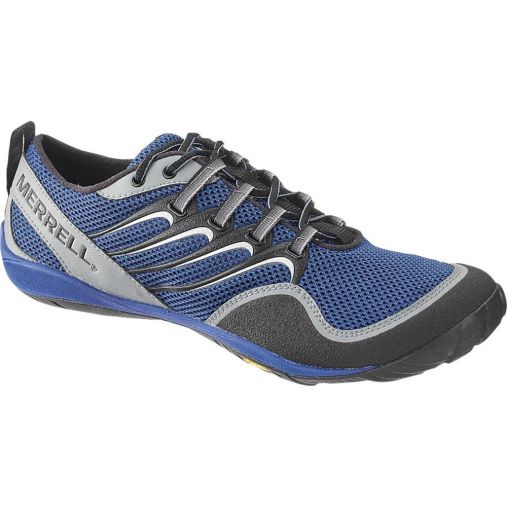
Merrell Trail Glove

h-merrell-j85523-zoom

This was the first shoe we wore when we began stair racing.

As a trail shoe, which we primarily used it for at the time, we had mixed feelings about it. But on the stairs it was ideal.

Even though it’s a trail shoe, it lacks the deep, chunky tread usually found on trail shoes (making it a bit rubbish for wet/muddy trail conditions). This means you won’t get that sometimes lumpy underfoot feeling you can get when you wear trail shoes on hard flat ground.

It’s a flexible, minimalist ‘zero drop’ shoe that, as the name suggest, has a snug ‘glove’-like fit. This is something we personally look for when picking a running shoe to stair climb in, especially when a tower has lots of landing turns. But it’s not restrictive. We have a wide forefoot and this shoe fits it well, so if you have narrow feet you may well find the toe box a bit roomy.

While we prefer a spacious toe box for flat level running, we find the snugger fit works well for stair climbs. Especially in shorter runs where you’re running at pace and pushing off hard at each landing turn. Too much lateral foot movement inside the shoe can be annoying.

The Merrell Trail Glove has a reassuring Vibram outsole, which grips really well in dry conditions (such as in a stairwell). Even though the outsole grips really well, we never found any issues with the shoe sticking as we pivoted on landing turns, which is another plus point for this shoe.

At 230g per shoe it’s pretty lightweight, and if you race in them without socks, you’ll feel really light and free in the stairwell.

The latest version of this excellent minimalist running shoe is the Merrell Trail Glove 4, which has some design differences to the original version pictured.

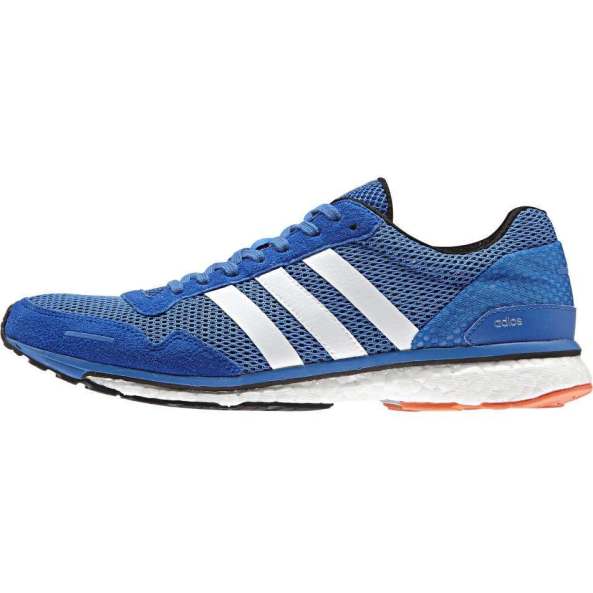
Adidas Adizero Adios Boost 3

143c40bfc4a343ab8951a49f011

We’re a big fan of many of the shoes in Adidas’ Adizero range. Lightweight, well-designed and with Boost cushioning they make for nice, pacey racing shoes. Although the notoriously narrow fitting brand can be a bit of a squeeze for the wide footers out there, we’ve favoured them for 5k and 10k road races and fast training runs for a while. And we’re in good company.

Dennis Kimetto broke the marathon world record in 2016 in a pair of the Adizero Adios Boost, while world tower running champion and perennial podium-topper Piotr Lobodzinski wears a variety of Adidas shoes in the various events he takes part in.

adidas

At the recent La Verticale de la Tour Eiffel in Paris, Lobodzinski (above) appeared to be sporting the Adizero Takumi Sen 3. Weighing just 170g per shoe, these are the second-lightest model you can get in the Adidas Adizero range. The Sub 2 shoe, designed solely with the two-hour marathon barrier in mind, weighs just 160g.

These super-lightweight running shoes are a great choice for stair climbing. If we were advising on a specific shoe for stair climbing it would be something like one of those two.

For most people, they’re probably only suitable for shorter, flat road races, and even then only if you’re fairly lightweight and have good running form. So they probably aren’t the ideal dual-purpose shoe for most.

We’ve also ran on road and stairs in the Adizero Adios Boost 3 (pictured above in blue). At 230g they’re still a light shoe, making them a good choice for stair climbing, but they also have enough cushioning to make them comfortable, and more forgiving, for longer runs/races on the road. It’s probably our preferred dual-purpose trainer. You can still find these at some online retailers.

Barefoot

1912497_10100342405214606_1400867316_n

If you can get away with it, you don’t need to wear shoes at all.

Most event organisers/building managers we’ve encountered have prohibited bare feet in the stairwell on account of health and safety concerns. But we have managed it a couple of times at different events and it’s obviously as lightweight as you can get.

We’d recommend giving it a go, even if just in training. It gives you a greater connection with your surroundings, and the completely stripped-back feeling is a wonderful one. Plus any barefoot training will help strengthen your feet and lower legs, giving you a firm base for your running/stair climbing.

That said, regardless of whether the organisers would allow you to or not, barefoot stair running is not suitable for all races. Outdoor stair climb events, where the steps are sometimes grated, could prove unnecessarily uncomfortable and being barefoot could impair your performance.

We’ve also made use of a couple of Vibram Fivefingers – particularly favouring the KSO Classic, which weighs just 167g. Slipping on a pair of these is a decent alternative to going completely barefoot.

You may also be interested in:

Susie Drinkwater took the win at Shelter’s Vertical Rush in London, in her debut tower race.

The all-round endurance athlete transitioned seamlessly into stair running, taking victory in a time of 6.11.

She saw off fellow Briton, and tower running rising star, Sarah Frost (6.12), with Italy’s Cristina Bonacina third (6.35).

‘I had absolutely no idea I would win. I was really chuffed with my time, but I hoped for maybe top 10 female in my dreams’, Drinkwater told Tower Running UK.

‘I found the race incredibly hard from the outset. The only thing I can compare it to is a VO2 max test…I felt ill for a good hour afterwards.’

29512420_10160183431905716_2601659053524385792_n

Warrior’s war paint: victorious Susie Drinkwater at the top of Tower 42, the seventh tallest building in the UK.

Her background in cycling, triathlon and ultra-running obviously gave her a strong base to launch an attack on the leaderboard when she set off in the 10am wave, but she told Tower Running UK she had no idea about pacing or technique.

‘I genuinely had no idea of time or pacing, but had an idea from training I could go near 6.30. I’ve never run up a skyscraper before. I had no idea of technique, I just went for it.’

‘I only trained on a stairclimber – the stair-mill kind – about once a week. I always use it completely hands free and do intervals on it. I started using it at the gym to practice for a hilly ultra last year, and with no real big hills nearby I thought it was a good substitute. But training on it was so much harder than anything I’d done so I kept it up, and when I saw this race it looked like a real challenge, which I love. I will definitely do more.’

She combined this weekly session of stair-mill intervals with yoga, running, cycling and additional strength training, as she prepares for other events this year.

It’s interesting to see what can be achieved without training on actual stairs. We know that the top-level men and women have high-volume training schedules away from the stairs. Piotr Lobodzinski, for example, puts in a massive weekly running mileage alongside his stairwell sessions. But they almost all still work in sessions on the stairs, if only to work on technique.

But Drinkwater’s winning performance suggests you don’t need access to stairs at all to do well in the sport.

Her time and win were all the more impressive given she was caught up in a congested stairwell during her run.

‘I thought I was at the front of my wave when we went out to start for the warm up, but then we turned round and I ended up in the middle, which I took as a lesson for next time because I went out hard but found it really congested for a few floors at about level 15 where I had to walk.’

With plans to race again at some point, Drinkwater is undoubtedly one to keep an eye on for the future. Given this debut showing, she clearly has the potential to challenge some of the top ladies in the world.

Manzi takes overall win at Shelter’s Vertical Rush 2018
Manzi VR


In the men’s division it was Italian mountain-runner and elite stair climber Emanuele Manzi who raced to victory in a blistering time of 4.38.

With the bulk of Europe’s top racers in Paris for La Verticale de la Tour Eiffel, and Vertical Rush no longer on the Vertical World Circuit tour, there was a dearth of elite level competition in attendance. The race was Manzi’s to lose.

His closest competition was expected to come from the British pair of Mark Sims and Elliot Slaughter, who had gone head-to-head in Leicester the weekend before.

Setting off in the 8am wave, in what was only his third stair race, Slaughter set an impressive benchmark of 5.01. This was a huge 10 second improvement on the time he clocked in his debut race at Vertical Rush 2017.

Manzi and Sims both set off in the 11am wave, and it was the Italian who pushed the pace. He reached the top of the 932 steps in 4.38, slightly slower than the time he ran last year.

Sims, who had actually finished ahead of Manzi at Vertical Rush in 2016, failed to dip under the five-minute mark for the first time since 2012. However, his finishing time of 5.00 was enough to push Slaughter back into third place.

Vertical Rush 2018 results

The full results are available here.

A selection of photos from the day can be viewed on the Shelter Facebook page.

Like us on Facebook for updates on upcoming events and tower running news from the UK and around the world.
Elliot Slaughter and Sarah Frost took the overall victories at the LOROS Tower Run at St George’s Tower on Saturday, and smashed the men’s and women’s course records in the process.

It was the third edition of the LOROS Tower Run, and fast times were expected at the 351-step sprint event in Leicester city centre, which welcomed close to 400 runners.

LOROS Tower Run 2018

9733936-large

In only his second stair race, Kent athlete Slaughter held off a strong challenge from last year’s event winner, and previous record holder, Mark Sims to take the win in a new record time of 1.27.9.

Sims, who was previously undefeated at the venue, finished just behind in a time of 1.32.3. David Harris, coming off the back of two wins last weekend, ran Sims close and finished third in 1:35.6.

In the ladies division it was race favourite Sarah Frost who took victory ahead of strong competition from Sonja Shakespeare and Chiara Cristoni.

Having set a course record last year at the 530-step Spinnaker Tower in Portsmouth, speedster Frost was hotly fancied to chase down the St George’s Tower record. She succeeded in destroying the previous record of 2.06.93 as she finished in 1.49.

Following her was the in-form Shakespeare in 1.51, who also went well under the previous record, while Chiara Cristoni made it three under the previous record as she finished in 2.06.7.

Full results here.

Attention now turns to Thursday’s Vertical Rush event at London’s Tower 42 where Slaughter and Sims will clash again. They’ll be joined by Italy’s Emanuele Manzi, who will be among those pushing for top spot in the absence of other elite European stair climbers who will be racing at the Eiffel Tower that same evening.

Like us on Facebook for updates on upcoming events and tower running news from the UK and around the world.

The UK tower running season so far

Posted: March 6, 2018 in News

With four races already run, and another to come this Saturday in Leicester, the 2018 UK tower running season is off to a flying start. We round up all the results so far.

Conquer the Tower 2018 – Action on Hearing Loss,  Broadgate Tower, London

The season kicked off on February 17th at London’s Broadgate Tower. In the absence of top European competition, it was reigning UK tower running champion Mark Sims who was the favourite heading into the event.

But having recently returned following a knee injury, there was anticipation that Sims, who has routinely been the fastest Briton at the venue in recent years, may be ripe for the taking. David Harris was tipped to push him all the way.

broadgate-tower

Indeed, the pair were the only ones to dip under the coveted sub-five minute mark. Sims took overall victory in 4.36, with Harris second in 4.59. Cameron Collier completed the podium in 5.28.

In the women’s division, the rising star of Sonja Shakespeare showed no sign of fading as she took victory in 5.41. Chiara Cristoni took second in 5.49, with Elaine Battson taking third in 6.17.

The Christie Tower Run 2018 – Beetham Tower, Manchester

The following weekend the action headed north to Manchester. Again Sims was expected to be up among the top finishers, but with the sport growing in popularity the chance of new talent being unearthed increases with every event.

beetham-tower-in-manchester

As it happened it was a complete newcomer who took the win. Local-man John Tullo stormed to victory in 4.27, pipping Sims by just five seconds. Jamie Ellis Marsland took third in 4.45. Hopefully Tullo will be seen at other events this year, as he’s an obvious talent that could do well in the sport.

Sonja Shakespeare made it two wins from two 2018 UK races as she reached the top in 5.39, taking an impressive 1.17 off her time last year in the process. The win was all the more impressive considering she has raced a heat and final at the highly competitive Rondo 1 race in Warsaw, Poland the day before.

Last year’s winner Elaine Battson secured second place in 5.59, a 34-second improvement on her PB. Marta Cosp was just behind in 6.04.

GOSH Walkie Talkie Tower Climb (20 Fenchurch Street), London

The action returned to London this past weekend (3rd March), where we saw two races on the same day. The Walkie Talkie Building played host to the first event.

David Harris set himself apart from the competition as he was the only racer to dip under the five minute mark. His speedy finish of 4.53 was more than enough to take victory in the men’s division from James Montgomery in 5.12 and Nishad Manerikar in 5.26.

walkie_talkie_building_01

Sarah Frost, a relative newcomer to the sport but already an established force, raced to victory, and third place overall, in 5.17. The ever-present Sonja Shakespeare had to settle for second place this time around as she finished just slightly behind in 5.22. Chiara Cristoni was third in 5.48.

Step Up: Ellenor’s Tower Run Challenge, Broadgate Tower, London

Just a short time later the action began again up the road at Broadgate Tower, with many stair climbers heading straight from the Walkie Talkie Building to race the double.

Once again it was the impressive Harris who took victory in a PB of 4.55. He held off a strong challenge from Slovakia’s Patrik Schneidgen (5.05) who was returning to action after some time away from the sport. Will Obeney took the final podium spot in 5.25.

Sonja Shakespeare and Sarah Frost went head-to-head once more for honours in the ladies division, and it was Shakespeare who managed to reverse fortunes and take victory in a time of 5.35.

Sarah Frost took second in 5.44, ahead of Elaine Battson who finished in 6.08.

Check out our results page to find links to all the results so far in 2018.

Like us on Facebook for updates on upcoming events and tower running news from the UK and around the world.

It’s 54 years since the first fully-recorded stair race in the UK took place in April 1968 at the GPO Tower (now BT Tower).

Although an undocumented event involving London students took place the year before, 1968 serves as a key point in the sport’s history in this country. We take a look back through the archives, and chat to some of the participants, to find out more about that historic and trailblazing race.

Read on to find out more about the sport’s history in the UK, including who took part in that race in 1968 and what the winning time was.

The GPO Tower

The tower had been commissioned by the General Post Office to support microwave aerials carrying telecommunications transmissions from London to the rest of the country. Work began in June 1961 and was finished in July 1964, at a cost of £2.5 million.

bt-tower-under-construction-1963-136385688702102601-140204102451

The tower under construction in 1963.

Upon completion the tower became the tallest building in the UK – a title it would hold until the completion of the Natwest Tower (Tower 42) in 1980.

It wasn’t until October 1965 that it would officially open, in a ceremony with then Prime Minister Harold Wilson in attendance.

wilson-136400927618602601

Prime Minister Harold Wilson officially opening the tower, with former Prime Minister Clement Atlee (seated) and a young Tony Benn watching on.

The first documented tower race in the UK

The race took place on Thursday 18th April 1968. It was organised by students from nearby University College, London as part of the RAG Committees activities that year. RAG is a longstanding, and still popular, tradition at UK universities, where students engage in a variety of activities, including sports events and sponsored challenges, to raise money for charitable causes.

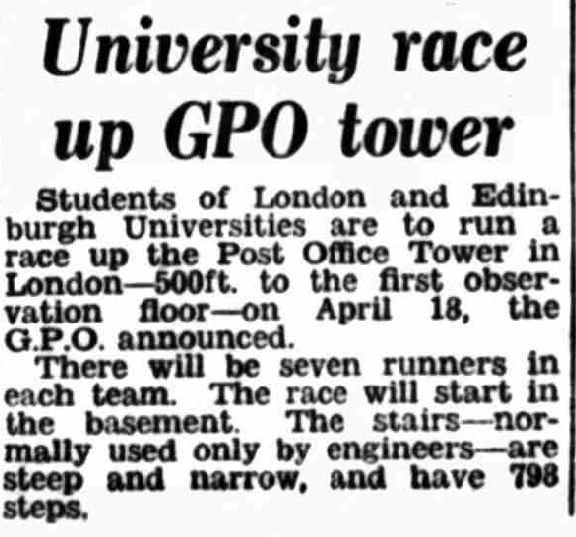
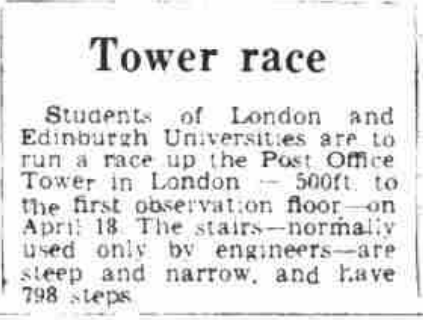
The small piece pictured below featured in the Aberdeen Evening Express on Wednesday 10 April 1968, just over a week before the event.

tower run 68

The next one is taken from the Coventry Evening Telegraph on Friday 12th April 1968.

Coventry evening tel_10 Apr 1968

Details about who was involved at the University of London, and how they managed to organise the event, have proved hard to come by. But we do know an invite/challenge was extended to students at the University of Edinburgh, who tied it in with their own Charities Week initiative up there.

By the time the event finished, the Londoners may well have regretted their choice of competition. Edinburgh sent down a team made up of members of the athletics and cross-country teams. They were among the best athletes in the country at the time.

Earlier in 1968, the University of Edinburgh Hare and Hounds cross-country team had won the British Universities Cross Country title. They had also won the team title at the Scottish National Cross Country Championship, becoming the first and only university team to have done so.

The Edinburgh team that attended the event was made up of: Hugh Stevenson (high hurdles), Jack MacFie (800m and cross-country), Iain Hathorn (400/800m and cross country), Andy McKean, John Exley and Ken Fyfe (all cross country). Also in attendance was Sheila Duncan, the only woman racing on the day.

1968

The Edinburgh University team celebrating their success

The seven-person Edinburgh team completely dominated the event. The men filled the top six places on the leaderboard, with cross-country athlete and 800m track specialist Jack MacFie taking the overall win, and establishing the course record, in a time of 4.46.

The previous record, set in 1967 by an unknown University of London student, stood at 6.02.

Behind him were Andy McKean (4.59), Ken Fyfe and Iain Hathorn (5.10), John Exley (5.32) and Hugh Stevenson (5.35).

runners

The six men of the University of Edinburgh team (note – our name spellings are correct)

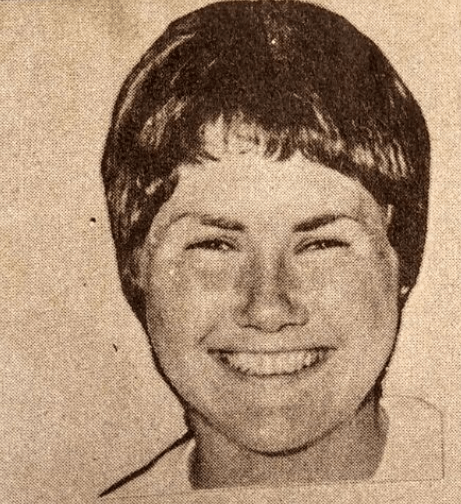
Sheila Duncan finished in a time of 7.06. She was a multi-eventer on the university’s athletics team, but was better known as a hockey player who went on to represent the Scottish national team.

sheila

Sheila Duncan

Memories of the race

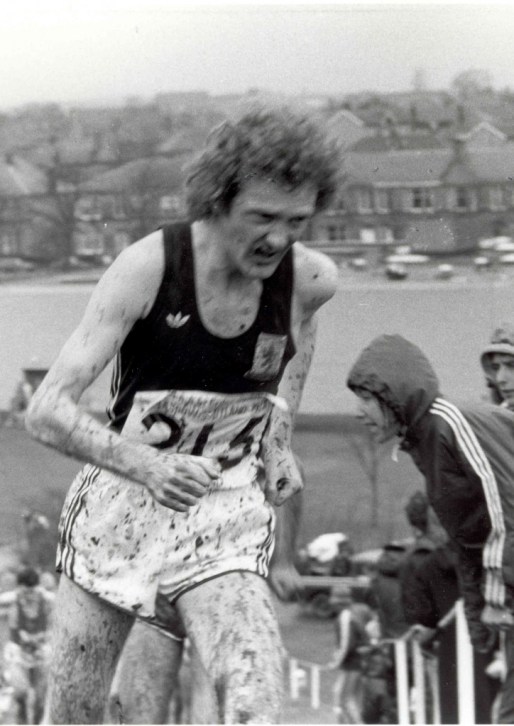
We got in touch with Andy McKean, a first year architecture student at the time, and team mates John Exley and Hugh Stevenson, to find out what memories remained of that race over 50 years ago. Following the event, Andy went on to win four Scottish Cross Country titles, represented Scotland at international races, and competed in the inaugural World Cross Country Championship in 1973.

Good-Andy-724x1024

Andy McKean in action (image courtesy of www.scottishdistancerunninghistory.scot).

“I think our participation may have been in some way associated with the Edinburgh Charities Week – i.e as a kind of charity stunt. I recall receiving a t-shirt emblazoned with the GPO Tower and a charity name, although I cannot remember which one. It must have been organised rather at the last minute and on a shoe string: we all traveled down by car the night before (fortunately with other friends driving), and back to Edinburgh again overnight the night after; so I was absolutely knackered when we got home!”

Remarkably, Hugh Stevenson still had his 50-year old t-shirt when we heard from him. He told us the team had been sponsored by the Scottish Milk Marketing Board in aid of Edinburgh Student Charities, and the t-shirts had ‘Edinburgh Charities Strong Pintamen up GPO Tower’ written on them.

For those of you who have raced the BT Tower in recent years, you will recall how narrow the stairwell is. A problem that hindered McKean on the day:

“In truth I was a bit too tall for it, as the space was fairly confined and actually felt quite claustrophobic at times.”

But he recalls the victorious Jack MacFie was well suited to it:

“Yes, Jack was indeed the fastest on the day, and I remember us all reflecting afterwards that he had exactly the right build for the event, slightly stocky (by distance running standards) but sufficiently strong and agile for managing the steps and turns at the stair landings.”

Yes, those pioneers immediately recognised the importance of quick landing turns to success in stair running.

There was lots of media coverage on the day from newspapers and national TV, including the video below.

Hugh Stevenson recalled well-known TV presenter Alex Mackintosh interviewing race winner Jack MacFie.

“‘Well Jack, now that you’ve got your breath back, how does it feel to be World All Comers Record Holder for the Post Office Tower?’. To which the reply was, ‘All right I suppose.’ The nightmare continued with, ‘How are the team going to celebrate your victory tonight?’ Jack replied, ‘Have a few drinks I suppose, then drive back up to Edinburgh’ Cue panic cries from producer, ‘Cut! Cut! Can’t have that!’.”

Despite the large amount of media coverage on the day and the morning after, we found it hard to get hold of, with practically all of it kept behind the pay walls of multiple archive search engines. But thankfully, Hugh shared with us several newspaper clippings from the event he had in his scrapbook.

ed team 68

Thigh and mighty: the imposing Edinburgh team

Funnily, one journalist commented:

‘In years to come the Tower Race could take the place of the old-styled boat race between Oxford and Cambridge.’

52 years on and disappointingly nothing close to that has materialised, and the sport in the UK is still very much in its infancy in terms of numbers of participants, media coverage, recognition and respect.

GPO Tower race 1969 and 1970

The organisers managed to run the event again in 1969, expanding it to include students from eight universities, but without the participation of the University of Edinburgh.

John Pearson of Manchester University was fastest in 1969, reaching the top in 5.07.

1970 would be the last year this University of London-organised event took place. Scottish athlete Norman Morrison, at the time a mathematics student at Imperial College, won the event and set a new course record of 4.21.

The only woman at the event that year was Hilary Tanner, representing Hull University. Like the fastest man at the race, she also set a new course record, with her time of 7.00.

An IRA bomb at the BT Tower in 1971 led to its closure to the public, and the event never returned. Unfortunately, it would be decades before tower running returned to anywhere in the UK.

In the intervening years the sport took off in North America, with the 1978 Empire State Building Run-Up being the first event, and now the longest continuously running stair climb event in the world.
You may also be interested in:

Suzy Walsham returned to New York City on Wednesday night to secure a record ninth victory in the women’s race at the Empire State Building. In the men’s division, it was Colombia’s Frank Nicolas Carreno, the current world number two, who took the overall win.

Having won the event every year since 2013, Australia’s Walsham was widely tipped to take victory again. However, last year’s runner-up, American Cindy Harris, who has competed at the event over 20 times was expected to push her hard the whole way.

Former top-three finishers Shari Klarfeld and Stephanie Hucko were also expected to be in the mix at the close of play.

With the impressive Harris coming off  back-to-back victories last month at the Dallas Vertical Mile and the Bop to the Top event in Indianapolis, there was anticipation that she could get a lot closer to Walsham than she had in previous attempts.

In 2016 she finished almost three minutes back from the reigning world champion, as she took third place.

Last year she closed the gap significantly, cutting the time between her and Walsham to just over a minute, securing second place in the process.

The veteran Harris, who is a four-time winner at the ESBRU, did not disappoint. Only a mere 20 seconds stood between her and world number one Walsham when the race was finished.
In what was the third slowest finishing time of all her victories, the almost invincible Walsham made it nine in a row, in a winning time of 12.56.
Embed from Getty Images


‘This year was a bit tough for me’ said Walsham. ‘It felt a little bit harder than previous years. I’ve had a bit of an interrupted build-up, so I think it might have been a smile of relief when I crossed the finish line today’.

When asked if she planned to return in 2019 to attempt to claim a record 10th victory, Walsham replied, ‘I’d love to get 10, so yes!’.

Shari Klarfeld took third place in 13.43, cutting an impressive 18 seconds off her 2017 finishing time, and setting a personal record in the process.

ESBRU debutant Carreno secures a straightforward win
Embed from Getty Images


In the absence of any of his fellow top-10 world-ranked stair climbers, Frank Nicolas Carreno was a clear favourite going into the men’s elite event, despite it being his first time racing at the 86-floor building in Midtown Manhattan.

In what turned out to be one of the slowest races in recent history,  he took a comfortable victory in an official time of 10.50. Although it was the slowest winning time since 1989, it was more than enough to secure the win for the young Colombian.

Belgium’s Omar Bekkali took second in 11.53, the only other sub-12 minute finishing time on the night. American veteran Sproule Love secured his fifth ESBRU podium finish in a time of 12.10.

The full race results are available here.

Get the history behind the event and read about the first ever ESBRU in 1978.

Found this but looking for a tower running race in 2020? For a full list of upcoming stair climb event in the UK check out our race calendar.

The 2018 UK stair racing season gets under way in just over five weeks, and here are three of the best events we think you should be looking to sign up for in the coming months:

1. The Christie Tower Run
beetham-tower-in-manchester

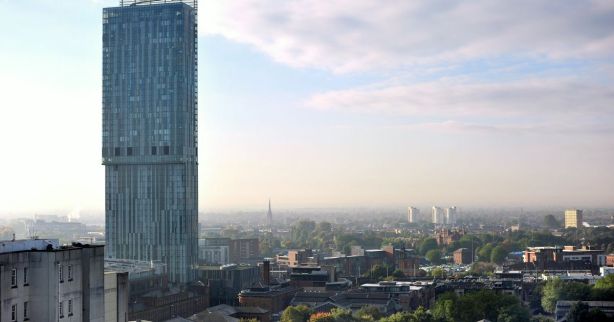
Beetham Tower has 798 steps and is the 11th tallest tower in the UK.

What is it?

This challenging, charity stair climb event returns for a second year, giving runners the chance to climb 798 steps to the top of Beetham Tower, Manchester’s tallest building. Entry is £15, with participants asked to commit to raise £150 sponsorship.

Why should I do it?

Firstly, it’s an excellent cause and charity that deserves support. The Christie charity is one of the largest hospital charities in Europe. It exists to raise funds for all those extra special services that help patients to cope with the impact of cancer on their daily lives.  Donations also contribute towards their cancer research programmes, capital building projects and the purchase of state of the art medical equipment.

Secondly, if you’re in the north of the country you’ll know that stair races are thin on the ground up there. We’ve seen more events popping up outside of London year-on-year, and last year this event heralded the welcome return of stair climbing to the north west. For those north of the Midlands this is a brilliant and easily accessible race to try. For stair climbers in the capital, it’s a welcome chance to escape London and climb one of the other tallest buildings in the UK.

Thirdly, it was a really popular event last year, with climbers universally praising the organisation and atmosphere on the day. It’s definitely not one to be missed.

When is it?

Sunday 25th February at Beetham Tower, 303 Deansgate, Manchester M3 4LQ.

How do I sign up?

The Christie Tower Run registration

2. Step Up: Ellenor’s Tower Climb Challenge

broadgate-tower

What is it?

A challenging, charity stair climb up the 877-step Broadgate Tower in the City of London.

Why should I do it?

It’s hard to get into one of the big London towers for a race without committing to fundraising a sizeable minimum amount of money for a charity. But this event has no minimum fundraising amount, although fundraising is encouraged to help this brilliant charity that works to support people with a terminal illness, and their families.

Broadgate Tower is one of the big London towers and is a great venue to climb.

It’s also a great chance for those signed up for Vertical Rush on 15th March to make sure they’re in race shape while experimenting with race-day planning and stair climb pacing.

When is it?

Saturday 3rd March at Broadgate Tower, 201 Bishopsgate, London EC2M 3AB.

How do I sign up?

Step Up: Ellenor’s Tower Climb Challenge event details and registration information.

3. LOROS Tower Run

9733936-large

What is it?

A sprint event up the 351-step St George’s Tower in central Leicester.

Why should I do it?

It’s cheap. Just £17 entry with no fundraising commitment, or free entry if you can fundraise £50 or more for LOROS. With most UK races requiring you to raise sponsorship in excess of £100 on top of your entry fee, this friendly and very well-organised event is an absolute bargain.

The 351-step building is one of the the shortest courses in the UK, so is a great introductory climb for those who want to try out stair climbing but are maybe a bit daunted by the challenge of one of the bigger towers.

For more experienced climbers, it’s a rare opportunity to go all out in a sprint and throw off the shackles of pacing that is sometimes so hard to get right during climbs in taller buildings.

It will make a great warm-up race for those doing Vertical Rush for Shelter in London on 15th March.

When is it?

Saturday 10th March at St George’s Tower, 1A St Georges Way, Leicester, LE1 1SH.

How do I sign up?

LOROS Tower Run registration

Sonja Shakespeare set a new women’s course record at the NSPCC Gherkin Challenge event in London last Sunday (22 Oct).

One of the rising stars of UK stair climbing, Shakespeare shattered the existing record by over 30 seconds to set a new time of 6.03 and continue her success in 2017.

She was challenged strongly by the in-form Sarah Frost who set off 45 minutes after in a later wave of runners. Frost was coming in to the race off the back of two strong wins at the ArcelorMittal Orbit in September and Spinnaker Tower earlier this month. She also managed to blow past the previous course record, finishing a mere second behind Shakespeare in 6.04.

Sonia Shakespeare towerrunner

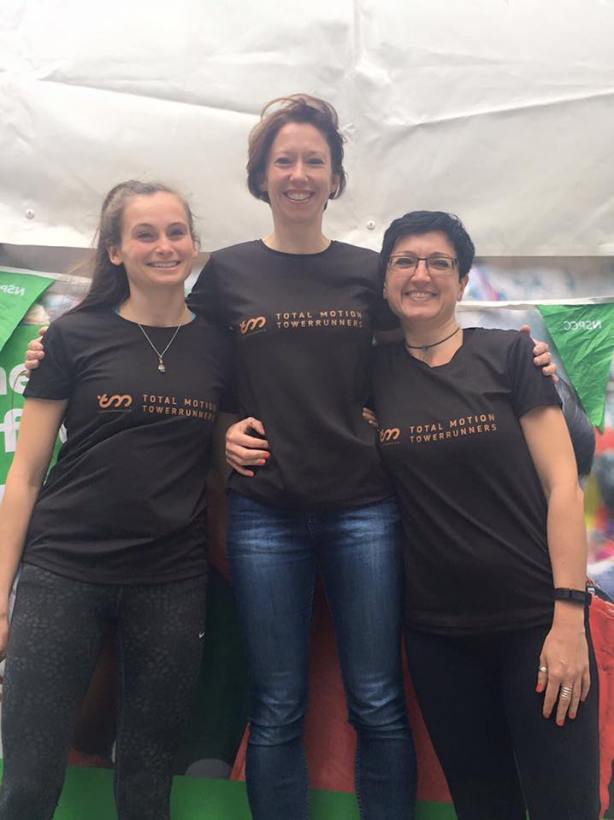
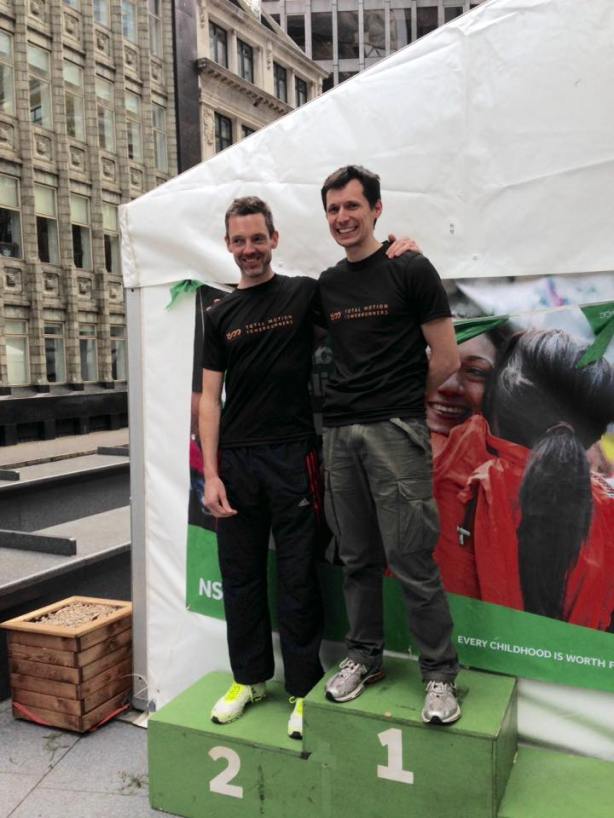
Sonja Shakespeare celebrates with Sarah Frost (l) and fellow Total Motion Towerrunners teammate Chiara Cristoni (r)

‘I actually enjoyed the race’ said Shakespeare. ‘I was really quite nervous before, which is normal for me, although I was confident in what I needed to do and stayed completely in control during the climb.’

A relative newcomer to the sport, she has been chopping away at her PBs constantly in 2017, improving from event to event.

‘I’ve been improving, but I’ve also had some really bad races where I completely blew up on the stairs. It’s the most painful thing ever and I’ve learnt from that. I’m learning with each race.’

With the experience of a number of international races already in the bag, Shakespeare is keen to explore her limits and see exactly what she is capable of in the coming months.

Her next event will be the Shanghai Tower International Vertical Marathon on 26th November, where she will compete against a lineup of some of the biggest names in the sport.
Mark Sims wins NSPCC Gherkin Challenge 2017

The Gherkin Challenge was the fourth race in the ongoing UK Championship series. Organised by the charity NSPCC, it attracted over 400 competitors, but the battle for overall winner was really a two-man race as reigning UK champion Mark Sims went head-to-head with David Harris. Sims is one of only a handful of people to have completed The Gherkin in under five minutes and was determined to secure another victory following his win at Spinnaker Tower in Portsmouth on 8th October.

Two-time UK champion Sims won in a time of 4.43, taking four seconds off the second-place time he set in 2015. A fast improving Harris, who has set a number of impressive PBs in 2017, took second place in 5.15.

Mark Sims Gherkin Challenge

David Harris and Mark Sims on the podium at the Gherkin Challenge 2017

Focus in the UK now turns to the final race of the 2017 UK Championship next month. The Broadgate Tower Run Up takes place on Saturday 25th November at London’s Broadgate Tower. Not only will it feature a double-climb main event, but it also boasts the first ever vertical mile event in the UK – 12 climbs of the 877-step tower! There’s still plenty of time to sign up to the Broadgate Tower Run Up.

Like us on Facebook for updates on results and upcoming events.

The UK tower running race calendar explodes back into life again in the coming months, after a relatively quiet summer. We run through four of the best stair climb races to sign up for this coming September and October.

1. Upslide Down
d8eb0964c8c72f7e47ddcfe798bbbe2d

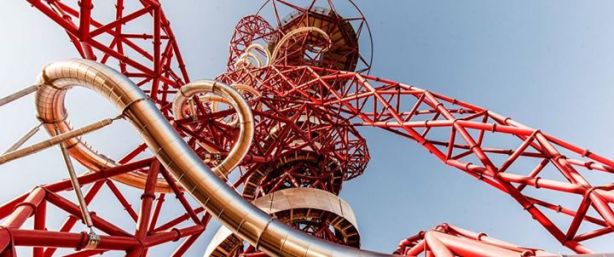
The winding stairs and slide of the unique ArcellorMittal Orbit

What is it?

This is the third and final run of this exciting new event for 2017, following its two successful runs in June and July. It’s a 455-step climb up the iconic ArcelorMittal Orbit in London’s Queen Elizabeth Olympic Park, followed by a hair-raising slide down the helter-skelter that’s been erected around the UK’s largest sculpture.

If you’ve been watching the World Athletics Championship over the past fortnight you’ll no doubt have seen images of the towering structure. If you were fortunate enough to be in the stadium, you might even have seen it peering over the top of the London Stadium.

Why should I do it?

It’s a fantastic opportunity to fuel your own athletic ambitions in the Olympic Park, and 455 steps is a great entry-level distance. If you’ve been debating doing a stair climb, but have been put off by the height of taller buildings, then Upslide Down is an excellent choice. The height is suitable for all fitness levels and the relatively shallow steps should prove slightly less demanding than some of the steeper steps you’ll find in other UK towers. What’s more, unlike most UK stair races, there’s no fundraising requirement for this one so you can pay your fee (£30 individual, or £28 pp for a team of 5) and just race.

It’s also a unique race in that the stairwell is built around the outside, curling its way up to the top of the sculpture. So, you get excellent views on the way up and exposure to cooling air that can delay you getting overheated, plus you don’t have to worry about taking any landing turns – because there aren’t any.

Then there’s the thrill of a fast-paced slide down the helter-skelter that’s been erected around the outside, which definitely offers more bragging rights and conversation opportunities than a bog-standard lift ride to the bottom.

When is it?

Wednesday 20th September – 6.30pm and 7.30pm waves – ArcelorMittal Orbit, Queen Elizabeth Olympic Park, London, E20 2AD

How do I sign up?

Upslide Down registration

2. Spinnaker Tower-thon
yhH6G0fg

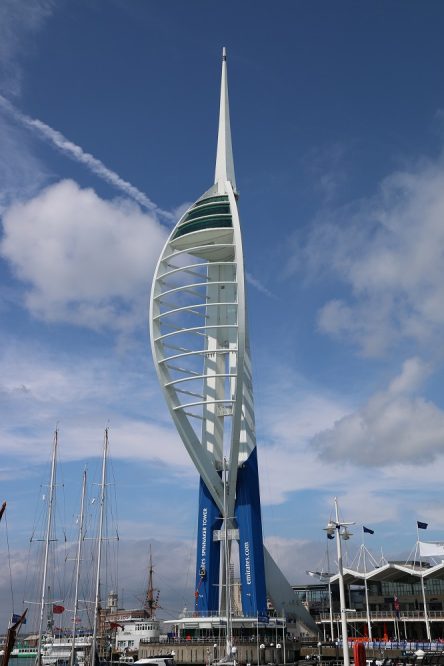
Emirates Spinnaker Tower, Portsmouth

What is it?

An extremely well-run, and well-established, stair climb at Emirates Spinnaker Tower in Portsmouth. It’s 530 steps up a unique, triangular staircase and is usually less than £20 to enter.

Why should I do it?

First off, we love the vibe at this event. All the staff are very friendly and welcoming and it’s usually brilliantly organised. They are very accommodating of regular tower runners, so you should be able to take a look at the stairwell before the event and will also get a clear run up the stairs at the front of your wave if you ask for one.

While there’s no denying the 530 steps to the top are demanding, there are still far fewer than most stair climbs in the UK, so the Tower-thon makes for a decent entry-level race. It’s always a very competitive event at the business end of the standings, and is one of the more popular stair climbs among UK stair climb regulars. Times have been getting faster and faster in the last few years here, so it’s a good venue to try and measure yourself against some of the quickest UK male and female stair climbers.

There are usually considerably less people at the Emirates Spinnaker Tower-thon than you’ll find at big London races. This makes for a friendlier environment at the top, where you’ll find elites and first timers chatting and cheering on finishers well after they’ve finished their run.

Finally, entry is usually very reasonably priced and there is no fundraising required. A win-win.

When is it?

Sunday 8th October – Emirates Spinnaker Tower, Gunwharf Quays, Portsmouth, PO1 3TT

How do I sign up?

Spinnaker Tower-thon registration

3. Step Up: ellenor’s Tower Run Challenge
broadgate-tower

The 33-floor Broadgate Tower in London

What is it?

A challenging, charity stair climb up the 877-step Broadgate Tower in the City of London. Early bird entry of £20 is available until 31 August, and after that the fee rises to £25.

Why should I do it?

It’s hard to get into one of the big London towers for a race without committing to fundraising a sizeable minimum amount of money for a charity. The minimum for this event is just £87, which is definitely manageable. The money you raise will go to helping a brilliant charity that works to support people with a terminal illness and their families.

Broadgate Tower is also one of the big London towers and is a great venue to climb.

When is it?

Saturday 14th October – Broadgate Tower, 201 Bishopsgate, London EC2M 3AB

How do I sign up?

Step Up: ellenor’s Tower Run Challenge registration

4. MHA Radisson Blu Hotel Stair Climb Challenge

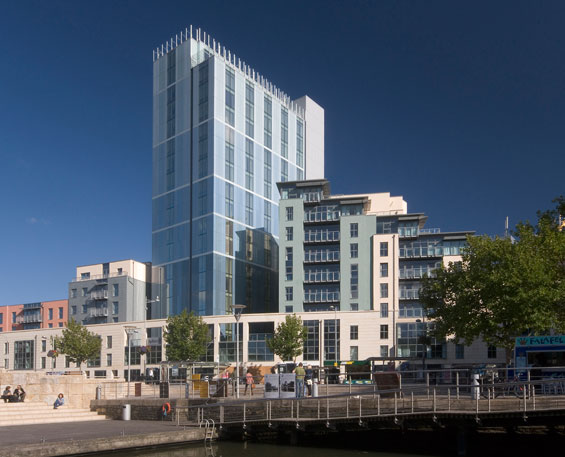
Radisson_Blu_Bristol

What is it?

A super-sprint event up the 300-step Radisson Blu Hotel in central Bristol.

Why should I do it?

Firstly, it’s only £10 to enter, plus a commitment to fundraise a minimum of £50. That’s very reasonable for a UK stair climb.

Secondly, this is the only stair climb event (we know of) in the West Country. So, if you live down that way this is your best chance to do a stair race without having to worry about a trip to London or beyond.

Thirdly, it’s the shortest race in the calendar this year by quite a few steps, which makes it a unique offering. Sprint races ask many different questions of your fitness and technique than longer climbs, and if you’re a regular tower runner this will challenge you in new and varied ways.

Finally, there are prizes for the fastest climbers so if you fancy yourself a speedster it’s worth heading to Bristol to try and claim them.

When is it?

Sunday 15th October – Radisson Blu Hotel, Broad Quay, Bristol, BS1 4BY

How do I sign up?

MHA Radisson Blu Hotel Stair Climb Challenge registration

Like us on Facebook for updates on results and upcoming events.

Rich ‘Beyond Human’ Sirrs is the fastest UK stair climber on the circuit. He first blew onto the UK tower running scene in 2015 after a successful run of results while working in China. The Hull native caught the tail end of the inaugural UK Tower Running championship that year, and managed to set two British records in the process – at the Gherkin and the Heron Tower.

11846693_1196208523737903_1334962298345501438_n

In May 2016 he set a new British record at the Broadgate Tower and then departed our shores once again, this time heading for Singapore. We caught up with Beyond Human to see what he’s been up to since he left. Read on to find out how a grip strengthener and training alongside the best in the world have transformed him.

TRUK: We haven’t seen you racing in the UK for a while now – where have you been and what’s going on?

RS: I moved over to Singapore in June 2016 and haven’t had a chance to get back over to the UK yet. I’m living and working here with my girlfriend and really can’t say enough good things about the place. Plenty of training opportunities and chock-a-block with sports facilities – I have two Olympic sized pools within five minutes walk of my house! I’ve taken some time out from stair racing in 2017 and trained for my first aquathlon. I’ve enjoyed mixing it up and also seeing some benefits from adding swimming to my training. I’ve recently raced another aquathlon and ended up with podium place in my category, so quite pleased with that as my swim is still a little pedestrian.

My last race in the UK was at Broadgate Tower in May 2016 where I finished second behind an inform David Robles. I’ve seen there have been some close, competitive battles in my absence and I’d like to get involved in those races.

11692692_1174485135910242_8895554918480225758_n

Beyond Human salutes a victory in 2015 from the top of the winner’s podium

TRUK: So, how is training going?

RS: I’ve been suffering with shin and Achilles injuries from running for a couple of years now and I’ve made the commitment to try and injury proof my body with a regimen of strengthening and balance exercises, plus some custom orthotics, and so far it seems to be going in the right direction.

I’ve been doing a fair bit of trail running out here, and even managed to win a trail race in Malaysia earlier in the year, despite only being able to put down 10-15km a week running for the six months before it (lots of stairs and swimming though). Further proof stair climbing is a great way to maintain/enhance fitness.

I’ve been listening to podcasts when I’m open water swimming here at the beach in Singapore (big recommendation to swim and get MP3 on) usually Tim Ferriss or Joe Rogan and usually sports or nutrition related. Anyways I came across this guy called Pavel Tsatsouline and he was talking about strength training and how all the muscles can be recruited to fire together to greatly increase strength of a movement. For example, you can grip harder if you flex your glutes at the same time! It’s called muscle irradiation and it got me thinking that perhaps it could be an important factor in stair racing where you are literally powering up the stairs and firing so many muscles at the same time. The force you can pull on the rail and how the legs can fire you upwards must be an important factor and I realised then that strength training must be a key element and was one I was overlooking.

I’ve basically added a range of body weight exercises – chin ups, dips, press ups, leg raises…and grip training using bar and also a sprung grip trainer. I’m trying to give myself a more stable and efficient movement base to increase the force I can recruit to power myself up the stairs, but also to try and move and run more efficiently.

I was actually told all of this in 2014 by an inspirational P.E teacher and former Valencia CF (when they were good) strength and conditioning coach during my time as an English teacher in Northern Spain, but at the time I didn’t act upon his advice.

MG_41461-1024x682

TRUK: You’ve been training with Tomas Macecek (Czech stair climber, current world number 7) and Suzy Walsham (reigning ladies tower running world champion) out in Singapore. How has it been training with the world’s best?

RS: I took Suzy and Tom on my stair running tours of Singapore. It’s basically a 5km loop of Singapore CBD, which takes in 4 or 5 open access buildings of varying height 150-225m, with a variety of stairwells. We run to a building, ascend, come down in the lift, run to the next building, and repeat.

We go at a steady pace, not killing each other but also not slow. The key thing I noted from following them up was how stable and compact they looked in the stairs. There was an assuredness to their movements. No energy was being wasted hopping around or flailing arms around the corner. It just looked compact and stable and the turns were tight and controlled.

Tom is more of a power walker and seems to sort of sit into his stride. I’ve seen something similar in videos of the Colombian stair climber Frank Carreno (current world number two). I’m guessing that lowering the pelvis helps recruit more glute to the movement. Try it next time you walk up stairs, it feels weird but you feel kinda powerful as you stride up. Anyways I was running behind Tom, but still having to work pretty hard to keep up even though he was walking.

Suzy employs a technique where she has real quick feet as she ascends the stairs and then sort of takes a mini rest on the stairwell, which involves lifting the head slightly and opening the lungs up and then popping her head back down and whipping around the turn to do the rapid feet again up the next flight.

I don’t think we are anywhere near understanding what is the best way to climb stairs, however I’m personally starting to transition my training away from a bouncy run style to a more compact rail heavy walk which whips around the corners. I call this the ‘German style’ – Christian Riedl, Görge Heimann, Ralf Hascher all have a similar style to this, in my opinion.

Beyond Human

Beyond Human: Sirrs was profiled in a Chinese magazine in 2015.

TRUK: What does your training look like at the moment?

RS: On weekends I train in the local ‘council flats’ – 50 floors/160m or so I think. I have a left turning and right turning stairwell (my left is always slower – in fact at balls out I’m about 15 seconds slower on left turning than right. The only left turning race I’ve won is Heron Tower, and it wasn’t by very much.)

  • I start with 4 x 50 floors steady.
  • Then it’s onto 10-floor sprints up to the 50th. I’m looking for around 45 seconds to complete the sprint and another 45 seconds recovery. I’m using these more to develop my coordination and feel for the stairs rather than endurance so I don’t pay too much attention to recovery time.
  • Once a month or so I try to do a vertical km in this building, taking it easy but looking for the volume.

I will also do a lot of lunch time sessions during the week in my 36-floor office building:

  • 2 x 36 floors at a tempo pace, which is a steady pace that feels fairly quick but isn’t a full gas effort. This stairwell has very runnable stairs, which actually allow ‘aerobic stair running’. Basically I mean I can ascend and keep HR around 150 and still maintain a run. Not easy to do in most stairwells as it’s just too bloody hard on the body.
  • 2×10-floor sprints with recovery between sprints. 10 floor sprints are for me more about getting used to moving fast in the stairs and practising the coordination which it takes to move quickly without falling over. It definitely hurts, but for me the real pain comes in a 20-floor sprint, as you need time to get into that pain zone (it usually kicks in at around 16 floors). I’m not using 10 floor sprints to build endurance. It’s about coordination of hands and feet to whip around the turns. I don’t think the movements are easy and they take a lot of practice.
  • 20 floors steady + 16 floors surge. I recently introduced a training run where I take 20 floors at the tempo pace and then push for the last 16 floors. This hurts big time and helps to strengthen the mind to take on this zone when it inevitably arrives during a race. I started doing this after reading your article on Terry Purcell.
  • I also do a monthly vertical km here, too. Ascending seven times at a steady pace (around five minutes per climb). The idea here is to build some strength.


11693939_1174485189243570_3853115205327947075_n

“I could get used to this!” Sirrs embraces the perks of being a champion

TRUK: Do you do anything for recovery? How about diet and nutrition?

RS: I love eating too much, especially here in Singapore – got to be the world’s best place for food. Get anything you can imagine, all pretty well priced and eat outside every night. I consider my race weight to be around 70kg, but I’ve put on a little muscle recently since the strength training, so up that a couple of kilos.

I realise weight is a key factor in heaving yourself up the stairs and I’ve seen there is a trend for the top guys to drop weight. Some were definitely more bulky and muscular looking a few years ago and seem to have improved their times by trimming down.

It’s probably a place I can get some improvements in, but I lack a little will power when it comes to food! One thing i’ve started taking is probiotics. I suffered for three years with a recurring problem with yeast infections and gut problems. I put it down to training too much, which maybe was stressing the body and lowering my immune system. I started taking probiotics and it cleared up almost immediately and hasn’t come back.

TRUK: Can we expect to see you back in the UK anytime soon for a race?

RS: Not anytime soon!

TRUK: Where the f**k are the OPSRC (Orchard Park Stair Running Club) lads??

1538931_10153093927133202_1532835102868545480_n

To Hull and Back: the successful Orchard Park Stair Running Club (l-r) Michael “The Rampart” Johnston, Lawrence “Bleed ’em” Needham, Daniel “Beast Mode” Sirrs, Rich “Beyond Human” Sirrs and manager Paul “Toolbox” Spivey.

RS: I know mate, don’t get my started!!! I’m considering withdrawing their OPSRC membership. We cant have Total Motion Tower Runners as the best team in the UK! That keeps me up at night sometimes.

My bro (Daniel Sirrs) moved to Canada this year, hopefully we’ll see him in a U.S/Canada race in 2017! We have talked about doing a U.S trip in 2017 or 2018. I’m thinking Las Vegas race (Scale the Strat) could be good! We’ll have a good battle with West Coast Labels and Total Motion coming up soon and I expect it might be close! Imagine that, cross country style scoring format. That would be fun.

Like us on Facebook for updates on results and upcoming events.