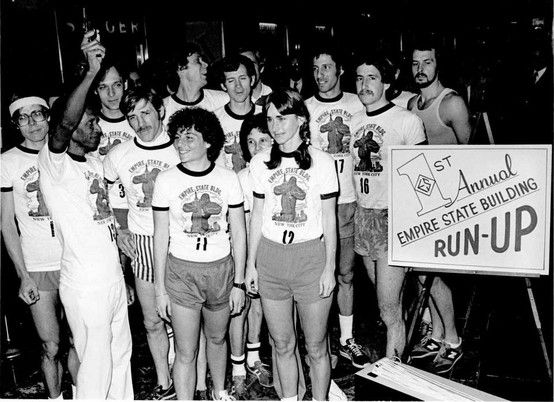
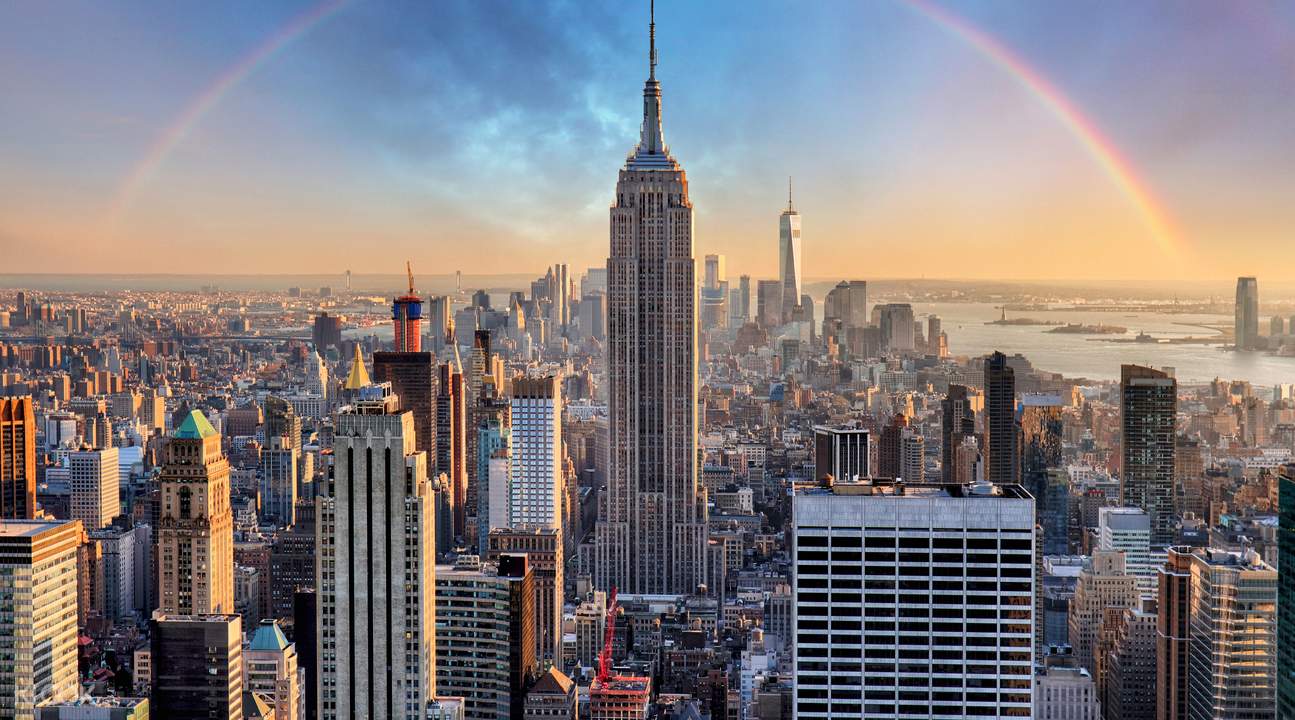
The Empire State Building Run-Up is the longest continuously running stair climb event in the world, and in 2025 it returns for its 47th edition.
High on the wish list for probably every stair climber out there, the ESBRU is frustratingly difficult to get into, with some climbers applying year-on-year and failing to get a spot.
Read on to find out what we know so far about the 2025 edition.
When is the Empire State Building Run-Up (ESBRU) 2025?
The date of the 47th edition of the Empire State Building Run-Up is now set for Wednesday 8th October 2025.
The event is run at night, with competitors setting off from 8pm, to as late as 10pm in previous editions.
How to enter the Empire State Building Run-Up (ESBRU)?
Entry to the ESBRU is through a lottery system that will open on Tuesday 1 July and close on Tuesday 15 July.
Entry fee is TBC. If successful in the lottery, you’ll be contacted to pay and secure your place.
There are also charity slots available each year, but the minimum fundraising requirement for these is pretty steep ($2,000+), so you might have to get friends and family to dig deep if you go down that route.
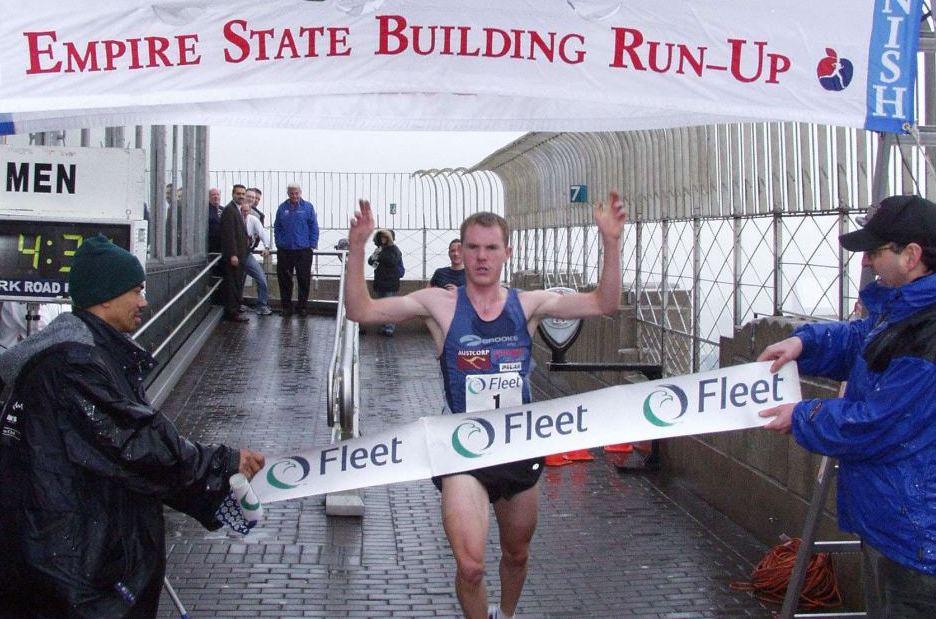
The race involves a climb up 1,576 steps (86 floors) to the viewing deck at the top of the building, usually ending outside when the weather permits.
Having been run by the New York Road Runners (NYRR) for years, the ESBRU is now organised by NYC Runs.
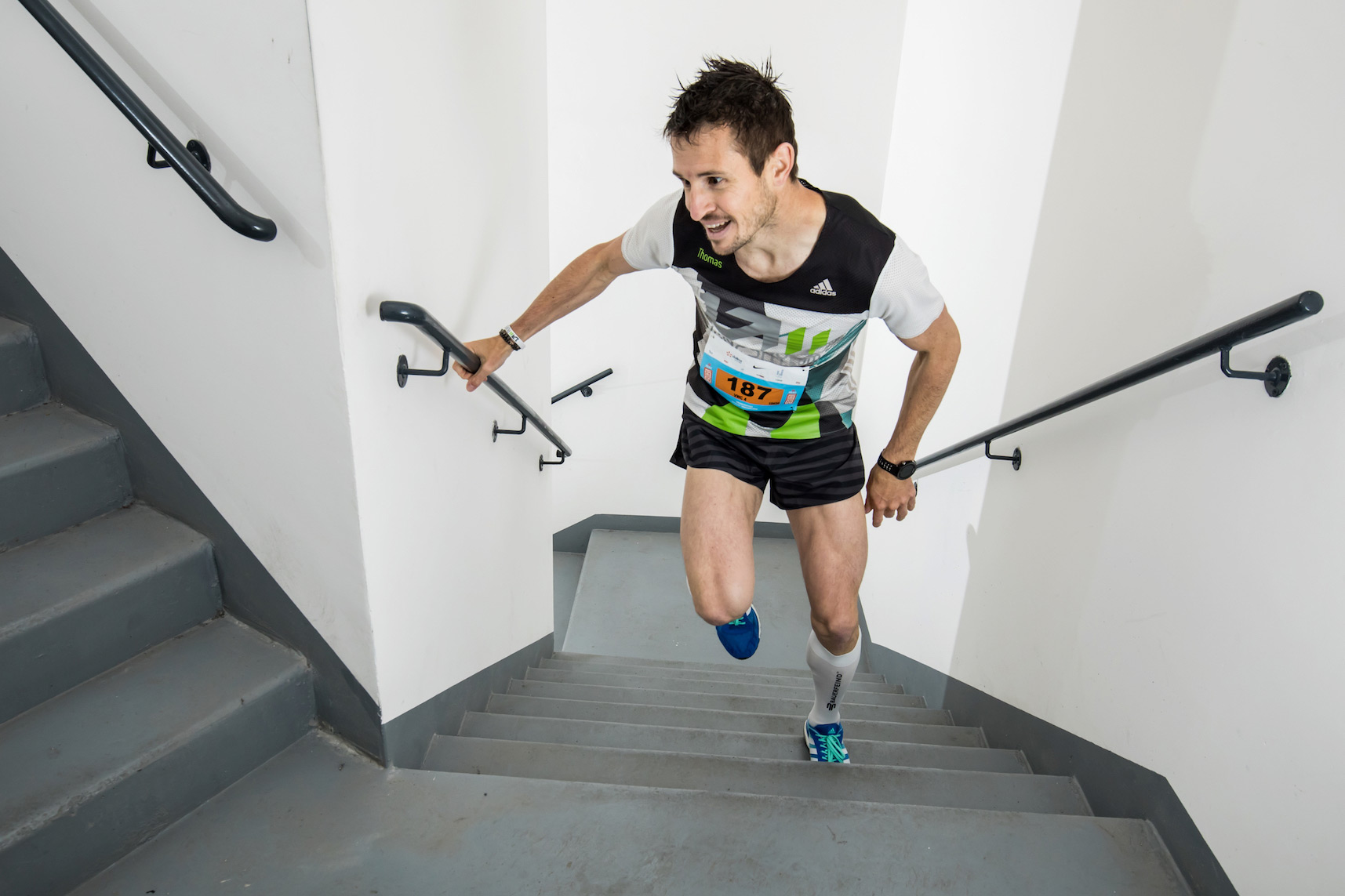
The winners list for the ESBRU reads as a who’s who of tower running greats. From Terry Purcell, Cindy Harris and Thomas Dold to Darren Wilson, Christian Riedl, Piotr Lobodzinski and the incredible course record holder Paul Crake, the ESBRU podium has been topped by most of the best athletes to ever climb the stairs to the top of a tower.
Ten-time winner Suzy Walsham is in a league of her own at the venue, although it’s Austria’s Andrea Mayr who holds the women’s course record of 11:23, which she set back in 2006.
Suzy Walsham made it a record ten ESBRU wins when she took victory in 2019
The Empire State Building Run-Up is just a day away and the excitement is building for the biggest race in the tower running calendar.
The 43rd edition of the event is slightly diminished by the absence of Suzy Walsham who has decided not to defend her title, while Italy’s Valentina Belotti, who would have been the hot favourite, is unable to attend due to travel restrictions.
Nevertheless, there’s a strong contingent of athletes set to line up on Tuesday night to claim the coveted crown of ESBRU winner.
Read on to find out who’s who in the elite women’s division at the 2021 edition of the Empire State Building Run-Up.
Cindy Harris
Cindy Harris won her first ESBRU title back in 1998, and three more followed in 2000, 2001 and 2003. The fact that she’s still competing at the top of the sport of tower running says everything about what a formidable athlete she is. Incredibly, this will be her 23rd appearance at the ESBRU!
The 2020 US stairclimbing champion set her ESBRU personal best of 12:45 back in 2001. Don’t expect to see a sub 13 minute time at this year’s event, but if Harris can get in around the 13.38 she clocked to take third in 2019, then that will likely be good enough to earn her a fifth ESBRU title.
Shari Klarfeld (USA)
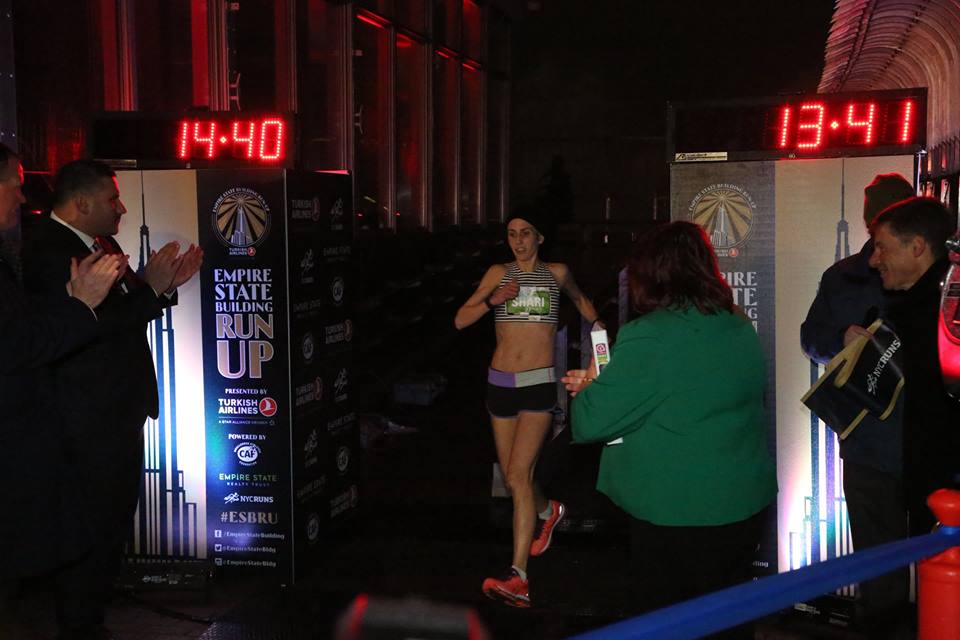
A road runner who competes at 5km and 10km, Shari Klarfeld is the least experienced tower runner on the list – but she’s also one of the most formidable. She typically does just one stair race a year – the Empire State Building Run-Up – and she does it well. Klarfeld was third at the ESBRU in 2015 and again in 2018, and took fourth in 2019.
She’s had some good results at local road races over the past year and a bit, so seems to be in decent shape. Her personal best time at the Empire State Building is 13.43. If she can run another sub 14-minute time then expect to see her back on the podium.
Meg Santanna (USA)
Meg Santanna (second from the right)
Santanna was third at the ESBRU in 2017 with a 13.51 finishing time. But her times at the following two events were considerably slower (14.50 and 14.22 respectively), so who knows which Santanna will show up. With tower runs only recently starting up again in the US, and Santanna absent from them, it’s impossible to say how she might fare on Tuesday night.
She has finished ahead of most of the other athletes on the start list at one race or another, so we expect to see her in the top five and possibly back on the podium.
Maria Elisa Lopez Pimentel (Mexico)
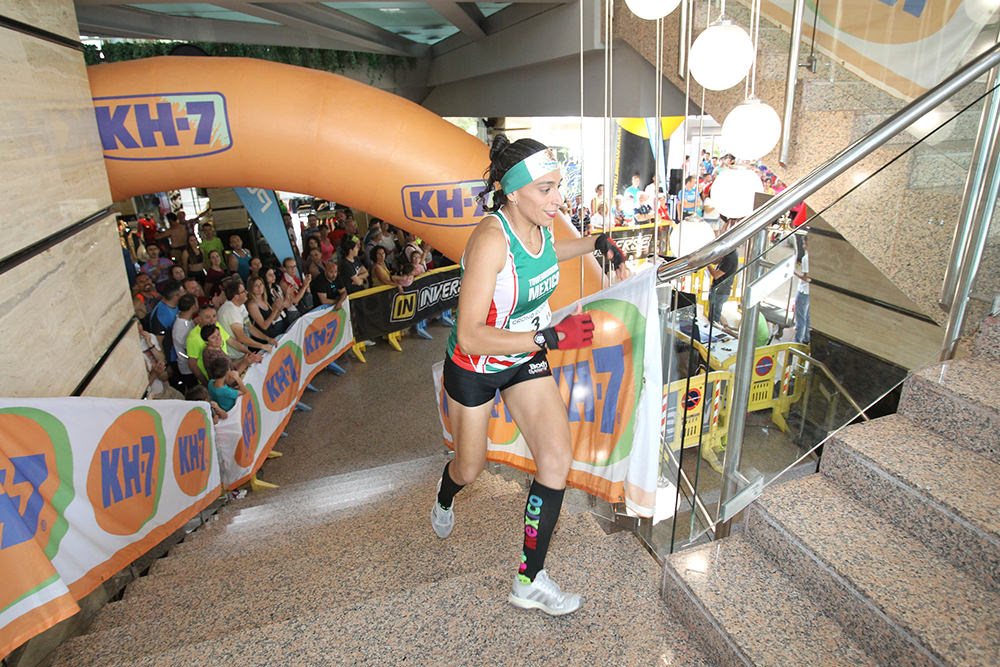
The only non-American athlete on the start list, Lopez Pimentel is a highly accomplished stair climber well used to competing at big races. She’s got lots of experience racing in the States, and has been on the podium at Scale the Strat in Las Vegas and the Dallas Vertical Mile. She made her ESBRU debut in 2018 and finished an impressive fourth with a time of 14.17. She ran even faster in 2019 (14.05) and that earned her fifth.
Will be no surprise to see her on the podium this time around and depending how quick the race is a win isn’t completely out of the question either.
Anna Carlson (USA)
Carlson debuted at the ESBRU in 2019 and took seventh in a time of 14.29. Just before the pandemic pulled the rug out from under the 2020 tower running season, she took second at the US stair climbing championship at Scale the Strat, Las Vegas. Only 13 seconds behind Cindy Harris that day, her time indicated she had made serious improvements and had a strong tower running season ahead of her.
She has spent 2021 competing in triathlons, with her last race just earlier this month, so she is in shape for sure. But can she translate triathlon fitness to the demands of the 86 stories of the Empire State Building? A very solid option if you’re picking your podium finishers.
Debbie Officer (USA)
Officer already has a tower run victory under her belt this year. She took a commanding win at the 1,197-step 555 California St. building in San Francisco back in September. That recent stair racing experience will certainly help on Tuesday night, but Officer will need a massive improvement on the 16.04 she clocked at the ESBRU in 2019 if she’s to be in among the top finishers.
Tricia O’Hara (USA)
A well-known stair climber in the USA (although she lives abroad), O’Hara has been racing the ESBRU for a number of years and clocked her personal best 15.36 at the event in 2019. A strong athlete, but unlikely to feature among the top finishers this time around.
Verity Rees (USA)
Rees took second in an 861-step stair race in Tampa, Florida earlier this month, so is coming into the ESBRU in shape. She clocked a respectable 15.28 on her ESBRU debut in 2019. Imagine she’ll be looking to cut a chunk off that PB, but unlikely to see her competing for the podium.
Olga Starikova (USA)
Another familiar name to anyone who follows US stair climbing, Starikova has been on the circuit for a few years now, with some podium places to her name.
She finished the ESBRU in 2019 in 15.53. With the winner on Tuesday expected to clock sub 14-minutes, or close to it, we don’t anticipate seeing Starikova in the running for the top third of the leaderboard.
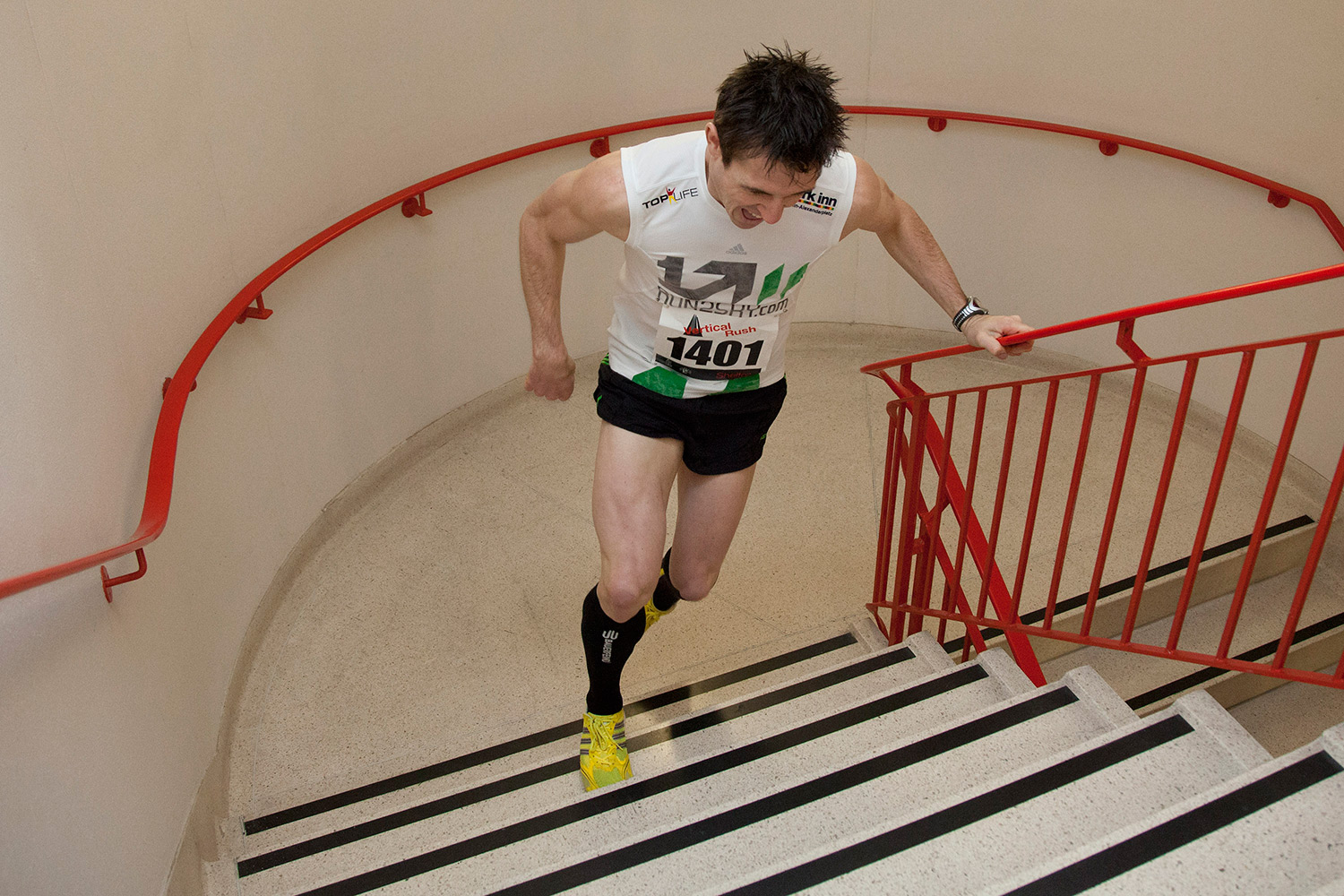
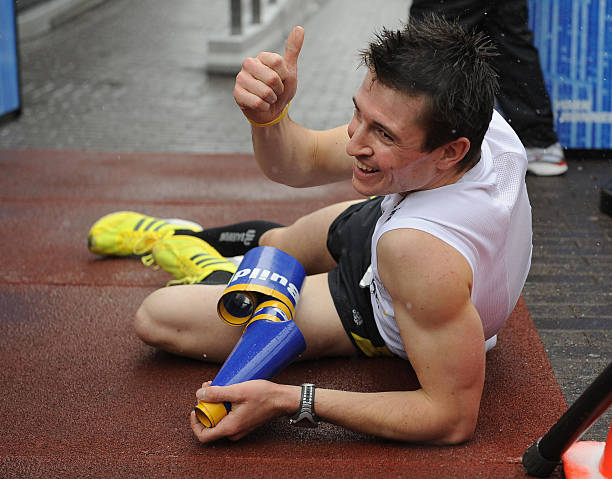
The seven-time winner of the Empire State Building Run-Up enjoyed a long and hugely successful tower running career. We take a look back through his races and pick out five of his finest moments.
With so many to pick from, we’ve selected the ones that stood out to us. Leave a comment to let us know which others you’d include.
5. 2004 Uptown Run Up, Munich, Germany
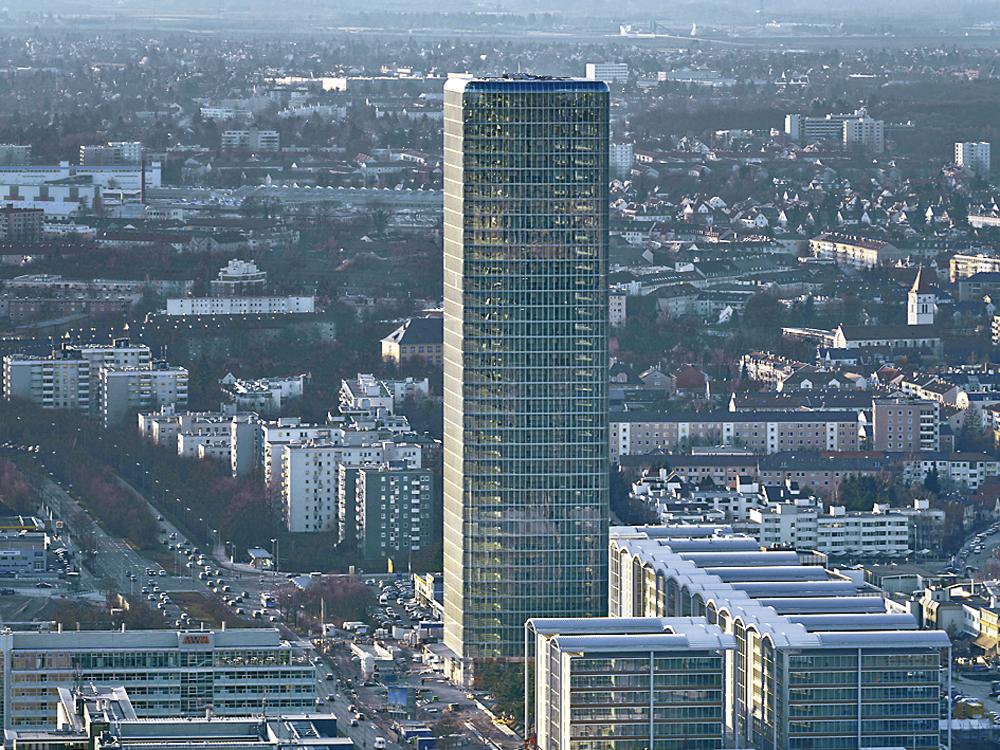
Hochaus Uptown Munchen – site of Thomas Dold’s first tower running victory
Already a mountain running star who’d represented Germany at the World Junior Mountain Running Championships in 2002 and 2003 (where he finished 11th), Dold was still a tower running novice when he took part in the Uptown Run Up on 2 October 2004.
He’d made his stair racing debut the year before, taking sixth place at the highly competitive Donauturm Treppenlauf in Vienna, Austria. But it was in Munich that Dold recorded the first of his 45 career wins.
It was the first edition of the 780-step race, so it probably went unnoticed by many in the world of tower running. But soon they would sit up and take notice of the man from the Black Forest.
It might seem an odd choice to include a race where Dold finished second as one of his ‘top moments’, when he has 40+ wins to pick from. But there’s a reason.
Dold had stepped away from tower running for the 2015 and 2016 seasons, missing all the big races, including the World Championships in Doha.
Many thought they probably wouldn’t see him race again. Then in 2017 he returned for three races on the Vertical World Circuit: Tower 42 in London, Tour First in Paris and One World Trade Center in New York.
He finished second in London (to Piotr Lobodzinski) and would later take a controversial joint-first in New York alongside Australia’s Darren Wilson.
But it was the race up the 954 steps of Tour First in Paris that really stood out. 2015 world champion Piotr Lobodzinski clocked a new course record of 4:42 at the event, but the returning Dold finished just five seconds behind him.
14 years after his tower running debut, and following a two-year layoff, the brilliant Dold proved he could still hold his own with the rest of the best in the world.
3. 2012 European Championship final, Frankfurt, Germany
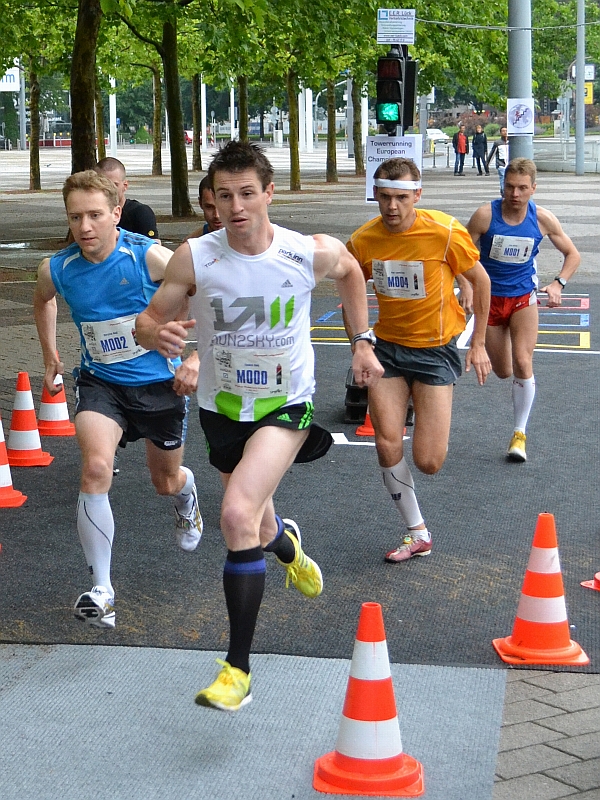
Thomas Dold leads the finalists into the stairwell at the 2012 European Tower Running Championships
A seven-time Empire State Building Run-Up champion and three-time Vertical World Circuit winner, Dold had a massive target on his back at every race he took part in throughout the 2012 season.
At the final of the European Tower Running Championships at the MesseTurm in Frankfurt, Germany, Dold was facing the best of the new cohort of European stair racers.
The championship event involved one full qualifying run up the tower’s 1,202 steps. Christian Riedl clocked the fastest qualifying time, with Dold taking second. Earlier in the year at the Empire State Building Run-Up 2012, Riedl had finished just eight seconds behind the winning Dold. He was definitely the athlete that could cause Dold the most problems.
In the semi-final the runner’s had to sprint just half way up the MesseTurm. This time Dold evened things out and came out on top.
Could Dold take victory in the final run up the full height of the tower? Christian Riedl, Tomas Celko, Piotr Lobodzinski, Milan Wurst and Viktor Novotny were all looking to stop him.
Below is a short clip taken from inside the building during the final run (click here if embed not working).
Thomas Dold once again proved he was still the best in Europe, pulling away from the field to finish in 6:30, ahead of Christian Riedl (6:53) and Piotr Lobodzinski (7:00).
2. Course record at 2012 Vertical Rush, London, UK
As part of the Vertical World Circuit 2012, Vertical Rush in London attracted a long list of top European tower runners.
Dold was making his debut at the 932-step Tower 42 and was expected to be squaring off with the 2011 winner, Fabio Ruga of Italy, for top honours.
Dold produced a performance for the ages, clocking a course record 3:58.
Eight years on and his incredible record still stands. Only Piotr Lobodzinski has come close to it, clocking 3:59 in 2017.
1. Personal best at 2009 Empire State Building Run-Up, New York, USA
Thomas Dold made the Empire State Building-Run Up his own during his stunning run of victories from 2006 to 2012.
There are plenty of memorable moments to pick from out of his seven wins, but the 2009 event stands out as the best.
The stellar line-up in the lobby included 2007 World Mountain Running Champion Marco De Gasperi from Italy and American Rickey Gates, who had finished just eight seconds behind Dold in 2008.
Both men pushed Dold hard throughout the course, driving him on to a 10:07 finish, the best time he ever ran at the Empire State Building.
But what stands out about this race in particular is what might have been.
Only Australia’s Paul Crake has ever completed the ESBRU course in under 10 minutes, managing it four times during his run of victories from 1999-2003.
But under different circumstances, Thomas Dold may very well have done the same in 2009.
At around the 40th floor (of 86), Dold caught up with the back end of the women’s wave that had set off five minutes before the men.
As a result he had to weave his way through scores of runners as he chased his fourth title.
Thomas Dold weaving his way through the women’s wave on his way to winning the 2009 Empire State Building Run-Up
It’s highly likely that given a clear run that day Dold would have broken the 10-minute mark. Unfortunately, we’ll never know for sure.
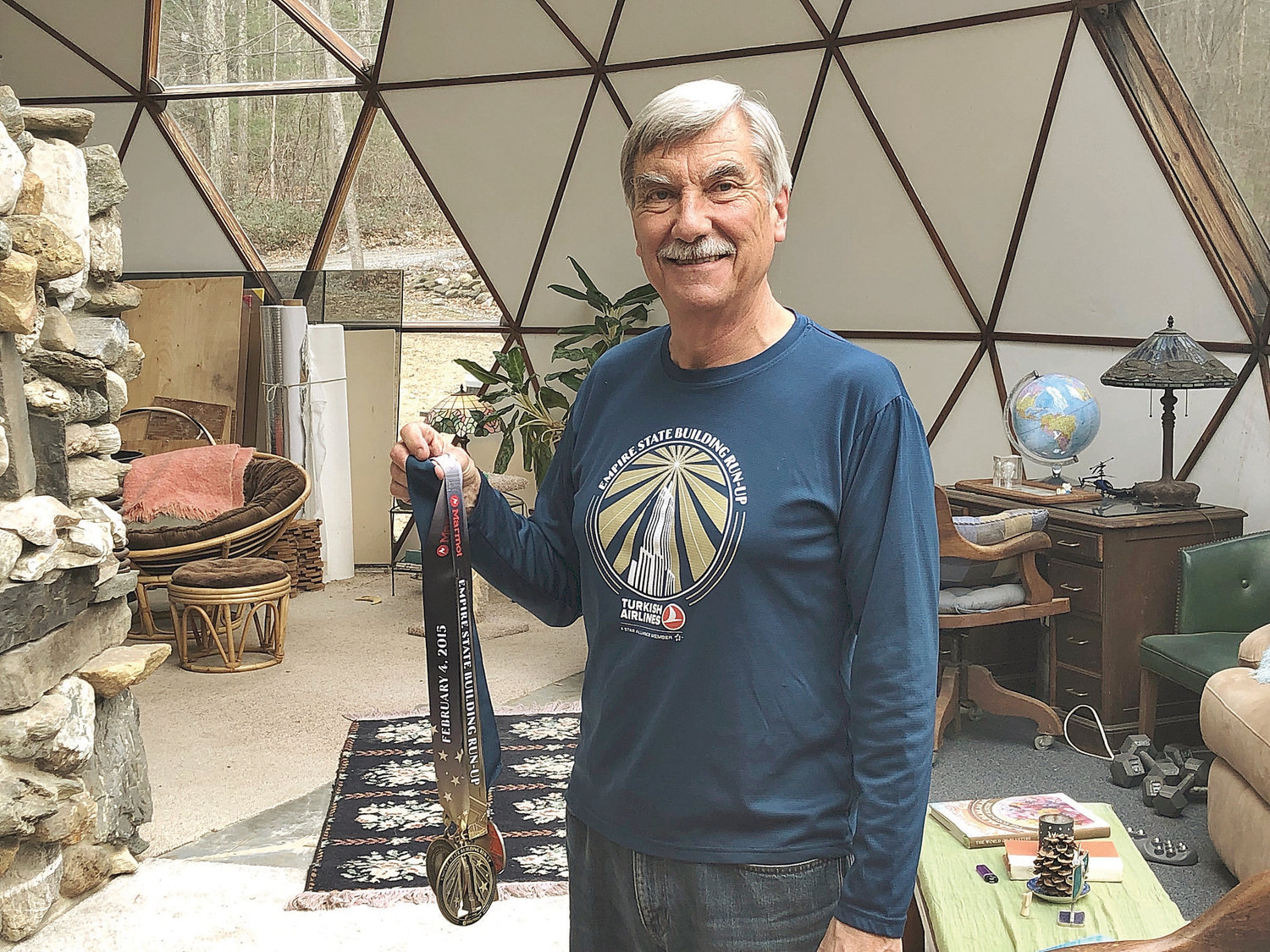
Getting to race up the stairs of the Empire State Building just once is a dream for most tower runners. For many it’s a dream that continues to elude them as they fail year after year to secure a coveted place at the world’s longest-running stair race. But for one man it’s become a real-life recurring dream that’s been going for more than a quarter of a century.
When you look back through the long and eventful history of the Empire State Building Run-Up you’d be forgiven for skimming over the event in 1994.
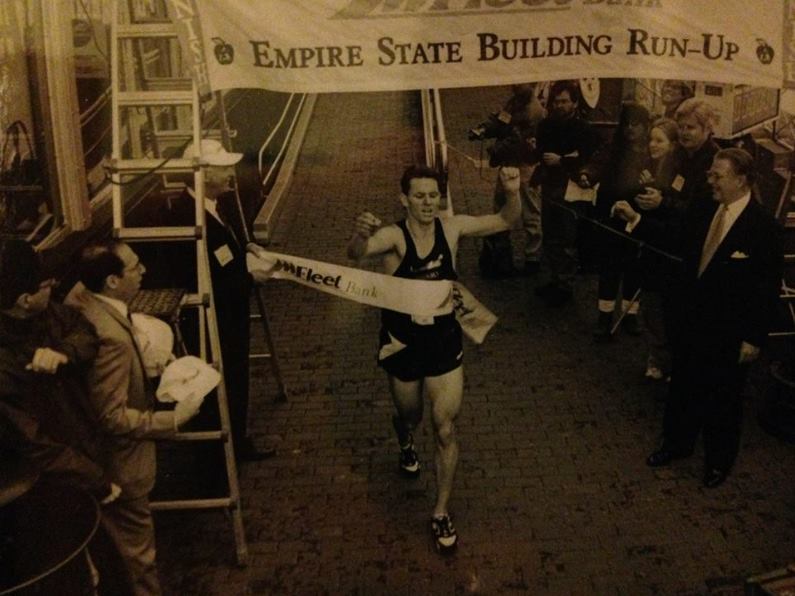
Ran on a shortened course of 80 floors, the men’s race was won by debutant Darrin Eisman (USA), while fellow first-time runner Belinda Soszyn (AUS) took the first of her eventual three victories in New York.
With all the close battles, intense rivalries and record-setting runs that came before and after, 1994 was, in comparison, fairly unexciting.
But it was certainly far from unexciting for David Allard, the man who currently holds the record for the most ESBRU appearances. This was the year he made his debut at the famous Manhattan tower.
Darrin Eisman and Belinda Soszyn, winners of the 1994 ESBRU
From novice to veteran
David Allard had only a couple of stair races under his belt when he took part in the Empire State Building Run-Up for the first time in his mid-40s.
In fact he hadn’t run at all until a few years before.
‘I didn’t start running until my daughter had joined the high school cross country team,’ he said. ‘I had never run a step in my life until then.’
Despite his lack of experience, the tower running novice from Great Barrington, MA, clocked a respectable 14:51 on the shortened course in 1994.
A year later he was back to take on the full course of 86 floors/1,576 steps, where he set his personal best of 16:43.
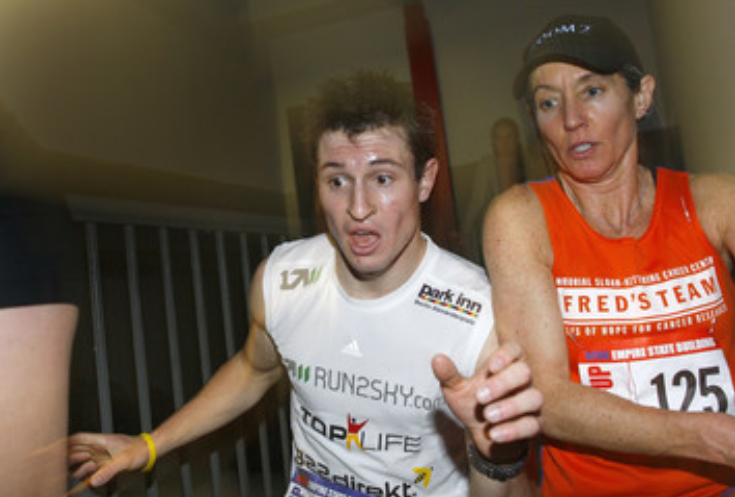
‘It was a simple race at first, with a mass start that begins in the lobby,’ Allard told the Berkshire Eagle back in 2013. ‘We all had to hit this tiny door and then begin our ascent. But a lot of people tried to go too hard, too fast and many ended up holding their chests, slumped to the side of the stairwell by the eighth floor. For me, I set a steady pace and held it.’
‘Years ago you could only pass on the left,’ Allard recalled to the Brattleboro Reformer last year, ‘so you have seven stairs to pass a guy before a landing. Someone hits the landing and just has to turn so it was impossible to pass.’
The elite waves still begin with a manic mass start, but runners in the general wave now set off five seconds apart. With less crowding and mania in the stairwell, it’s a bit easier for Allard to settle into his runs and focus on his technique.
With 26 ESBRU appearances to his name, David Allard perhaps knows the stairs and the race better than almost anyone. So first time tower runners could do worse than listen to some of his advice.
‘It’s a breathing race, not a leg race,’ says Allard. ‘It’s all about holding a steady breathing pattern and using the handrails to carry your momentum.’
‘You bring yourself right to the edge of a heart attack, and you just hold it. The Empire State Building [Run-Up] is not a legs race, it’s a lungs race. The trick with the race is to start at the pace you’re going to maintain.’
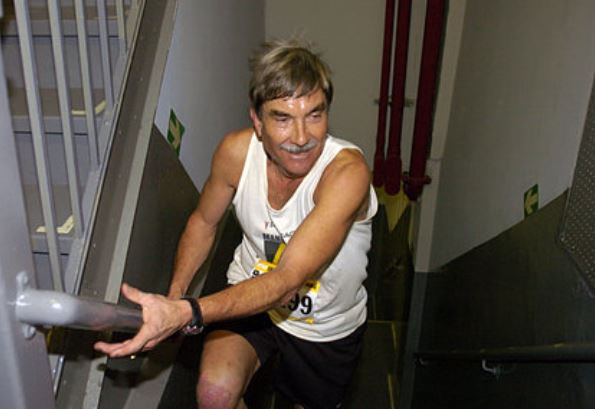
David Allard at the 2008 Empire State Building Run-Up
His top five tips?
‘(1) Don’t go out too fast; (2) Take the stairs two at a time; (3) Use the hand rails; (4) When someone wants to pass you in the stairway, get out of the way; and (5) Smile at the end.’
The payoff at the top will make all your hard work worthwhile, Allard promises.
‘It’s the most beautiful ending to a race because you have to run one last lap around the observation tower and you get to see all of New York ahead of you. It’s so exhilarating, there’s no other feeling like that.’
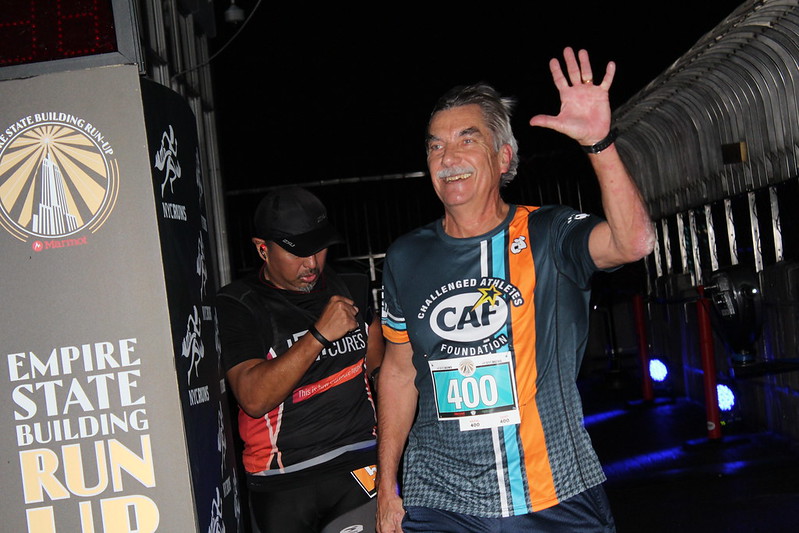
David Allard crosses the line at the 2015 ESBRU
TV presenter Kelly Ripa took part in the race in 2013 and she got to meet David Allard before she set off on her run.
You can see their brief exchange at the Empire State Building in the video below (starts at 1:40).
Allard’s rivals for The Streak
‘The streak is a really strange thing because it has zero value,’ says Allard. ‘Yet to the person that holds the streak it has enormous value.’
Hot on his heels for the record for most appearances at the Empire State Building Run-Up is a well-known tower runner from New York, Stephen Marsalese.
Marsalese made his debut at the Empire State Building in 1996 and has competed in every race there since, bringing his current number of appearances to 24.
With 15 or so years age difference between the two men, it’s likely the younger Marsalese (if he continues to be invited to the the ESBRU) will eventually outlast Allard.
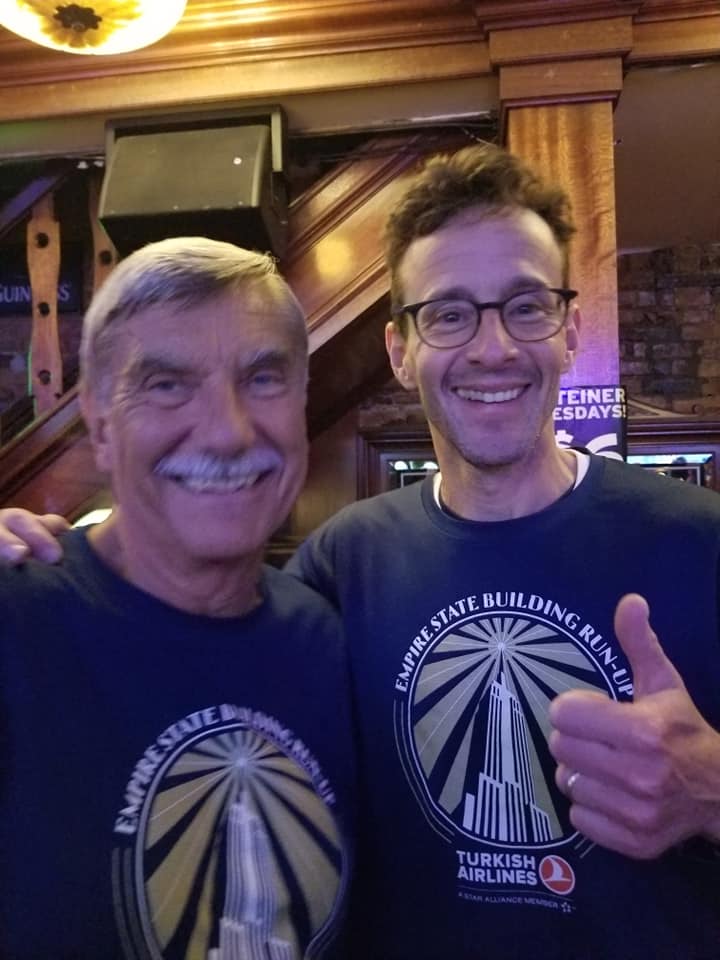
David Allard and Stephen Marsalese
But the evergreen, four-time winner Cindy Harris (nee Moll), who currently has 22 appearances to her name and is still competing at the very top, could well pass both men out in the coming years.
But Allard has no plans to call time on his fantastic run at the ESBRU any time soon.
‘I hope to do this into my nineties—I’ll crawl up the stairs if I have to’, he told TimeOut.
For the first time since 2010 Suzy Walsham will not attend the Empire State Building Run-Up.
The Australian star, who has remained unbeaten at the ESBRU since 2013, has decided not to compete at the race in May.
It’s somewhat of a surprise announcement from the athlete whose name has become synonymous with the iconic New York race. Since her debut in 2007, Walsham has gone on to become the winningest athlete ever at the venue, taking victory a record 10 times.
But her decision not to compete this year does not come as a complete shock given the close proximity of the Empire State Building Run-Up (Tuesday, May 12) to the Towerrunning World Championships at Taipei 101 in Taiwan (Saturday, May 9).
Suzy Walsham won on her ESBRU debut back in 2007
The absence of the 2018 world champion and reigning world number one opens the door for a new name, or a familiar one, to enter the ESBRU record books.
Walsham’s closest rivals in recent years have been four-time champion Cindy Moll-Harris (USA) and Laura Manninen (FIN).
With those two also likely to be at the World Championships in Taiwan the weekend before the ESBRU, it is perhaps unlikely they will make the long journey to New York in time for the race.
If that’s the case, it leaves the door open for a completely new name to step in and take the crown. Stephanie Hucko, Shari Klarfeld and Meg Santana, who have all finished on the podium in recent years, will likely be in the mix for top spot on Tuesday, May 12.
Terry Purcell is a legend of the sport and when the Tower Running Hall of Fame is founded, he’ll be first in line to be inducted.
His outstanding contribution to the sport began in 1993 when he took part in his first race at Sydney’s Centrepoint Tower. Encouraged by friend, and fellow Australian, Geoff Case, who had won the Empire State Building Run-Up from 1991-1993, Purcell excelled from the very beginning.
Within two years he had destroyed Case’s record at the Sydney Tower by 24 seconds. In 1998 he won the ESBRU himself, and when he retired from competitive racing in 2011 he had won more elite races than any other climber before him. His record included five wins from five starts at Chicago’s AON Center (plus a long-standing course record that was only broken in February 2017) and nine wins from nine starts at the John Hancock Center (now 875 North Michigan Avenue).
Terry Purcell winning the ESBRU in 1998.
Purcell came out of retirement in 2017 to race once more at the Hancock Center, and has been active once again on the US stair climbing scene for the past couple of years. In that time he’s secured wins, podium places and top five finishes in a spread of highly competitive races to take the number one spot at the top of the USA tower running rankings.
This is a cool video showing Terry Purcell MkII on his way to winning the Vertical Mile event at the Reunion Tower in Dallas back in January 2018.
But it’s this next excellent video that we really want to bring to your attention. This interview is from around 2009, when Purcell had been racing and winning for 16 years. His knowledge and experience is invaluable and there are lots of useful insights here, ranging from how to pass rivals during a race to how he trains and his mental approach to stair climbing.
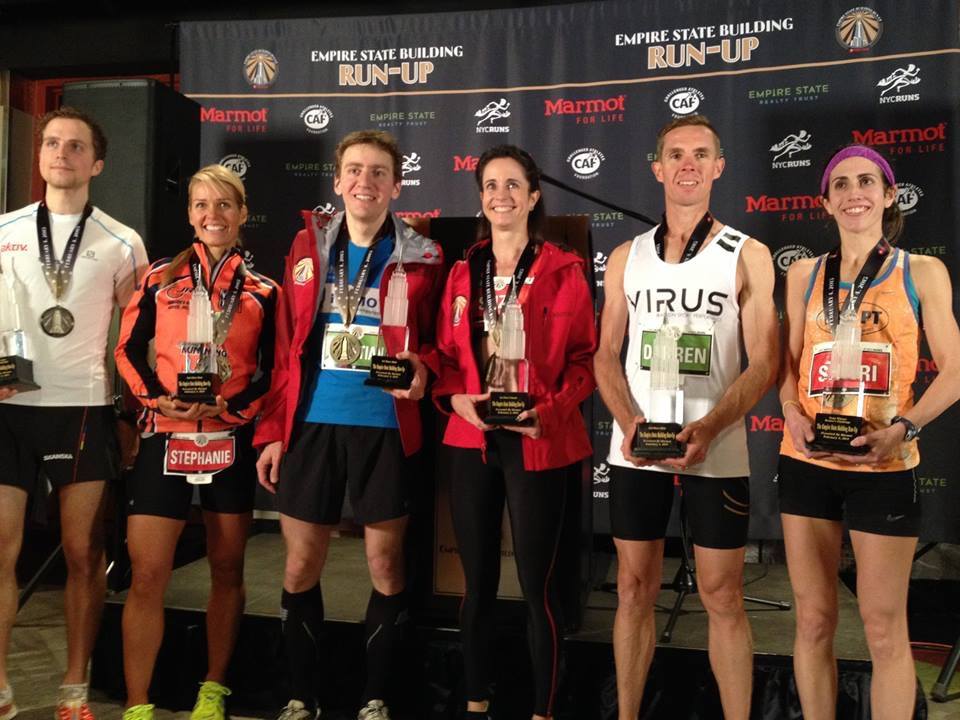
Congratulations to Christian Riedl on an amazing first win at ESBRU last night. The German held off last year’s champion Thorbjørn Ludvigsen to take the win by a very narrow margin of just three seconds. His winning time was 10:16. Australian Darren Wilson took third spot with a sub-11 minute finish. It was good to see Sproule Love take a few seconds off his 2013 time and take fourth, with Italy’s Emanuele Manzi claiming a strong fifth place, in what we think may have been his first attempt. This follows on from his recent second place finish at the Swissotel Vertical Marathon in Singapore last year, showing he may well be one to watch this season.
In the women’s race it was in many ways business as usual as reigning ESBRU and Tower Running World Cup champion Suzy Walsham demonstrated her supremacy by taking an incredible sixth title, with a winning margin of over a minute. Americans Stephanie Hucko and Shari Klarfeld completed the podium, with only five seconds separating the pair in what must have been quite a battle on the fairly narrow staircase.








 Tower Running UK