space-needle

Tristan Roth powered to a new course record at the Base 2 Space event in Seattle yesterday, with a winning time of 4:17.

Roth took three seconds off the previous course record set by Sproule Love at the 2018 event, on his way to the top of the 832-step tower.

The new record time was 17 seconds faster than Roth’s previous best of 4:34, which won him the event in 2016.

It’s the fourth time the Seattle man has finished on the podium in the event’s five-year history.

Mark Henderson, 52, rolled back the years to secure second spot in 4:35, a massive 35-second improvement on his time from last year. Russell Webb also made a huge improvement on his previous best time to finish third in 4:49.

In the women’s division, Jessica Pickett finished in 6:00 to take her first win at the event. Debbie Officer (6:17) and Tricia O’Hara (6:24) took second and third place, respectively, for the second year in a row.

Intercontintent Tower Run winner 2019

Piotr Lobodzinski made it 11 wins from 11 starts in 2019 with victory at the InterContinental Tower Run in Warsaw, Poland.

Lobodzinski climbed the hotel’s 959 steps in 4:42 to maintain his unbeaten run, and make it three wins in a row at the venue in the Polish capital.

Mateusz Marunowski was second in 5:17, while Daniel Koszykowski took third in 5:32.

71786405_2356866957766141_5758845128621948928_o

Piotr Lobodzinski on his way to winning the InterContinental Tower Run, Warsaw

In the women’s division, Iwona Wicha took the win in 6:28, ahead of Agnieszka Kolano (6:50) and Ilona Gradus (7:03).

https://www.instagram.com/p/B2wKmnEoXdO/

More on this:


Eiffel tower at night

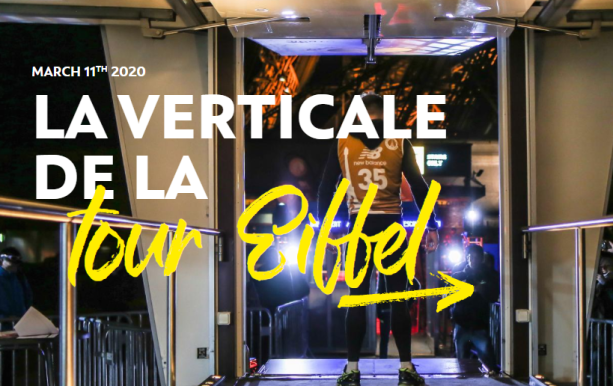
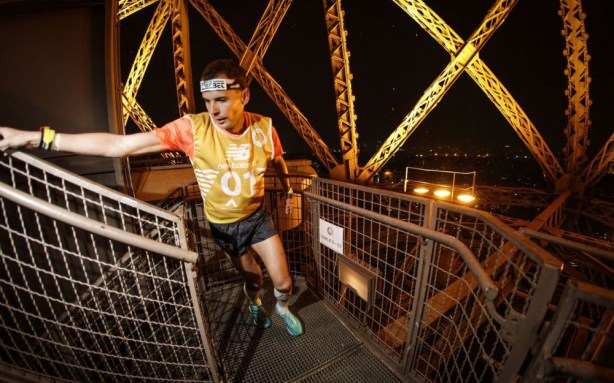
La Verticale de la Tour Eiffel is one of the most prestigious stair running events in the world and in 2020 it returns for its sixth edition.

With just 130 entry spots up for grabs, with 40 of those set aside for elite athletes, competition just to take part is fierce. But the Eiffel Tower stair race is one of the best in the world and a joy to take part in. So if you’re free in March and want a challenge it’s well worth applying.

Read on to find out when the race is and how to enter.

When is the Eiffel Tower stair race 2020?

The sixth edition of La Verticale de la Tour Eiffel will take place on Wednesday 11th March 2020 at the Eiffel Tower in Paris, France.

The event will start at approx. 8pm (local time) with amateur runners setting off first at around 8.10pm. The first athletes in the elite wave will likely set off around 9pm.

Note: the race format for the 2020 edition of La Verticale de la Tour Eiffel has changed from the traditional climb up 1,665 steps to the top of the tower.

It will now involve two qualifying runs of 665 steps and then a final run for the fastest 10 women and 20 men, again up 665 steps.

Read our announcement for more details on the changes for 2020.

La verticale de la tour eiffel 2020

How to enter La Verticale de la Tour Eiffel?

The pre-registration process is now open at verticaltoureiffel.fr where you should find answers to all your questions.

81 places are available for amateur athletes who will be selected via a lottery.

  • In order to be considered for the lottery you have to fulfill some pre-selection criteria, such as proof of participation in a stair race over 700 steps, or completion of a 10km road race in under 50 minutes, within the past two years.

40 places are set aside for elite athletes from stair racing, trail running and road racing, selected by a panel of judges.

  • When you pre-register you are asked to select elite or amateur entry. A panel of judges will select 40 elite runners from those who’ve applied. Those who aren’t selected will go into the lottery for amateur spots.

10 people will be selected by the event organisers as wildcards.

  • In order to be considered for one of these wildcard spots you’ll have to submit a letter explaining why you should get one. Historically they’re reserved for event partners, celebrities, disabled athletes or people who’ve overcome the odds to make it to the event. Even if you don’t think your ‘story’ is compelling enough, it’s still worth submitting a letter anyway, in case you don’t get picked in the lottery. You never know.

It costs €10 to register and if you’re selected you’ll then have to pay an additional €50 to secure your place. You’ll also need to make sure you provide a signed medical certificate to clear you to participate.

The registration portal will close on Friday 6th December.

The elite selection will be completed on 17th December and the draw for the amateur places will happen on 19th December.

What is the Eiffel Tower stair race?
7611975_b3cd436c-290c-11e8-8762-ff73745f8155-1_1000x625

Five-time winner Piotr Lobodzinski

The Eiffel Tower is the historical home of tower running. The first recorded tower race in the world took place there in 1905 and a second event was held in 1906.

Decades later, in 1995, another stair race was held. This time a select group of world-class French athletes from various disciplines battled it out for top spot.

After a 20 year hiatus, stair climbing returned to the tower again in 2015, when the first edition of La Verticale took place.

The modern race involves a climb up 1,665 steps to the third platform of the Eiffel Tower; considerably more than the very earliest editions that covered around 730 steps to just the second platform.

The race has had only two winners. Suzy Walsham (AUS) and Piotr Lobodzinski (POL) have both won the event five times in a row. They’ll aim to be back in March to see if they can make it six on the trot.

Looking for a race in the UK? Check out our UK tower race calendar to find out what events are on near you.

Tower races are often won and lost by the narrowest of margins, so finding ways to make small gains can make a big difference to where you finish in a race.

Ergogenic aids, or performance enhancers, are one easy way to potentially get ahead. Alongside proper training, these simple and natural additions to your race day prep could see you clocking faster times on the stairs.

Read on to find out the three natural performance enhancers that could change your tower running.

Caffeine

Caffeine

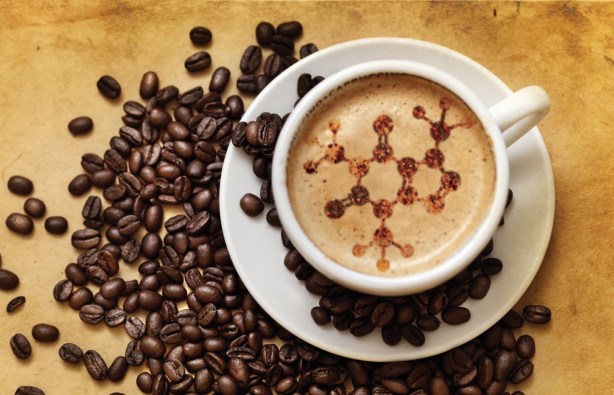
There’s a good reason why the World Anti-Doping Agency (WADA) had caffeine on its list of banned substance up until 2004. Its performance enhancing qualities are well established.

Up until that point you had to be ‘caught’ with a dose of 1,200mg (somewhere around 10-12 cups of coffee) in your system close to competition to be considered doping. To be fair, if you were necking that much before an event, the chances were you were probably utilising it disingenuously as a performance enhancer.

But since coffee and energy drink usage in particular have become more mainstream, WADA has softened its stance on caffeine. It’s no longer banned, but since 2017 it has been put on WADA’s Monitoring Program.

That means caffeine levels in athletes can be monitored for patterns of use, or abuse, but there’s no longer a set limit as to how much you can have in your system before competition. If caffeine intake is a normal part of your dietary routine, you’re OK; but if you’re specifically ingesting loads just before a race you could potentially be flagged for a violation if it doesn’t fit in with your regular pattern.

Of course, WADA regulations haven’t found their way into tower running yet anyway, but it’s worth noting the official position adopted by them.

Interestingly, the NCAA (the National Collegiate Athletic Association in the USA) still has caffeine on its banned list. Ingest 500mg of coffee within three hours of the start of one of their sanctioned competitions and you run the risk of a positive drug test.

Although the advantages of high levels of caffeine for performance have been established by multiple studies, you don’t need to go anywhere close to 1,200mg to reap the benefits of this centuries old performance enhancer.

Some studies have shown that caffeine can still have a significant impact on performance at much lower doses. In one test, trained runners cut an average of 4.2 seconds off their 1,500m time after taking 150-200mg of caffeine in the form of coffee (roughly two cups of instant) an hour before exercise.

In another study, cyclists extended their time to exhaustion by nearly 15 minutes while caffeinated with 330mg caffeine one hour before exercise.

Some of the established positive effects of caffeine include:

• Enhances endurance exercise performance
• Improves reaction time, concentration, and self-perceived energy levels
• Low doses increase energy expenditure and oxygen uptake without changing perceived effort, exercising heart rate, or fuel usage
• Delays feelings of fatigue, and lessens sensations of exertion and pain

That last point is probably most significant for tower runners. Delaying the onset of pain and fatigue by just a couple of floors could potentially see you clocking PBs at a bunch of towers.

Caffeine isn’t for everyone and it should be used judiciously, because at high doses it can be dangerous. The potential benefits will vary depending on a bunch of other factors, but even if you’re not a coffee fan, it’s probably worth experimenting with it in some form to see if it can work for you.

Research shows the effects peak around one hour after consumption, so make sure you time it before your climb to maximise the benefits.

Peppermint oil

peppermint oil

The evidence on this one is less well established than for caffeine, but results from studies have shown that inhaling peppermint oil prior to exercise, or taking it orally as a supplement, can produce some positive effects on performance.

In a 2013 study, ’12 healthy male students every day consumed one 500 ml bottle of mineral water, containing 0.05 ml peppermint essential oil for ten days.’ The results of a series of exercise tests on a treadmill taken one day before and one day after the supplementation period showed ‘significant increases’ in power output, time to exhaustion and energy output.

Additional studies have examined the ergogenic benefits of peppermint oil when inhaled as a vapor. A 2000 study concluded that there was an ‘association found between administration of peppermint odor during near-maximum treadmill exercise with a reduction in RPE (rate of perceived exertion) and increase in perceived performance.’

A further test, although this one done on rats, showed that the inhalation of peppermint oil ‘powerfully relieved the indicators of exercise-induced fatigue’. There was also a reduction in blood lactate (BLa) and blood urea nitrogen (BUN), which is another sign of reduced fatigue.

Tower runners work at the edge of exhaustion for significant parts of their races. A reduction in the signs of fatigue and the rate of perceived exertion are exactly the sorts of effects they could benefit from.

Yes, you may look a bit odd standing in the lobby before a race, rubbing essential peppermint oil across your top lip and smelling like a sickly child who’s been slathered with Vicks vaporub. But who’ll care when you’ve taken 10+ seconds off your personal best time at the top? Worth a shot, for sure.

Beetroot juice

83fda72a-63617360-1200x630

Beetroots, like many vegetables, are high in nitrates. When ingested, the nitrates in these items go through a set of conversions within the body until they become nitric oxide.

Increased levels of nitric oxide in the body have been shown to increase blood flow, improve lung function, and strengthen muscle contraction.

For example, a test on masters age competitive swimmers found they significantly increased their anaerobic threshold after beet juice supplementation compared to testing without. This means increased oxygen capacity allowed them to swim longer before reaching exercise failure after drinking beet juice.

In another study, ‘competitive cyclists who supplemented with beetroot juice improved their performance by 0.8 percent in a 50-mile test. Significant improvements were observed during the last 10 miles. Both oxygen efficiency and time to exhaustion were greatly improved after beet juice consumption.’

The ideal way to supplement with it is still a bit of an unknown. In some studies, the best results came from drinking beet juice 90-150 minutes before commencing exercise. But other findings suggest supplementing for as long as 15 days in the run up to a race.

Perhaps the best approach is to regularly boost your nitric oxide levels by including nitrate dense foods in your diet, such as celery, rocket, spinach and lettuce. Then you can top up on race day with beet juice.

If beetroot juice is not the one for you, you can up your nitric oxide levels with other supplements. Terry Purcell, one of the top stair climbers in the USA, makes use of the Kiyani Nitro Xtreme supplement which is derived from the noni fruit.

It’s worth keeping in mind that findings from one study indicated that caffeine can interact with beetroot juice and mask its ergogenic benefits. So you’re better off choosing one or the other, instead of doubling up with both before a race.

You may also be interested in:

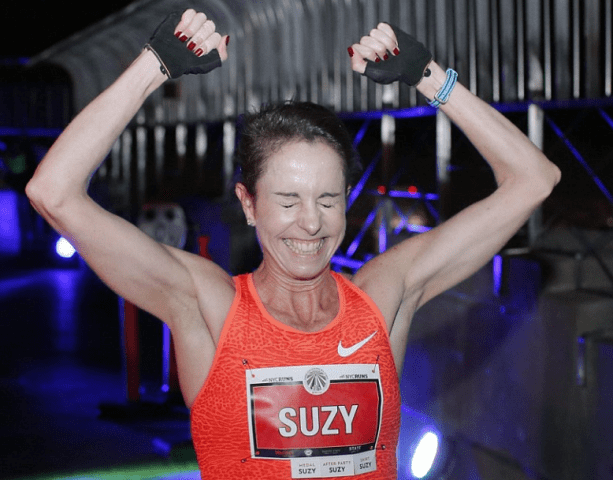
Suzy Walsham ESBRU

Suzy Walsham is one of the greatest tower runners of all time, so who better to hear from to find out more about the sport of stair climbing?

In this episode of the excellent Everyday Running Legends podcast, Suzy chats with Brodie Sharpe and discusses her journey from an elite track and field career to stair climbing super-stardom.

The episode also covers how she trains for a tower run, the differences between stair running and flat running, and her tips for those looking to start out in the sport.

Click the link below to listen to the full podcast:

Everyday Running Podcast – Reaching the top of the world in tower running with Suzy Walsham

You may also be interested in:

Penang Top Komtar Towerrun 2019

Soh Wai Ching clocked 7:39 to take the win at the Penang Top International Tower Run on Sunday.

The world number two was the only athlete to go under eight minutes, taking victory ahead of Kenya’s Lel Kipchirchir who climbed the Komtar Tower’s 1,377 stairs in 8:17.

Mohd Saddam bin Mohd Pittli, winner of the R U Tough Enough? Southeast Asia competition in 2018, was third in 8:32.

The win caps a great few weeks for Wai Ching. Last month the Malaysian runner secured second place at the fiercely contested 200-point Ostankino Tower Run in Moscow.

In the women’s division on Sunday it was Michele Tan who came out on top. Tan finished in 10:58, a long way ahead of Stephanie Chong (12:15) in second place.

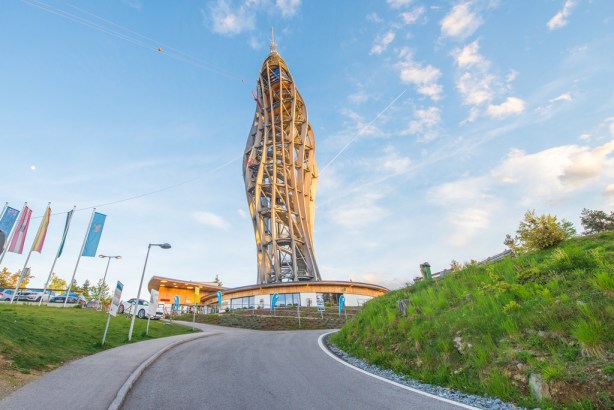
Pyramidenkogel-Aussichtsturm

Britain’s Sarah Frost took third place at the Pyramidenkogel-Turmlauf in Keutschach, Austria on Friday afternoon.

The British number one reached the top of the distinctive tower’s 441 steps in 2:45.04 to continue her impressive run of form in 2019.

‘It was a better result than I expected, so I am super stoked’, said Frost.

‘There’s still a large gap between myself and the legends of Windisch and Walsham, so I can’t wait to get back to training in London – lots of work to do to catch up.’

Austria’s Veronika Windisch, who set the course record at the inaugural event in 2018, returned to take the narrowest of wins ahead of Australia’s Suzy Walsham.

Windisch clocked a winning time of 2:36.42, while world number one Walsham finished agonizingly close in 2:36.68, to claim second.

Walsham followed the race with a ski jump run-up at the Red Bull 400 event in Planica, Slovenia on Saturday, where she finished fourth overall.

Sarah Frost is set to return to action on home soil at next month’s NSPCC Gherkin Challenge, where she is hotly tipped to break her own course record.

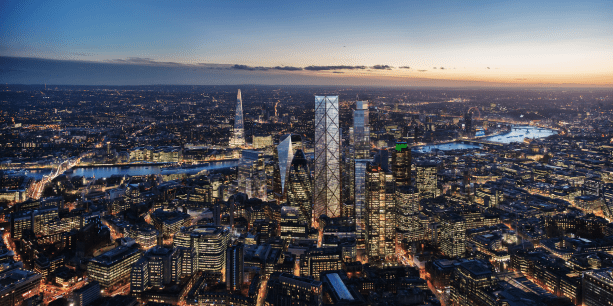
London skyline

This year saw the fewest number of stair climb events in the UK since 2014.

In 2015, a then record 14 stair running events seemed to herald a new era for the sport in the UK. This boom continued for a spell and in 2018 there were 16 pure stair races.

But this year the number of events has dropped off and the looming loss of another big race next year is casting a shadow over the future of tower running in the UK.

What’s the problem? Is it just a blip or is UK tower running in trouble?

Tower running is too London-centric

While it makes sense that the ‘home’ of tower running in the UK should be London – the proliferation of tall buildings is ideal ground for an HQ – it’s a necessity for the growth and promotion of the sport that opportunities are available for people in other parts of the country to take part as well. Unfortunately, these opportunities are disappearing.

In the last six years there have been stair races in Belfast, Birmingham, Bristol, Leeds, Leicester, Manchester and Portsmouth (we’re not including stadium stomps in this analysis, but Edinburgh would be included if we were). Planned events for Middlesbrough and Liverpool didn’t quite come to fruition for varying reasons, but for a time the scene outside of London was seemingly healthy and growing.

But in 2019 only Leicester and Manchester have hosted stair races outside of the capital. And, at the time of writing, the Christie Tower Run at Manchester’s Beetham Tower won’t be returning in 2020.

Not only has the sport’s spread throughout the country ceased, it’s fallen apart completely. It’s a massive disappointment.

Fortunately, London should be hosting a good set of stair races for the foreseeable future. But there’s a catch.

Tower running poverty: the reliance on charities

GherkinChallenge_2018-476

Although saddening, it’s no massive surprise that almost all the events that were once run around the country have ground to a halt.

Apart from the Spinnaker Tower-thon event in Portsmouth, every one of those events was put on by a charity. The events teams in those often small organisations are solely focused on getting the maximum return from every event they organise. If for just one year they don’t get the sort of return they expected or needed from the work and investment they put in, they often call time on their venture into stair racing and move onto promoting alternative activities that are more profitable for the charity.

But it’s not just a problem for charities. Even without any charity connection or fundraising minimum, plus a very reasonable entry fee of around £15, the Spinnaker Tower-thon struggled to attract the sorts of numbers needed to make it worth their while to continue hosting it. After a handful of years they called it a day.

Sometimes a charity will ride out a small turnout in the first year or two and dig in to see the event grow and grow. The LOROS Tower Run in Leicester is a brilliant example of this. They’ve been growing year-on-year since they launched in 2015, and hopefully 2020 will be their biggest event yet. They even offer a highly reasonable flat entry fee with no fundraising requirement, which has been very well received by the tower running diehards here in the UK.

But fundraising continues to be a challenge for committed stair climbers. Of the six stair races in London this year (we’ve excluded the multi-event Guy’s Urban Challenge that finishes with a stair climb), only one of them offered a straightforward non-fundraising entry at a reasonable price; the Broadgate Tower Run-Up back in July.

The Great Ormond Street Hospital (GOSH) event at the Walkie Talkie Building, Shelter’s Vertical Rush, the NSPCC Gherkin Challenge and the Rainbow Trust’s Grate48 event at the Leadenhall Building all require, for the most part, a commitment to raise at least £130 for the charity (GOSH are asking for £250).

There are some small exceptions, though. For £149 you can take part in the Gherkin Challenge without having to raise any additional funds – the alternative is to pay £20 entry and fundraise £250.

For most of the regular UK tower runners who tend to pay outright for their events, to save them the hassle of constant fundraising, the self-funded option provides a not insignificant saving of over £120. But paying £149 for a race lasting less than six and a half minutes for most of them isn’t really sustainable, especially if you’re hoping to do multiple races each year.

The race organiser on behalf of the Rainbow Trust’s Grate48 has managed to secure 10 male and 10 female entry fee only places for that event in November, which is fantastic. Everyone else, though, will have to pledge to raise £130 to take part.

Access is everything

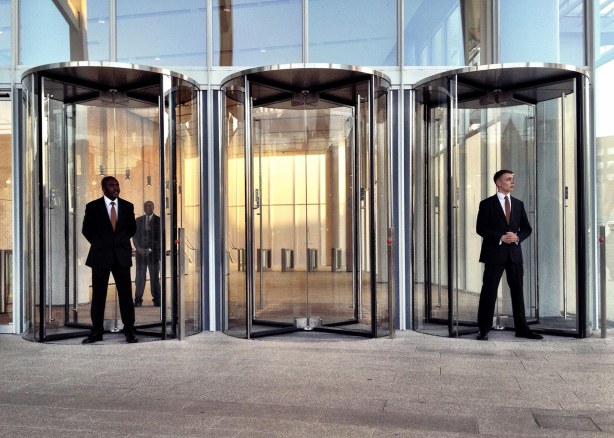
"Security staff at the Shard, London."

The fact is, there wouldn’t be a tower running community in the UK if it wasn’t for these charities putting on these events. So there is a deep gratitude there, for sure. It’s highly unlikely anybody would be racing inside the Gherkin, Leadenhall or Tower 42 if it wasn’t for the charity connection. But that’s also the problem.

Vertical Rush and the Gherkin Challenge have each been running for over a decade, but will they run for another decade? If, for whatever reason, these charities decide this means of fundraising isn’t working for them anymore and stop organising the events, the ‘sport’ of tower running in the UK will very likely disappear.

Will any of London’s big towers open up for non-charity affiliated stair climbing events? So far, only Broadgate Tower has done so. Perhaps others will in the future, but its a precarious position to be in for a ‘sport’ whose followers and advocates have ambitious notions of international legitimacy and even Olympic participation.

You simply can’t build a sport on the back of just a handful of venues that could potentially deny participants access at the drop of a hat, with nobody in the tower running community having any say or impact in the decision making process.

Of course this isn’t a problem for the UK only. Tower runners around the world face the same issues, whether its the dominance of charities in the organisation of races or just general issues with access.

Hope for the future?

Hopefully, the fantastic London-based Total Motion Events will continue their excellent work putting on events at Broadgate Tower, regardless. Their Total Motion Towerrunners group has seen a big rise in interest and they’re now hosting training sessions at Broadgate Tower in London two nights a week. The relationship between Total Motion and Broadgate Tower is certainly a cause for much needed optimism.

broadgate-tower39bf77a1f42264a8875eff0000c536f5

London’s Broadgate Tower is host to weekly tower running training sessions

Participation at Vertical Rush, LOROS Tower Run, the Gherkin Challenge is all on the rise, so that’s another positive. But if the number of events held each year continues to fall, the tower running eggs begin to drop into one basket held by the charities, and that’s a problem. If they call time on their respective events, the bottom falls out of it all.

The loss (still to be fully confirmed) of the Christie Tower Run is a blow, but 2020 may yet see the return of other races, such as the popular UpSlideDown event at the ArcelorMittal Orbit in London’s Olympic Park which didn’t run this year. It’s to be seen.

Perhaps as tower running garners increased attention, more race organisers will sit up and explore options for putting on stair climbs at alternative venues. There are certainly enough options in London. Tower running doesn’t just have to function around the high-profile towers – although it would be nice.

People have been running stairs in the capital since at least 1730 and one of the first competitive stair races in London was organised back in 1968. Ideally, with this rich base, the sport would be further along in its development.

Ultimately, towers aren’t purposely built for people to race in, so, in order to take part in their chosen sport, tower runners will always be reliant on people whose main interest isn’t tower running. Benevolent real estate moguls with a diehard passion for stair running aside, that means the power will forever be out of the hands of tower runners.

Tower running could have a bright future in the UK, but unfortunately achieving that doesn’t rest solely with those who have a love for it. And that’s a real tough spot to be in.

Lobodzinski Empire State Run Up 2019

Piotr Lobodzinski is unbeaten so far in 2019 and now appears practically invincible. Is it a problem for tower running or does it add to the excitement of following the sport?

Speaking after winning silver in the 400m final at the 1996 Olympic Games in Atlanta, GB athlete Roger Black admitted that he and six of his fellow athletes had been competing for second place. They all knew they stood no chance against the incredible Michael Johnson from the USA, who won the gold medal in a new Olympic record.

Johnson didn’t finish any lower than second in a 400m race from the start of the 1993 season to the Olympic final in 1996 (a total of 37 races). And those second-place finishes were in the heats or semi-finals of major championships where he was likely just doing enough to qualify.

This is just one example of extreme one-sidedness in athletics. Usain Bolt had a 45-race win streak from 2013-2017, which came after his complete dominance at the World and Olympic finals before that period.

Going back a little further, Ed Moses dominated the 400m hurdles for a full decade, amassing a win streak of over 100 races.

Great runners

Moses, Johnson and Bolt all dominated for years

But dominance in the track and field sprint events is a little different. Even when Moses, Johnson and Bolt were winning repeatedly, the margins of victory were quite often small. That’s expected in the 100m and 200m (although Bolt of course had some famously massive wins in those events), but in the 400m races, Johnson and Moses were also often only winning by less than half a second.

That is, their races were still highly competitive…for the most part.

What about tower running?

Two-time tower running world champion Piotr Lobodzinski has been on top of the sport for over five years.

He’s been beaten before – Tomas Celko, Christian Riedl and Mark Bourne have all bested the Polish star over various distances on occasion in recent years.

But this season Lobodzinski seems to have elevated himself to another level that has him out of reach of almost all of his rivals.

Has the competitiveness gone out of men’s tower running at the very top?

Is a sport dominated by one person in danger of becoming boring, or does this display of individual brilliance serve as a welcome inspiration for tower running fans and participants?

Lobodzinski’s season so far

After winning his second Towerrunning World Championship title in 2018, the Polish superstar headed into the 2019 season with confidence high.

He got things underway in February in Dubai, with a perfunctory win at the 1,600-step Vertical Run Almas Tower, where he finished 91 seconds ahead of the second-placed male. High level international competition was largely absent from the event.

Next was the Rondo 1 race in Warsaw, Poland. Back on home turf, Lobdodzinski was expected to be pushed a bit harder on the mid-length course by some of Europe’s top tower runners, and he was.

But he still came out on top relatively unscathed, finishing 14 seconds ahead of runner-up Görge Heimann. Although it may not seem that big a gap to the uninitiated, considering the length of the course – 836 steps – it is fairly significant.

In March, he was back in Paris at La Verticale de la Tour Eiffel to attempt to win the event for the fifth time in a row.

A very serious test was anticipated ahead of this race. Only Mark Bourne was absent from the full list of elite tower runners from around the world in attendance.

At previous editions it had been Germany’s Christian Riedl who had come closest to toppling Lobodzinski. In 2016, less than six seconds separated the pair. In 2017, the margin of difference was just under 10 seconds, while in 2018 it was 15 seconds. Although the gap was growing, it was still manageable, and an improving field of competitors was expected to launch a stiff test.
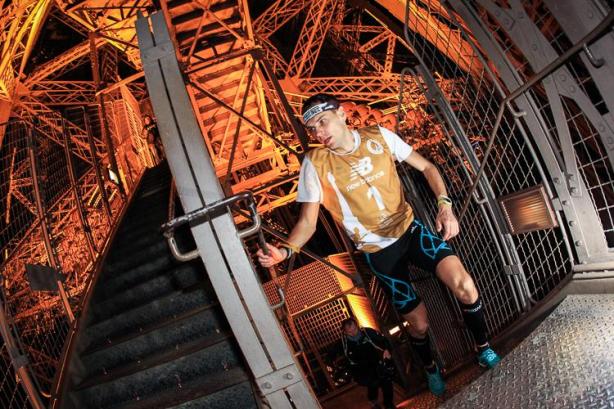
Lobodzinski La Vertical Tour Eiffel 2019

La Verticale de la Tour Eiffel 2019

But Lobodzinski finished an unbelievable 50 seconds ahead of Jakob Mayer in second to secure a fifth straight title. Conditions on the day were bad, and it clearly impacted the runners, but Lobodzinski was unfazed. Once again he dipped under the eight minute mark, clocking a time very consistent with all his other wins.

It was this performance that made keen observers sit up and really take in how supreme he was becoming. Yes, he had been on top for some time, but this win was different.

Dominating the Vertical World Circuit

With a couple of solid wins at European venues in the bag, Lobodzinski headed to Asia to compete on the Vertical World Circuit.

First up was the 2,919-step Lotte World Tower International Sky Run in Seoul, Korea and a face-off with Australian star Mark Bourne.

Lotte World Tower run up race 2019

Lotte World Tower, Seoul, Korea

Bourne was the record holder at the tower, having set the best time of 15:44 in 2017.

Lobodzinski had beaten Bourne at the 2018 edition in a personal best of 15:53.

At the race on 6th April, Lobodzinski set a new course record of 15:37 – a huge 16 second improvement on his previous fastest time. Bourne himself ran a magnificent race to finish just two seconds behind in 15:39.

A week later the pair went head-to-head again in Milan in another leg of the Vertical World Circuit. The 1,027-step Allianz Tower serving as the venue this time.

At the finish, less than a second separated them. But once again it was Lobodzinski who came out on top, setting a new course record of 5:16 in the process.
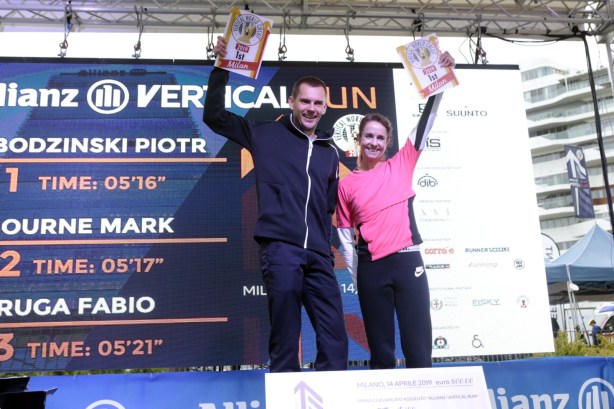
Allianz Vertical Run 2019 Lobodzinski win

Lobodzinski celebrates his win in Milan alongside fellow winner Suzy Walsham

Bourne was proving Lobodzinski’s biggest rival. Each time coming so close, but just not getting the breaks.

Two weeks later the Australian had another chance to attempt to beat his rival. The action returned to Asia for the inaugural Vinpearl Luxury Landmark 81 – Race to the Summit in Ho Chi Minh City, Vietnam. 2,383 steps stood between the bottom and the top of the world’s 14th tallest tower.

Bourne and Lobodzinski had been splitting victories for a number of years now in some of the regions tallest towers, so another close contest was anticipated. Especially after the particularly tight race in Seoul.

But once again Lobodzinski pulled out a performance for the ages. His finishing time of 11:35 was a massive 50 seconds faster than Bourne’s.

Pulling away in May

A week later on 5 May it was the Taipei 101 Run Up, where Lobodzinski had won his second world title in 2018.

He completely dominated again. This time running a personal best 10:46. Bourne was once more his nearest rival, but he finished 41 seconds back in 11:27.

A gap was opening up.
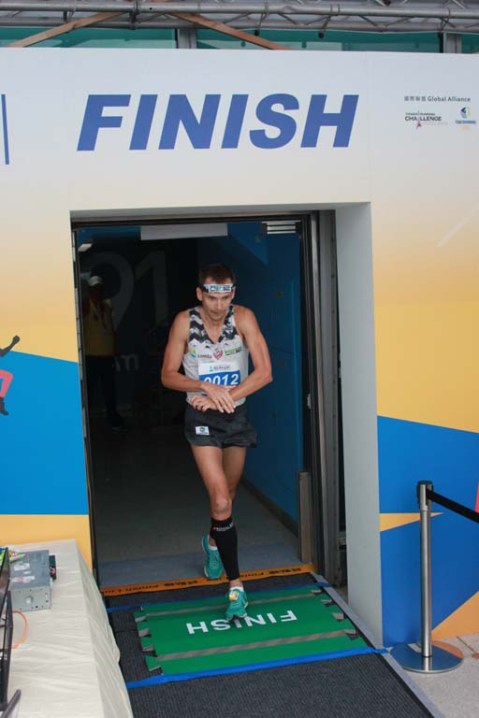
Taipei 101 Run Up 2019 Lobodzinski

Piotr Lobodzinski wins the 2019 Taipei 101 Run Up

On 14 May the Empire State Building Run-Up welcomed Lobodzinski. There was no Bourne in attendance, but Soh Wai Ching and Fabio Ruga were there to keep Lobodzinski on his toes.

But in reality they didn’t. Lobodzinski ran one of the fastest times ever at the venue (becoming the second-fastest man ever behind only Paul Crake). He crossed the line in 10:05, a full 1:13 ahead of Wai Ching in second place.

Lobodzinski Empire State Run Up 2019

Lobodzinski crosses the Empire State Building Run-Up finish line in the fifth fastest time ever

Had there been a shift in the dynamics of the competition? Were the other runners competing for second place? It was beginning to appear that way. Three races on the trot and nobody had come even close to challenging Lobodzinski.

At the end of the month he returned to Wroclaw, Poland where he clocked another straightforward win, this time against almost exclusively Polish competition.

A quiet June and July followed, with a break from tower running.

Another level of dominance

On 24 August he returned to action at the 1,704-step Ostankino Tower in Moscow.

Lobodzinski had finished second there in 2018 behind Christian Riedl, trailing the German by just a second.

Riedl was absent this time around, but even if he had been in attendance it probably wouldn’t have mattered anyway. Lobodzinski was on another level and he set a new course record of 9:36, taking 15 seconds off the previous best time.

The perfect season?

So let’s ‘punch the numbers’, so to speak.

  • Ten races
  • Ten wins
  • Four course records (Lotte Tower, Allianz Tower and Ostankino Tower, plus default record at the inaugural race at Vinpearl Luxury Landmark 81)
  • Two additional personal bests (Taipei 101 and Empire State Building)

Lobodzinski has been on top for a number of years now, but this season he is showcasing an unprecedented degree of dominance. It feels like he is now competing on a level all of his own. There may even be more PBs in some of the races, such as Wroclaw, we’re unaware of. It’s unbelievable.

As a fan of the sport it’s exciting to see an athlete at the top of his powers, breaking records and getting closer to marks such as the mythic sub 10-minute ESBRU finish.

Personally, we like to see athletes like Lobodzinski raising the bar, bringing new levels of excellence to the sport and showing what’s achievable. But there’s a limit to how long it can go on for before things start to get a little dull, and we think men’s tower running is fast approaching it.

A key element of the appeal of following elite level sports is the competition. Take that away and what’s left?

To be fair, it’s not 100% clear that Lobodzinski has completely pulled away. But he’s been winning almost everything there is to win for close to five years and his most recent set of performances this year do indicate a shift of some kind.

If he completes the ‘perfect’ season by going unbeaten in 2019, and does so by continuing to clock significant winning margins along the way, it will be hugely impressive, but it might also have a negative impact on the appeal of the sport from the fan’s perspective.

Yes, Mark Bourne was just one or two seconds away from winning a couple of those races earlier in the year, but Lobodzinski has since opened up a gap. Bourne is capable of getting back to winning ways, but if he will or not remains to be seen.

Christian Riedl is off the scene, only dipping in for the occasional race here or there.

Soh Wai Ching and Ryoji Watanabe are making great gains, but they still appear some way off being considered strong enough rivals to topple Lobodzinski.

There are four races left in the Vertical World Circuit where we might get to see Lobodzinski and Bourne go head-to-head again. Other races outside of the VWC will also likely see Lobodzinski face the best in the world.

Will they be able to rein him back in or will we all just be following the Piotr Lobodzinski Show until he calls time on his glittering career?

But let’s be clear. Despite the slightly provocative title of this post, we are massive fans of Showtime Lobodzinski. He is a brilliant ambassador for the sport and we thoroughly enjoy following his stair climbing exploits around the globe. He’s making the most of his powers to reap the rewards and accolades of years of hard work and training, and long may it continue.

We’d love to see him complete a perfect, unbeaten run in 2019, but maybe he could falter at least once in 2020…just to keep things interesting.

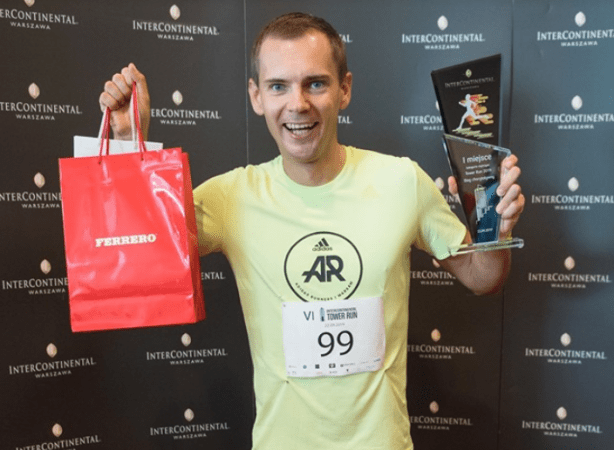
Valentina Belotti 2019

Valentina Belotti set a new course record on her way to victory at the Valle Camonica Vertical in Malegno, Italy on Saturday (31 August).

The in-form Italian was untouchable as she climbed the 2,975 steps (with 750m of vertical gain) in a new record of 25:51, taking a massive 1:20 off the previous best time.

The victory made it two wins from two races (plus two course records) in just seven days for the 2009 world mountain running champion.

It followed her stunning victory the weekend before (24th August) at the 1,704-step Ostankino Tower in Moscow. There she set a new course record of 10:54, easily beating a stacked field of international tower runners that included the world number one Suzy Walsham (second in 11:40) and American Cindy Harris (third in 12:46).

ostankino-tower-tour

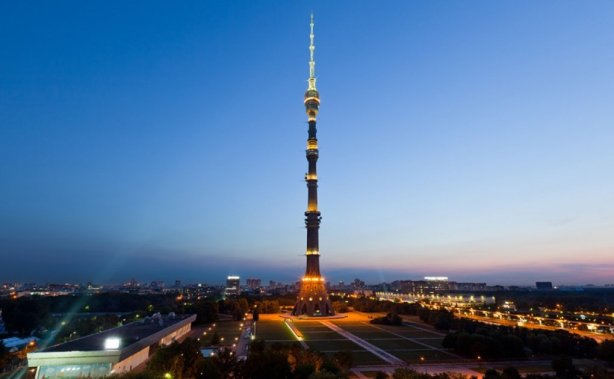
The Ostankino Tower in Moscow

Belotti has become a dominant force on the emerging Italian outdoor stair climbing scene. Last year she won at the 535 in Condotta event in Moio de’ Calvi, in similarly dominant fashion. She is now taking this form back indoors more consistently now, securing wins and podium places around the world.

It’s somewhat of a renaissance for the mountain running star. A four-time winner at Taipei 101 (2011-2014) with multiple VWC stage wins to her name as well during that period, Belotti was the dominant force on the global tower running scene in the early to mid-2010s.

She focused her athletic endeavours elsewhere for a few years, popping up occasionally for races, but not committing fully to the stair running circuit.

However, in 2018, her second-place finish at the tower running world championship event at Taipei 101 heralded the return of one of the best stair climbers ever.

If Belotti can maintain this type of form throughout the winter and into the World Championship year of 2020, she may prove to be the greatest challenge to the dominance of reigning world champion Walsham.

China Wing HOtel

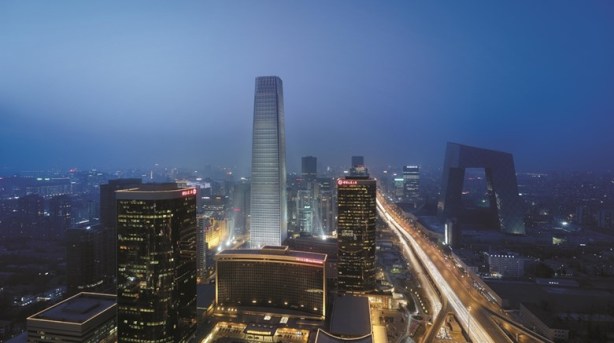
Suzy Walsham took victory at the China World Summit Wing Beijing for a seventh straight time on Saturday.

Walsham, the course record holder at the 2,041-step tower, reached the top in 11:59 to secure maximum points in the Beijing leg of the 2019 Vertical World Circuit.

The reigning world champion led from the claxon, eventually pulling away from Linming Chen (12:49) and Finland’s Laura Manninen (13:04) in the second half of the race.

https://www.instagram.com/p/B15r0KLnfJL/

‘I wasn’t feeling great in the warm up’, said Walsham. ‘But [I] focused and pushed hard and got the result I wanted. I focused on my own race and did not get distracted by the other runners. I was able to win by not going out too fast early on, and maintained a pretty good rhythm pulling away around the 30th floor, and it was head down to keep on going.’

The finishing time was 13 seconds off the course record she set back in 2013, but it was a very welcome return to top spot on the podium for the Australian.

The previous weekend (24th August), Walsham had to settle for second spot as former World Mountain Running Champion (2009) Valentina Belotti took victory at the Ostankino Tower in Moscow.

https://www.instagram.com/p/B11UsMynmkC/

The race was the seventh in the 11-race Vertical World Circuit. It was a third win for Walsham (Milan, Ho Chi Minh City, Beijing) alongside the second place she secured in Seoul, but Laura Manninen remains on top of the overall rankings.

The next race will take place at Two Shanghai IFC on 20th October. Walsham is also course record holder at that 1,460-step tower, and she will be expected to repeat her 2018 win.

Heading into the latter part of 2019 the UK stair racing season is winding down, but there’s still one big event left to sign up to.

The NSPCC Gherkin Challenge has been running for over a decade and remains one of the biggest and best stair climb events in the UK.

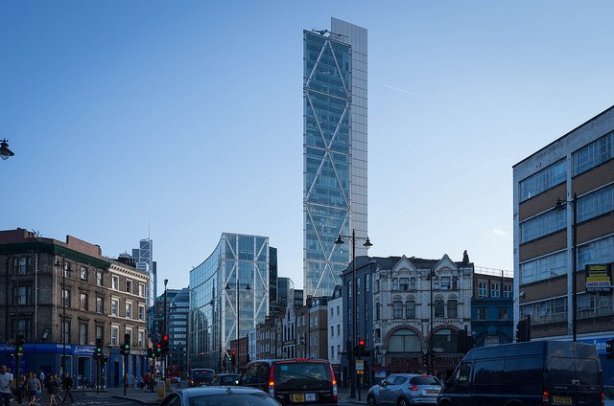
Read on to find out all the key info on the NSPCC Gherkin Challenge 2019, including who might be in contention to set a new course record.

The NSPCC Gherkin Challenge

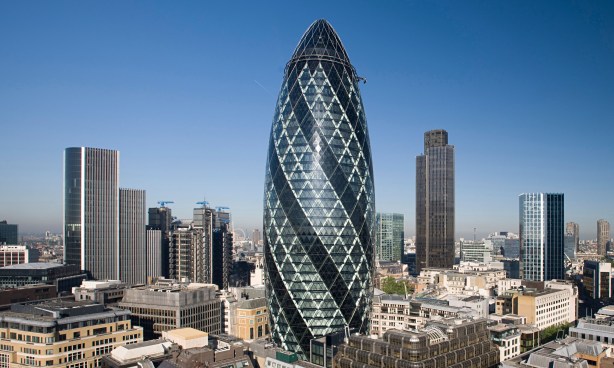
The Gherkin

What is it?

This challenging, charity stair climb event from the NSPCC returns for it’s 11th edition this year, giving runners the chance to climb 1,037 steps to the top of The Gherkin (aka 30 St Mary Axe). Entry is £20, with participants asked to commit to raise £250 sponsorship. Or, you can pay £149 upfront and forget about the fundraising.

Why should I do it?

Firstly, it’s an excellent cause and charity that deserves support. The NSPCC is the UK’s leading children’s charity and runs numerous projects to help safeguard youngsters and prevent abuse.

Secondly, the Gherkin Challenge is the second-biggest stair running event in the UK – after Vertical Rush – which makes for a great atmosphere on the day. The NSPCC have been running this successful event for over a decade now meaning they have a lot of experience about what works and how to put on a fun and exciting event.

Finally, this promises to be a competitive event where some of the best UK tower runners will be looking to break records. If you’re keen to test yourself against some of the top men and women in the country, this is one of the last chances you’ll get to do it in 2019.

Italy’s Fabio Ruga set the men’s course record of 4:07 back in 2010. Could Ruga’s time, or Rich Sirrs’ UK record of 4:23 set in 2015, be under threat?

Competition in the men’s stair races in the UK has really stepped up a level this year, with Mark Howard and Laurence Ball pushing the limits. Either man could well be capable of challenging those times.

The current women’s record of 5:33 is held by British stair running sensation, Sarah Frost. She is anticipated to demolish that time in October, so you could be there to witness history!

It’s definitely not one to be missed.

When is it?

Sunday 27th October 2019 at The Gherkin, 30 St Mary Axe, London EC3A 8EP

How do I sign up?

Gherkin Challenge 2019 registration

Check out our 2020 race calendar for a full list of upcoming stair climbing events in the UK.

It’s hard to believe that Londoners have been racing up stairs for almost 290 years, but it’s true.

In 1730, a young man took on the challenge of running up and down what at the time was one of the capital’s tallest structures.

Read on to find out more about what surely must be the earliest record of competitive stair running.

The venue: The Monument to the Great Fire of London

The Monument commemorates the Great Fire of London that happened in 1666. The renowned architect Christopher Wren (of St Paul’s Cathedral fame) worked on its design along with Robert Hooke, and construction began on it in 1671. By 1677, the 202 feet (62m) column was complete. It was positioned 202 feet from the spot where the Great Fire had begun on Pudding Lane.

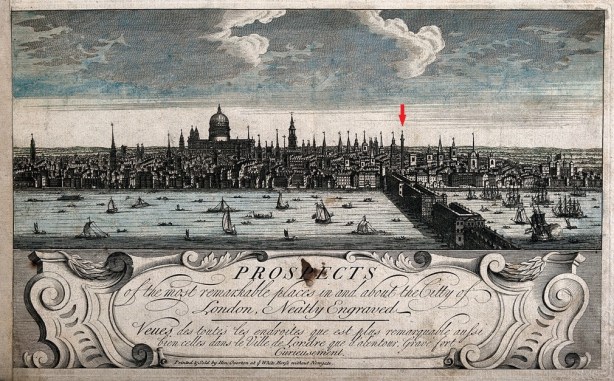
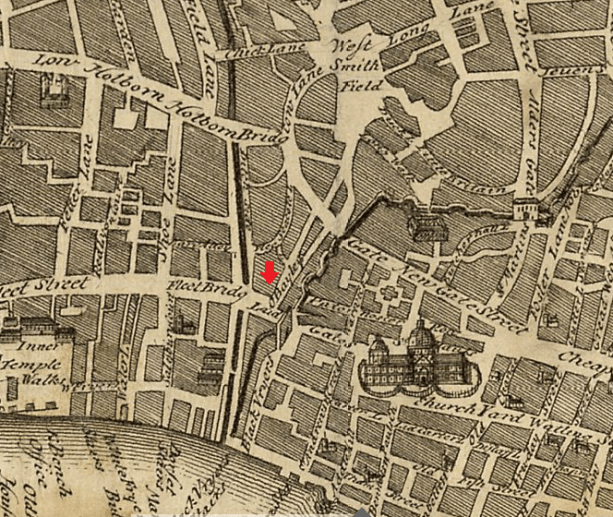
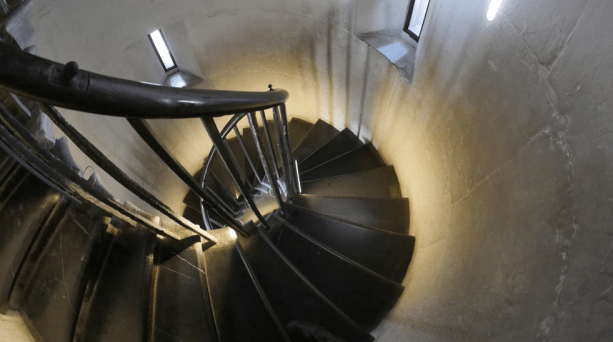
Inside, a narrow spiral staircase with 311 steps led up to a viewing deck at the top. You can see the Monument in the image below (highlighted by red arrow), just east of the old London Bridge.

London in 1730

An engraving of London made in 1730. The Monument can be seen to the east of London Bridge, highlighted by the red arrow.

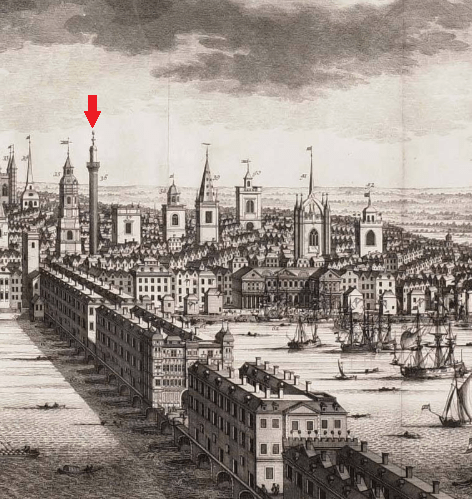
The Monument close up

A closer look at The Monument, taken from an engraving of the city of London made in 1710.

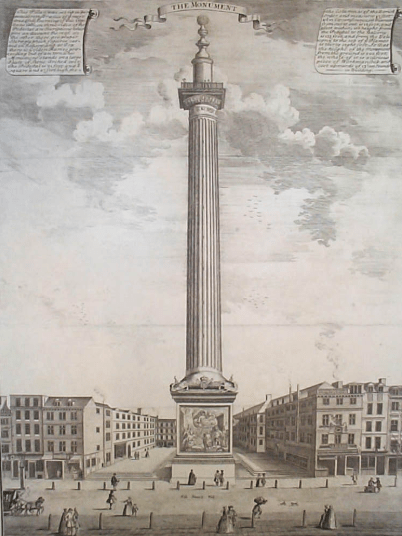
The Monument in 1753

The Monument in 1753.

The wager: the Baptist Head Tavern, Old Bailey

On Thursday, 24 September 1730, a group of men sat in the Baptist Head Tavern, which was at the southern end of Old Bailey, the road most famously known for featuring London’s central criminal court among its buildings.

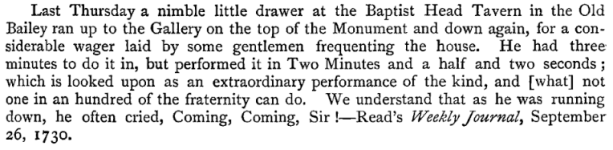
A small excerpt in the following Saturday’s (26th September) copy of J. Read’s Weekly Journal gives all the information we have about what transpired next, so some of the finer details remain unknown.

Old Bailey map Baptist Tavern

The Old Bailey (O Bayley) can be seen on this map from 1739. The arrow shows the approximate location of the Baptist Head Tavern at the southern end of the street, facing the courts.

The group made ‘a considerable wager’ among themselves, placing money on whether a barman (‘a nimble little drawer’) at the Baptist Head Tavern could run up the 311 steps of The Monument and back down again in three minutes or less.

The Monument is around a mile east of the Old Bailey, with an easy 20-minute walk getting you from one place to the other.

At The Monument, the speedy barman managed to complete the stair running challenge in just 2:32, which was deemed ‘an extraordinary performance’.

The Monument stairs

The narrow staircase inside The Monument.

Apparently on his way down the stairs he was shouting, ‘Coming, coming Sir’.

The actual copy from the Weekly Journal is reproduced below:

1730 exerpt

Although it wasn’t a ‘race’ as such (though still a race against the clock), this is now easily the earliest example of stair running for sport we’ve seen. It pre-dates the earliest proper stair race in Paris in 1903, by a massive 173 years.

Earlier this year, The Monument made good promotional use of this historic event to challenge visitors to beat the record of the ‘nimble little drawer’.

The venue tends to be fairly busy at all times of the day, so getting a clear run up and down is very unlikely. But you can enter the site every day from 9.30am for £4.50 to give it a shot. More info available on The Monument website.

You may also be interested in:

Sarah Frost smashed her own course record at the Broadgate Tower Run Up last Saturday to win the London leg of the Vertical World Circuit.

The British athlete held off competition from a loaded field of international stair climbers to reach the top of the 877-step tower in 4:40.

‘I feel amazing right now,’ Frost said at the top of the building in the City of London. ‘My plan was to forget what everyone else was doing and focus on my own goal which was breaking the five-minute barrier.’

‘My training must have paid off because I smashed it. I’m so very happy to be at Broadgate, a really special race for me because I train here and it’s so great to have the VWC here as well, bringing in lots more elite athletes. I’m already looking forward to the next race.’

Frost’s previous record of 5:04 was also bettered by four other women, with three of them dipping under five minutes.

Yuko Tateishi (JPN) was second in 4:52, while Anais Leroy (FRA) took third in 4:55.

Watanabe destroys men’s record

Japanese tower runner Ryoji Watanabe took an incredible 17 seconds off the previous men’s course record as he stormed to victory in 3:41.

Watanabe’s victory brings him up to fifth position in the current VWC rankings, and follows on from his win last month at One World Trade Center in New York.

‘As London is quite far from my country, Japan, I’m very happy to win the Broadgate Tower Run Up,’ Watanabe said at the finish. ‘I’m also very excited to have won two races of the 2019 Vertical World Circuit. Because the course was shorter than other VWC races, it was difficult for me to adjust during the race, but I was able to prepare the strategy for London after my New York win and perform well. I’ll be doing my best to win the next VWC race in Beijing in August.’

British newcomer Laurence Ball continued his incredible start to tower running by taking second place in 4:00.06.

Ball won his debut tower race at the Walkie Talkie Building back in March, and followed it up with a fourth-place finish at Vertical Rush two weeks later.

This great video captures some of the action from the day.

Full Broadgate Tower Run Up results

1980s westin stamford

Home to some of the biggest races in tower running, Asia is fast becoming the main arena of the sport. But stair running is nothing new to the region – Singapore has been hosting races for over 30 years.

Swissotel The Stamford hotel in Raffles City, Singapore is famous in the lore of tower running, most notably as the venue for the stair racing debut of the incredible Suzy Walsham in 2006. But the Australian superstar’s first race at the Vertical Marathon was actually the 20th edition of the event.

Read on to find out how the Asian tower running scene began in Singapore in 1987.

Back in 1987, the now Swissotel The Stamford was part of the Westin chain of hotels. William McCreary was managing director of Westin Stamford and the nearby Plaza, and under his stewardship the two hotels jointly designed to organise the first stair race event in the region.

As the tallest hotel in the world at the time, the 226-metre high Stamford was selected as the venue for the event. With 1,336 steps spread over 73 floors, the building would prove quite a challenge to the first time runners in Singapore.

All the funds raised by the ‘Vertical Marathon’ would go to the Community Chest, which had been established in 1983 to raise funds for social welfare projects in Singapore.

The trial run

Practice sessions in buildings hosting tower runs aren’t unique and nowadays a number of large events, particularly in the United States, grant participants access to the stairs weeks in advance of the race.

But the Vertical Marathon in 1987 was slightly different in that it appears to have officially timed the trial run, which was held in February a full three months before the big race in May.

The fastest man and woman at the trial run even got their pictures in one of the biggest English-language newspapers in Singapore, The Straits Times.

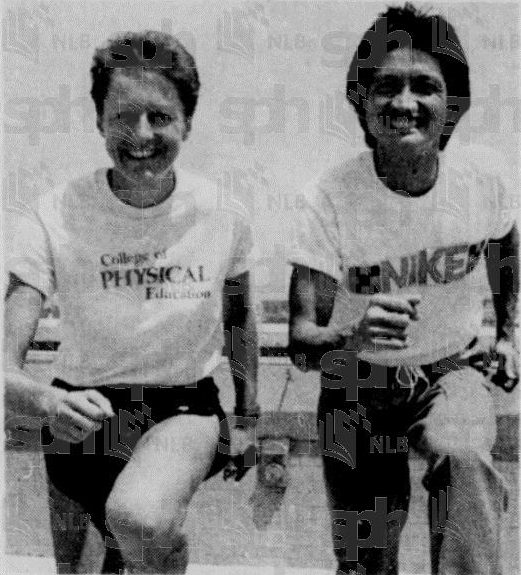
Time trial winners 1987

David Cheah Fook Choy, a 25-year old technician with the Public Utilities Board, was fastest to the top with a time of 8:20.

Mr Cheah said he was exhausted after the first 40 floors and had to walk the remaining 33. ‘But the heavenly view you catch at the top of the building makes it all worth the while’, he added.

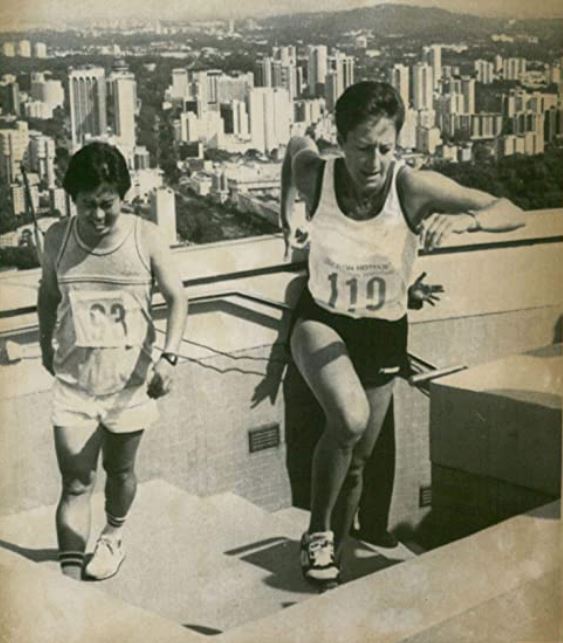
The fastest woman in the trial was a 31-year old British athlete, Helen Gilbey, a lecturer at the College of Physical Education. Already a well-established athlete in Singapore with a number of road races of varying distances under her belt, Gilbey finished with a trial time of 10:05.

‘After running 50 floors, oooh! I had to pull myself up using the safety banisters’, she told reporters.

The pair would head into the main race as firm favourites.

Vertical Events Sports Association

Before the main event had even taken place, an industrious group had got together and formed the Vertical Events Sports Association (VESA). The stated aims of the association were to promote and organise ‘all forms of vertical sport, including climbing steps or walking and running up high buildings’.

The Association was met with incredulity. It took six months for the Registrar of Societies to sign off on it – double the usual length of time it took to register a new association.

But Kenneth Jalleh, President of VESA, was determined to show this was no joke. ‘In no way are we going to try and push this as a fun thing. This is serious’, he told reporters. ‘Nobody realises just how good an exercise this is. It’s aerobic, it builds up a lot of strength and it’s dirt cheap’.

‘And we’ve got some of the tallest buildings in the world and most Singaporeans live in high-rise buildings’, added honorary secretary Kelvin Tan.

Jalleh also referenced the growing popularity of the sport in the USA and said that in 1986 a stair climb event at the World Trade Center had attracted 26,000 participants (Ed. note – this number seems almost impossible and we’ve been unable to find additional references to this event happening).

A public health warning

A little under a month before the race took place, The Straits Times carried an interview with two doctors, under the headline – ‘Vertical run only for very fit’.

The pair advised that those thinking of taking part in the upcoming Vertical Marathon should be very fit and train for the event.

Dr Low Lip Ping from the Singapore National Heart Association said: ‘I would not recommend anyone to take part in such an event as stairs racing, because it gives the person little chance to warm up and thus cause the blood pressure to go up too fast.’

Dr Giam Choo Kiong, Head of Sports Medicine and Research at the Singapore Sports Council added: ‘Running up stairs has been shown to be up to three times as strenuous as running on the level. Therefore, running up stairs continuously is not recommended for people who are unfit or do not train for such an activity.’

By this point, less than four weeks out from the race, 100 people had already signed up. They did so by picking up an entry form from the HR departments at either the Plaza or Stamford hotels.

The first Singapore Vertical Marathon

On Sunday 3rd May 1987 the first Singapore Vertical Marathon took place. 180 of the 250 available spaces had been filled, with 130 men and 50 women at the start line.

Participants had to be between 16 and 40 years old and each was asked to raise at least $73 – a dollar for each floor of the hotel they would be running up.

The prize for the fastest man and woman was a two-night stay at the Executive Suite of the Westin Plaza with American breakfast included, plus a year’s free membership at Raffles City Health Club.

The event got underway at 9am, with batches of four runners setting off every two minutes. Officials from the Singapore Amateur Athletic Association acted as marshals, timekeepers and recorders.

Spectators were gathered on the ground floor of the hotel to follow the action. Seven cameras had been set up at various points throughout the stairwell to relay the event live.

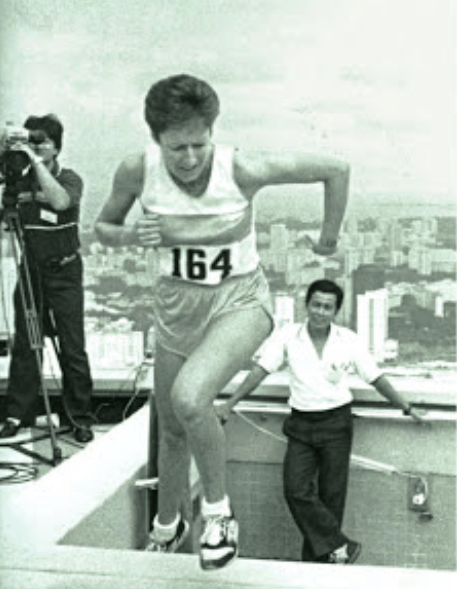
With her marathon-running background and strong trial run time of 10:05, Helen Gilbey was favourite to take the win in the women’s division. She told reporters she was hoping to finish in under 9:30. Gilbey did even better than anticipated, reaching the rooftop finish in 9:04.

Helen Gilbey SVM 1987

Helen Gilbey exits onto the rooftop of the Stamford hotel to win the first Singapore Vertical Marathon in 1987

Leong Siew May finished second in 10:25, and Tan Meow Liang was third in 10:41.

In the men’s race, Kenneth Keng took victory in 7:20. A successful athlete for a number of years, Keng had won the Singapore triathlon from 1983-1985.

Ken Keng 1987

He edged out the February trial run winner David Cheah who finished in 7:47. Another triathlete, Martin Hagger, finished third in 8:12.

Keng told reporters that the race was ‘grueling’, but that he’d do it again next year.

The organisers put forward Kenneth Keng’s and Helen Gilbey’s name to the Guinness Book of Records, and apparently Keng was listed in the 1987 edition.

The whole event raised $20,000 dollars for the Community Chest of Singapore.

1988 Singapore Vertical Marathon

Both 1987 winners returned on Sunday 8th May 1988 to defend their titles.

Kenneth Keng secured victory in a time of 7:35.

‘I went too fast in the beginning’, he said. ‘I should be very happy with the time as I’ve just recovered from the flu.’

Helen Gilbey said before the race she was aiming to finish in ‘anything under nine minutes’. She did just that, setting a new course record of 8:46.

Helen Gilbey 1988 winner SVM

‘I’m very pleased, and very relieved it’s all over as well’, said Gilbey. ‘My husband and I live in a 14-storey apartment block and we have been running nine times up the stairs three times a week. This has been going on for the last six to eight weeks.’

1988 singapore winners

Helen Gilbey and Kenneth Keng celebrate winning the 1988 Singapore Vertical Marathon

You may also be interested in: