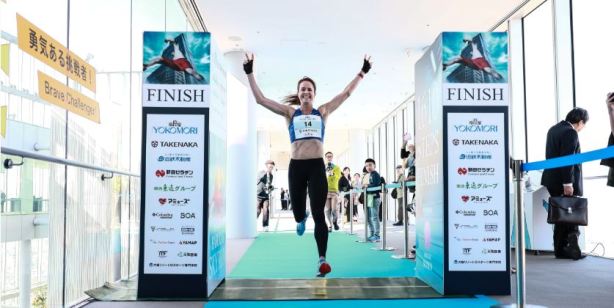
Suzy Walsham and Piotr Lobodzinski retained their Vertical World Circuit (VWC) titles yesterday at the grand finale in Osaka, Japan.
It was the eighth straight title for Australia’s Walsham, who first won the series back in 2012, and a sixth title for Piotr Lobodzinski.
The ten-event series has seen close races around the world throughout 2019. Starting in Seoul back in April, runners have since done battle in Milan, Ho Chi Minh City, Paris, New York, London, Beijing, Shanghai and Dubai before the final race on Sunday (Nov. 10) in Osaka.
The 1,610-step Abeno Harukas was the venue for the final event.
Heading into the race, Lobodzinski needed to place at least second to be certain of retaining his title. With a resurgent Mark Bourne (AUS) in the mix, and Ryoji Watanabe (JPN) seeking his first VWC title it was not an easy situation for the Polish world champion.
But in the end he did enough. Mark Bourne took the win with a new course record of 8:29 and Lobodzinski followed in 8:43. His second-place finish enough to earn him the overall Vertical World Circuit 2019 crown.
‘Of course, I wanted to win today, but my shape is not as good as in spring. Mark was better and I had no chance to win the race but the points I collected in the first part of the season were enough to secure my sixth title in a row so I’m very happy and glad to be on top for so long,’ Lobodzinski told reporters after the race.
In the final of the women’s event, Suzy Walsham only needed to finish in fifth place to be sure of winning an incredible eighth VWC title.
Giving her the title, then, was in part mere formality, as you probably have to go back to 2011 to find the last time the Australian star didn’t finish on the podium at a tower run.
But the race still had to be run and Walsham put in a blistering performance to take the win and finish in 10:18, just four seconds off the course record set by Japan’s Yuri Yoshizumi in 2017.
‘I’m thrilled to win here in Osaka at the 2019 Vertical World Circuit final and achieve my eighth straight world title,’ said Walsham. ‘I had a strong run, although I was a little disappointed to just miss the record, but it’s hard to be at your absolute peak for every race. It’s been a great year of racing and I’m already looking forward to VWC 2020!’
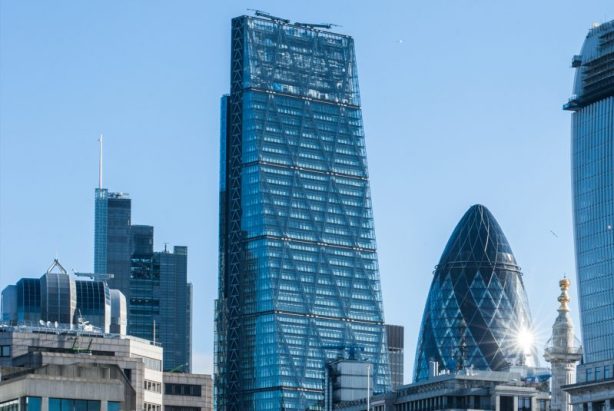
Laurence Ball set a new course record at the Leadenhall Building in London yesterday (Nov. 7), taking victory at the Grate48 stair climb event.
The emerging star of UK tower running set a new best time of 6:30 at the 1,258-step and 48-floor tower in the City of London.
The previous record of 6:56 had been set by Mark Howard in April, 2018. Howard also managed to go well under that time yesterday, as he clocked 6:36 to take second place. Will Obeney was third in 7:21.
Given that this was the final UK race of 2019, it was a fitting end to what has been a stellar debut year for the UK athlete.
The growing rivalry between Mark Howard and Laurence Ball is definitely the most exciting development in UK tower running right now. Expect more close-run battles and new course records in 2020.
You can find the full Grate48 2019 standings in our results hub.
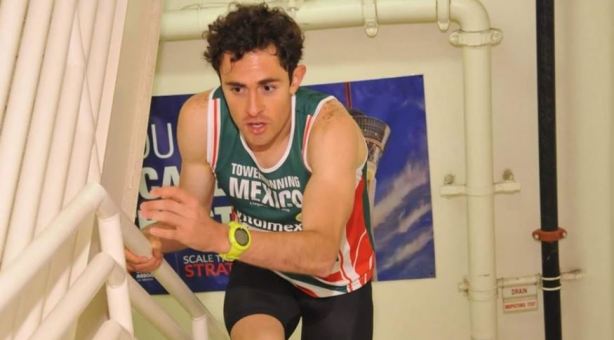
One of the new stars on the tower running circuit, Alexis Trujillo’s stair climbing career is on the ascendancy.
With multiple wins under his belt this year, including at Scale the Strat in Las Vegas back in February, plus hard-earned podium places at some of the most competitive events on the circuit, Trujillo is currently sitting in third in the Towerrunning World Association rankings.
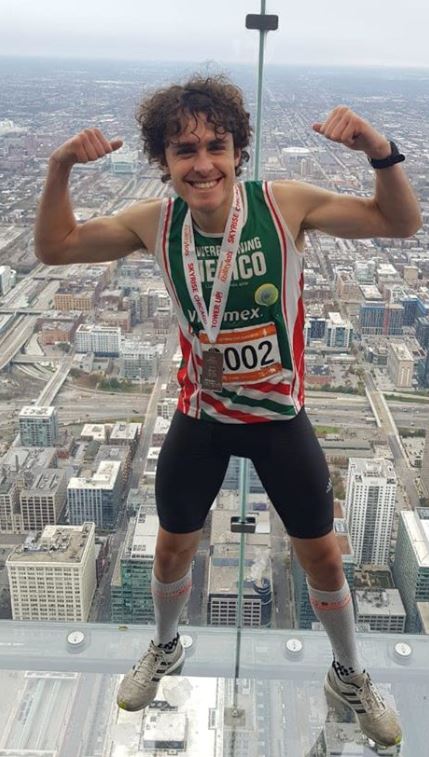
Fresh off the back of his victory at Willis (Sears) Tower in Chicago last weekend, we caught up with the Mexican athlete to find out more about that race, his training this year and his plans for 2020.
SkyRise Chicago 2019
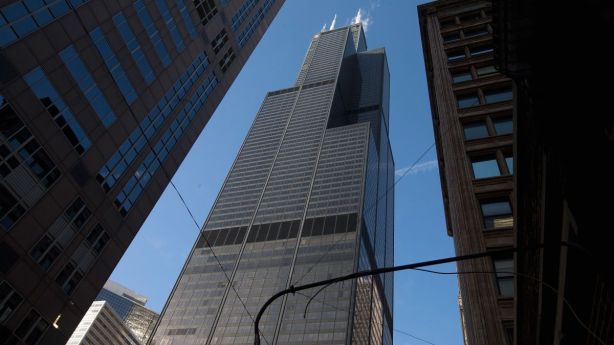
The 2,159-step Willis (Sears) Tower stair climb is one of the toughest in the USA, and it’s winner’s list reads like a Who’s Who of tower running legends.
Willis (Sears) Tower is home to the SkyRise Chicago stair race
‘In general terms it was a very good race. This is a difficult building to run in, because the height of the steps varies and therefore maintaining a consistent pace isn’t possible,’ said Trujillo.
‘I did well. But in reality it didn’t go exactly as I planned, since I couldn’t fully maintain the pace with which I started. My idea was to finish sub 13-mins [only Frank Carreno (12:58, 2017) has finished the course in under 13 minutes]. At the beginning I felt I was maintaining that rhythm, but, as I said, to sustain a constant rhythm in this building is very difficult.’
‘In this race we were placed in order of how we finished in the event last year. So the order was first Frank [Carreno], then Görge [Heimann] and finally me. But Görge gave me his place so I started second. The runners set off 10 seconds apart and that made it more challenging.’
‘At around the 20th floor I reached Frank and I stayed behind him for about 10-15 floors until he let me pass. After that I felt motivated and increased the pace to be able to continue with my goal of finishing in less than 13 minutes. But I couldn’t stand the pace and on the 60th floor I had a sudden drop in energy. Then, on the 80th floor, I perceived Görge behind [the race finishes on the 103rd floor].’
‘But I know that we’re very close in the world rankings and that this was one of the decisive competitions to maintain third place in the world rankings, so I changed my mental chip. I don’t know where I got energy to get my second wind, but suddenly I made a change of pace in the last 20 floors.’
Trujillo celebrates his win at SkyRise Chicago 2019
‘I felt very strong at the beginning and at the end. I think the adrenaline did its thing to make it happen. The critical state was from the 40th to the 80th floor where I felt weak and slowed down considerably. I think that tower running is mostly a mental sport and one of the strategies to manage this drop in energy is to apply sports psychology.’
Behind the scenes
In winning at Willis last weekend, Trujillo managed to take 21 seconds off the time he clocked there in 2018. What’s been the difference this year that’s seen him take his performances to another level?
‘There have been a set of factors and changes that have helped me improve since July. I decided to be more specific in tower running training. I started adapting all I’d learnt with my athletic trainer, Alejandro Zamudio, to the stairs, and experimenting with training methods that I learned as a triathlon coach a few years ago.’
Alexis Trujillo with some of his fellow Towerrunning Mexico athletes
‘For example, I’m now doing two or three specific stair sessions, and only one track session, per week. With this I can say that I have decided to sacrifice my performance in horizontal races in order to improve my performance in vertical races.’
‘In addition, the Towerrunning Mexico Federation, alongside Universidad del Valle de México (UVM) has supported us with a multidisciplinary team of specialists in nutrition, psychology and physiotherapy. These three elements have helped me a lot in the last few months and have been instrumental in me obtaining good results.’
The end of the year and beyond
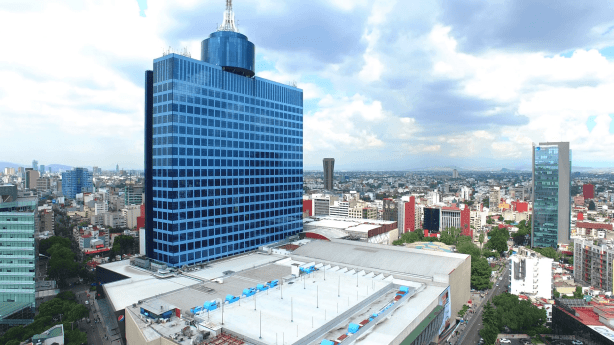
‘My main plan for the rest of this year is to compete at the TWA Tour Final [Nov. 24] in Shanghai, China, since in this competition the final positions of the 2019 world ranking will be defined. I’ll finally close out the season with the WTC race in Mexico City on December 15. Then, I’ll take a vacation to come back next year full of energy.
The WTC in Mexico City where Trujillo will have his final race of 2019
‘Next year I will start with triathlon preparation, a sport in which I trained for eight years. I think this can give me a general basis for vertical races and as the competitive stage approaches, I will start to do specific sessions on stairs.
The 2020 events that I have considered are the following:
Stratosphere – Las Vegas
Eiffel Tower – Paris
KL Tower – Malasya
Towerrunning World Championship 2020 – Taipei 101
Empire State Building Run-Up – New York
Ping An Finance Center – Shenzhen
Hotel Bali – Benidorm
Ostankino Tower – Moscow
UFO Tower – Bratislava
Willis (Sears) Tower – Chicago (once again)
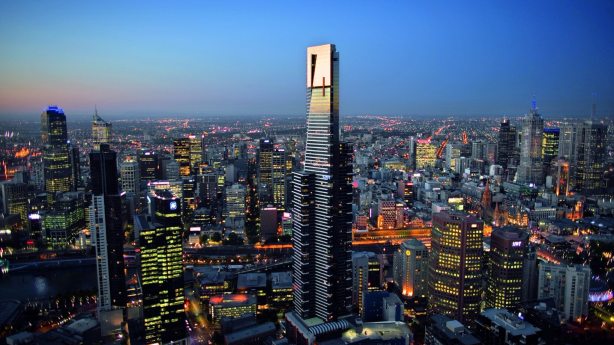
Eureka Tower – Australia
TWA Tour Final – Shanghai
However, that competitive schedule depends heavily on obtaining sponsorships to cover the travel costs implicated.’
In a sport as small and widely ignored as tower running, you’d be forgiven for having never heard of one its finest practitioners. Even more so when you consider this legend has routinely dipped in and out of the sport over a 15-year period, gracing it with short, but lasting, flashes of brilliance before disappearing from the scene for years at a time.
Although you may never have heard of her, Andrea Mayr is one of the best athletes in the world. She’s a six-time world mountain running champion, the course record holder and three-time winner at the Empire State Building Run-Up, the fastest woman to have run up Taipei 101 and has represented Austria at the World Athletics Championships (3000m SC, 2005) and Olympic Games (marathon, 2012 and 2016).
In 2015, after a long break from stair climbing, Mayr came down from the mountains to win the Towerrunning World Championship in Doha, Qatar. Then she disappeared again. What’s she been up to?
Four successful years
You could fill a small book detailing what Andrea Mayr’s been doing in the past four years. What follows is only a snapshot of the accolades she’s bagged during this period. There’s way too much to cover in detail.
She won the World Mountain Running Championship and the World Mountain Running Association World Cup (WMRA) in 2016.
Andrea Mayr on her way to winning the 2016 World Mountain Running Championship
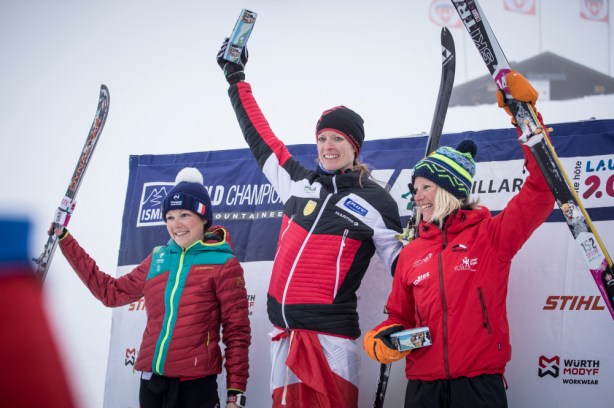
In 2017, she was second at the World Mountain Running Championship and third at the European Mountain Running Championship. She also won the vertical race at the Ski Mountaineering World Championship that year.
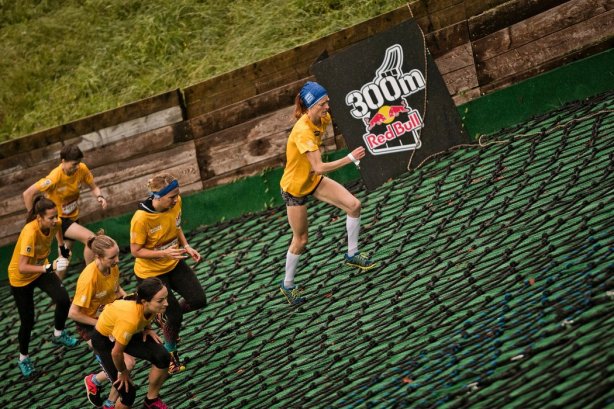
In 2018 she won the WMRA World Cup and the Red Bull 400 World Championship.
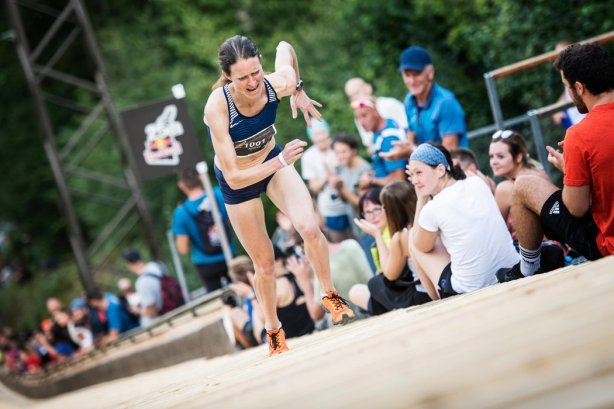
Mayr begins to pull away at the Red Bull 400 World Championship 2018
In among that busy 2018 season, Mayr was invited to partake in the Towerrunning World Championships at Taipei 101 in May.
In terms of participation on the stairs, that news that she wouldn’t be able to compete was pretty much the last the tower running community heard about Mayr.
Andrea Mayr wins the 2015 Towerrunning World Championships
But, as we head into another Towerrunning World Championship year, attention turns her way once more.
A wildcard entry to the event at Taipei 101 in May 2020 will be extended to the Austrian. Whether she decides to accept it is another matter. We can but hope.
It’s worth noting that Mayr is a medical doctor, working the long shifts associated with that profession and still taking examinations. The fact she has found time to put in the training required to stay at the top of the world mountain running and ski mountaineering circuit is miraculous. And that busy schedule could be an issue.
When she returned in 2015 to win the Towerrunning World Championship, she did so with no stair workouts. Suzy Walsham came within a whisker of beating her day.
If Mayr decides to come back next year she may want to set aside some time for tower running specific workouts that will put her in the best position to contend with Walsham, the resurgent Valentina Belotti and who knows who else.
But will she be able to find time? Will she even want to come back?
There’s much to ponder.
But let’s see where Mayr is now. We pick up her trail in the first quarter of 2019.
Ski mountaineering World Championships
On Wednesday 13th March 2019, Mayr was in Villars-sur-Ollon, Switzerland for the Ski mountaineering World Championships.
When Mayr had won the title in 2017, she had done so as somewhat of an underdog against younger emerging stars like Emelie Forsberg. But this year, as the defending champion, there was far more expectation on her.
In ski-mountaineering, Mayr prefers steep courses. With her strong mountain running background, she is no stranger to routes with big vertical gains, and she was anticipating a steep course at these world champs.
But due to safety concerns as a result of adverse weather conditions, the race organisers were forced to change the route to a flatter one just a day before the event. The 4km course would take in 420m of vertical gain.
The change made Mayr nervous. But you’d never have guessed as she stormed to back-to-back titles.
You can see her in action in the video below and hear her thoughts on the race.
Vertical kilometer course record at Trofeo Nasego
On Saturday 18th May, in rain swept Casto, Italy, Mayr went head-to-head with long-time rival Andrea Belotti. The battleground this time was the tough vertical kilomoter race at the Trofeo Nasego mountain running event.
Mayr was in majestic form as she broke the previous course record by more than four minutes, to finish in 38:39.
Clips from her winning run – from start line to finish – can be seen in the first minute and a bit of the video below.
Austrian Mountain Running Championship
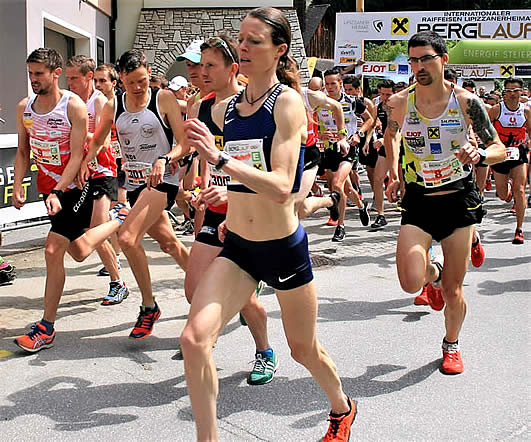
On Sunday 2nd June, the Internationaler Raiffeisen Lipizzanerheimat Berglauf doubled as the Austrian national mountain running championships.
Mayr completely dominated the race. She completed the 9.2km course (with 1,075 gain) in 52:20, over seven minutes faster than the second-placed woman.
Course record at Katrinberglauf
As the 2018 champion and course record holder at the Katrinberglauf in Austria, Mayr returned to the mountain on Sunday 16th June to defend her title.
She continued her run of outstanding form to take almost a minute off her previous best time.
Andrea Mayr leads out the field at the Katrinberglauf 2019
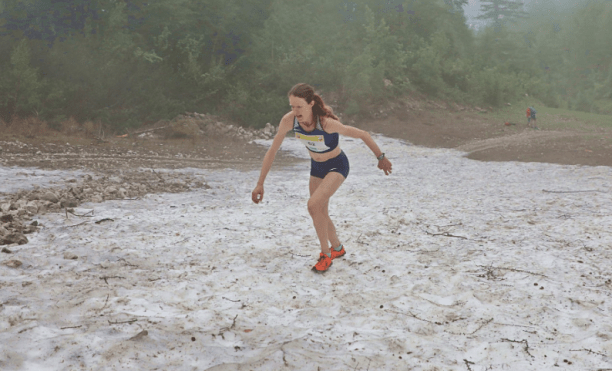
Crossing icy ground on her way to setting a new course record
European Mountain Running Championships
Winner in 2005 and 2013-2015, and then third in 2017, the Austrian has a great record at these championships.
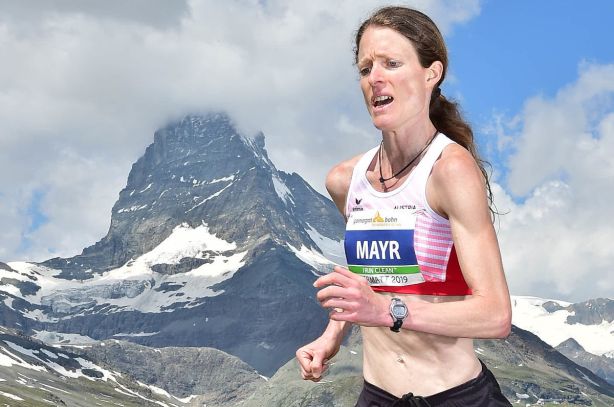
On Sunday, 7th July in Zermatt, Switzerland she was back to challenge Europe’s best once again. The race was across a 10.1 km course with 1,030 meters of ascent.
Standing between Mayr and a fifth title was the incredible Swiss athlete, Maude Mathys, winner in 2017 and 2018.
Mayr during the European Mountain Running Championships 2019
Despite maintaining a narrow lead in the first half of the race over the steeper parts of the course, Mayr was reeled back in by the younger Mathys as the course leveled out in the second half.
Mayr finished second, a minute back from Mathys who secured her third European crown in a row.
Piz Tri Vertical
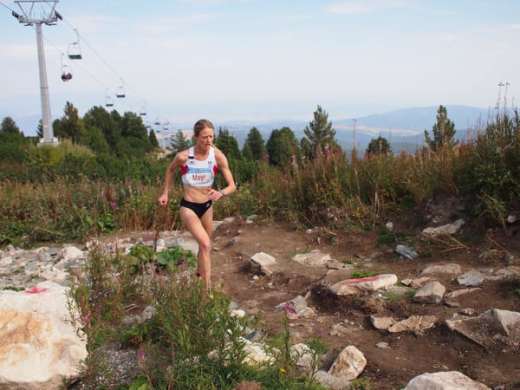
A little under a month later (Saturday 3rd August), Mayr was back in Italy for another battle with Valentina Belotti at a vertical kilometer race (across a 3.5km course).
At the 2018 edition of the event, the Austrian had broken Belotti’s course record. The 38:11 she ran that day was called a ‘phenomenal’ and ‘sensational’ time.
That reporter would have done well to keep some superlatives back for the 2019 race report, because Mayr obliterated that record as she crossed the line in 37:20.
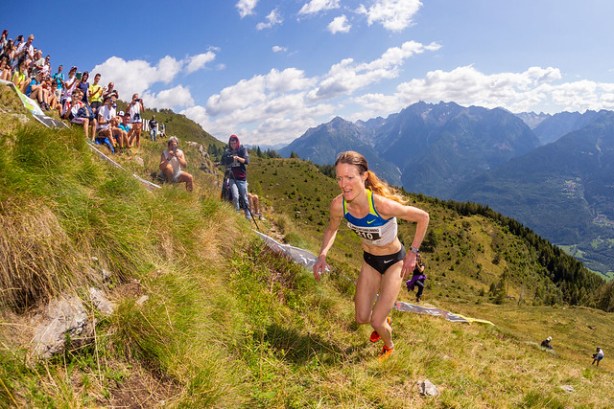
On the course of the Piz Tri Vertical 2019
Red Bull 400 Bischofshofen
Three weeks later (Saturday 24th August), Mayr was on home soil to take part in the Red Bull 400 race in Bischofshofen.
She was looking to win the event for the fourth time in a row, and was squaring off against fellow Austrian multi-sport athlete, and tower runner, Veronika Windisch.
Mayr won in a brilliant 3:52, followed by Windisch in 4:44 and Finland’s Mila Koljonen in 4:46.
‘I really felt very good from the beginning and especially in the last part, where the spectators are so close. You feel really motivated,’ she told Red Bull. ‘I’m really happy with the race. It’s a competition that really is a lot of fun and that’s one of the main reasons I participate.’
Pulling away at the Red Bull 400 Bischofshofen
Back to the Hochfelln-Berglauf
As the course record holder and nine-time winner of the Hochfelln-Berglauf, including five straight wins from 2014-2018, Mayr was expected to secure an astonishing 10th title when she returned to the event on Sunday 29th September.
And she did. It was the slowest winning time of all of her victories, but she still finished three and a half minutes ahead of second place.
Mayr completed the roughly 9km course (with 1,074m of vertical gain) in 49:51.
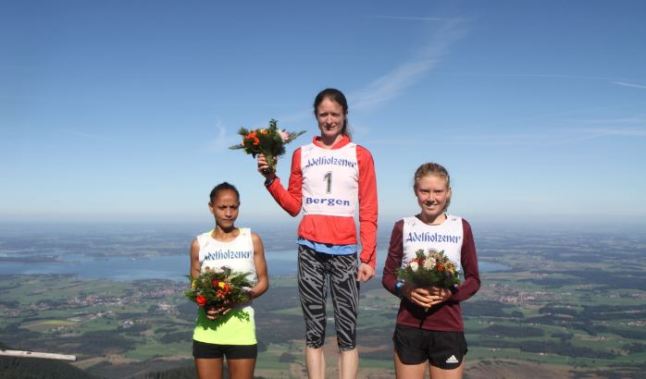
Ten-time winner of the Hochfelln-Berglauf
What’s next?
So, after that snapshot of her stacked 2019 season, this is where we find the magisterial Andrea Mayr.
On Friday 15th November in Villa La Angostura, Argentina the World Mountain Running Championships will take place. Mayr will likely be planning to be in attendance to see if she can win a seventh title. She finished 6th in 2018.
Beyond that is the Towerrunning World Championship at Taipei 101 in May, 2020.
By the time that comes around it will be almost 15 years since she set the course record of 12:38 at the tower in November, 2005.
Will we get to see one of the best tower runners of all time race again?
2008 Stuart Gibson (AUS) 9:10 women’s winner ?? 2009 Stuart Gibson (AUS) 8:56 Judith Arndt (AUS) 10:37 – results 2010 Scott McTaggart (AUS) 8:30 Alice McNamara (AUS) 10:29 – results** 2011 Mark Bourne (AUS) 8:22 Alice McNamara (AUS) 9:33* – results 2012 Mark Bourne (AUS) 7:59 Alice McNamara (AUS) 9:51 – results 2013 Mark Bourne (AUS) 7:34* Brooke Logan (AUS) 10:28 – results 2014 Mark Bourne (AUS) 7:49 Alice McNamara (AUS) 10:04 – results 2015 Mark Bourne (AUS) 7:55 Alice McNamara (AUS) 9:39 – results 2016 Mark Bourne (AUS) 8:13 Alice McNamara (AUS) 9:59 – results 2017 Mark Bourne (AUS) 8:10 Alice McNamara (AUS) 10:15 – results 2018 Matt Curtin (AUS) 9:15 Meg Reeves (AUS) 10:24 – results 2019 Mark Bourne (AUS) 7:45 Brooke Logan (AUS) 10:41 – results
* course record
** Alice McNamara unlisted in individual results, but she ran fastest time as part of the Teams event, so was overall winner. Conflicting reports on her time 10:24 or 10:29?
1990 Louis Young (AUS) 8:06 Female winner ? 1991 Geoff Case (AUS) 8:09 Dianne Nash (AUS) 10:26 1992 Geoff Case (AUS) 7:54 Sue Case (AUS) 9:54 1993 Phil Griffiths 8:06 Belinda Soszyn (AUS) 10:15 1994 David Osmond (AUS) 7:51 Chrissy Griffiths (AUS) 9:53 1995 Terry Purcell (AUS) 7.30 Belinda Soszyn (AUS) 10:04 1996 David Osmond (AUS) 7:29 Belinda Soszyn 9:52 1997 Terry Purcell (AUS) 6:54 (short course) Chrissy Griffiths (AUS) 8:50 (short course) 1998 Paul Crake – 6:52 (short course) Angela Sheean 8:45 (short course) 1999 ?
2000 Paul Crake (AUS) 6:52* Angela Sheean (AUS) 8:45 2001 Paul Crake (AUS) 7:01 Kelly Murphy (AUS) 10:14 2002 Paul Crake (AUS) 6:53 Judith May (AUS) 10:54 2003 ? 2004 Jeremey Horne (AUS) 7:55 Helen Stanton (AUS) 10:28 2005 ? 2006 Scott McTaggart (AUS) 2007 Scott McTaggart (AUS) 8:12 Angela Leadbeatter (née Sheean) (AUS) 9:15 – results 2008 Scott McTaggart (AUS) 7:49 Jessamy Hosking (AUS) 9:29 – results 2009 Thomas Dold (GER) 7:04 Vanessa Haverd (AUS) 8:41 – results 2010 Thomas Dold (GER) 7:04 Vanessa Haverd (AUS) 8:45 – news report 2011 No event 2012 Was there an event? 2013 Mark Bourne (AUS) 7:11 Suzy Walsham (AUS) 8:24* – results 2014 Mark Bourne (AUS) 7:17 Suzy Walsham (AUS) 8:39 – results 2015 Mark Bourne (AUS) 7:11 Suzy Walsham (AUS) 8:26 – results 2016 Mark Bourne (AUS) 7:35 Suzy Walsham (AUS) 8:27 – results 2017 Mark Bourne (AUS) 7:27 Alice McNamara (AUS) 9:26 – results 2018 Matthew Curtin (AUS) 8:22 Brooke Logan (AUS) 9:42 – results 2019 Matthew Curtin (AUS) 8:24 Brooke Logan (AUS) 9:31 – results
* course record
1990-2004 results found here: http://archive.li/J4WTR#selection-683.0-705.26
– 1999 and 2003 missing
– Have seen Paul Crake’s 6:52 course record listed elsewhere as having happened in 2002 not the 2000 listed in the link above. Can anyone provide official results for these years?
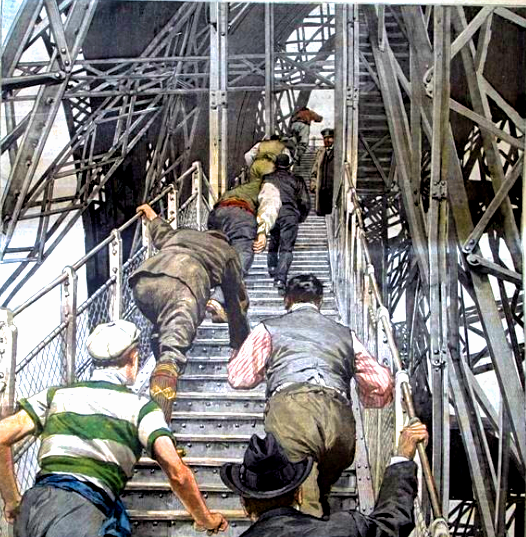
Tower running has a long and rich history dating back to 1905 when the first Eiffel Tower stair climb took place.
Many of the results for the races that have happened since then are scattered around the internet in hidden blogs, cached web pages and newspaper archives.
We are hoping to collate them all here in one place so fans of the sport, journalists and anyone else can easily access historic results for as many big stair races as possible.
It’s an ongoing project that will hopefully be collaborative with the global tower running community. If you spot errors, let us know. If you have race results you think should be featured, let us know.
Let’s document and secure the history of this sport for years to come.
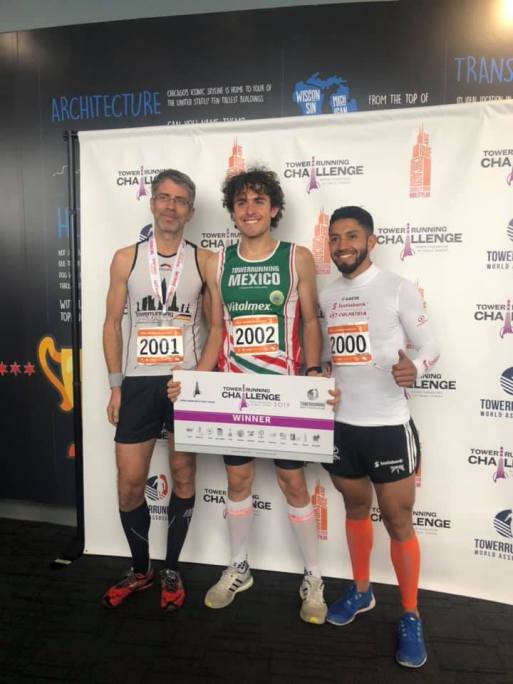
Alexis Trujillo took first place at the SkyRise Chicago event at Willis Tower on Sunday (Nov. 3) in a time of 13:26.
In doing so, the Mexican star broke the win streak of Colombia’s Frank Carreno who had remained unbeaten at the event since 2016.
Trujillo took an impressive 21-seconds off the time that earned him third place in 2018.
Germany’s Görge Heimann was the second fastest to reach the top of the 103-floor building, in 13:38, while course record holder Carreno (12:58, 2017) finished third in 14:19.
Since 2017 the race has started two floors below ground level, meaning racers step up 105 floors and around 2,150 steps to the finish line.
Alexi Trujillos, SkyRise Chicago winner 2019, with Gorge Heimann (l) and Frank Carreno
It’s the second massive win in the USA for Trujillo this year, after he took victory at Scale the Strat in Las Vegas back in February.
It’s also welcome revenge over Carreno who has pipped Trujillo to first place at a couple of events in Mexico this year, including the Carrera Vertical Torre Latino back in March.
Since then, Trujillo has bagged some solid wins in his native country, with victories at Pabellon M Monterrey and Carrera Vertical UVM Campus Chapultepec in July, and Carrera Towerrunning Tlaxcala in August.
He has also secured excellent podium spots at European venues. He finished third at the Ostankino Tower run in Moscow, Russia on 24 August (image below) and was then second at the UFO Vertical Sprint in Bratislava, Slovakia, a week later.
The Willis (formerly Sears) Tower has long attracted some of the biggest names in American tower running, and this year was no different.
Alongside the international contingent of Trujillo, Heimann and Carreno were top Americans Alex Workman, Mark Ewell, Jason Larson, John Osborn and Mark Henderson.
Three-time winner Jesse Berg (2006, 2010, 2012) also made a welcome return to the Chicago tower, taking fourth place in 14:50. Alex Workman was fifth in 15:09.








 Tower Running UK