bali

2003 Paul Crake (AUS) 4:35  Yamilka González (CUB) 6:26
2005 Javier Jover (ESP) 4:42  Sandra Ruales (ESP) 6:24
2006 Juan Antonio Fernández (ESP) ?  Jesica Núñez (ESP) ?
2007 Juan Antonio Fernández (ESP) 4:53  Verónica Gil Brotons (ESP) 6:04 – results
2008 Tomas Dold (GER) 4:40  Wafiya Benali (MAR) 5:47 – results
2009 Just Sociats (ESP) 5:06  Wafiya Benali (MAR) 6:01 – results
2010 Ignacio Cardona (ESP) 4:41  Wafiya Benali (MAR) 5:44 – results
2011 Angel Llorens Zafra (ESP) 4:41  Judith Corachán (ESP) 6:48 – results
2012 Angel Llorens Zafra (ESP) 4:37  Judith Corachán (ESP) 6:00 – results
2013 Angel Llorens Zafra (ESP) 4:38  Judith Corachán (ESP) – 6:21 – results
2014 Angel Llorens Zafra (ESP) 4:33  Rosi Llorens Zafra (ESP) – 6:34 – results
2015 Tomas Celko (SVK) 4:39  Lenka Svabikova (CZE) 5:47 – results
2016 Chistian Riedl (GER) 4:20*  Iwona Wicha (POL) – 5:55 – results
2017 Piotr Lobodzinski (POL) 4:26  Lenka Svabikova (CZE) 5:56 – results
2018 Christian Riedl (GER) 4:23 – men’s results
Wafiya Benali (MAR) 5:43 – women’s results
2019 Gorge Heimann (GER) 4:37  – men’s results
Suzy Walsham (AUS) 5:31*women’s results

* course records

Find out all the winners from other events around the world in our historical tower running results database.

Gherkin London NSPCC

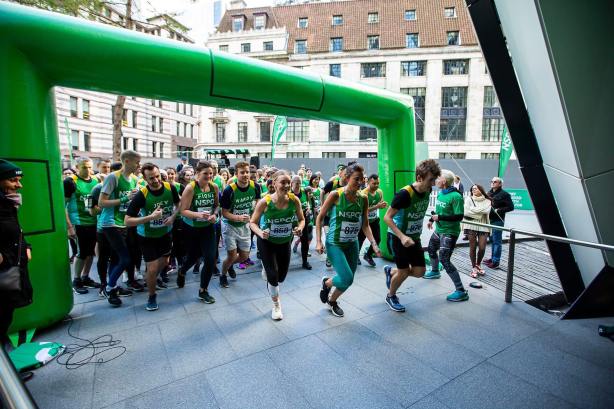
Tommy Bryant took the win at the NSPCC Gherkin Challenge in London last Sunday (27th October).

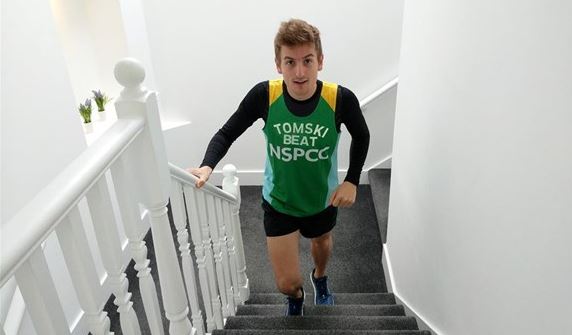
In his first tower run, the long-time runner who was English Schools champion in 2009 in the 2000m steeplechase, transitioned seamlessly onto the stairwell, finishing the 1,037-step course in 5.18.

‘I’ve never done this type of race before, so I didn’t quite know what to expect,’ said Bryant.

‘It was very high intensity. More than I expected. It’s tough because you want to take more steps but if your flexibility or power endurance is lacking, you will feel it for sure. I would say it felt like running a mile to the best of your ability.’

NSPCC Gherkin winner 2019

Although Bryant’s winning time was the slowest in the event’s history, it’s likely he could have gone sub five-minutes with a bit of race experience.

‘I went out too keen trying to double step, but I soon realised my mistake and changed to high cadence,’ he said. ‘I used the handrails sometimes, but I found that drained more energy.’

So the newcomer basically single stepped the bulk of the course without using the handrails and still clocked 5:18. A very impressive performance.

75627485_2556049581294879_9176591643908767744_n

Bryant leads out the 12.30pm wave at the Gherkin Challenge 2019

It’s perhaps of little surprise when you realise that 10 years ago Bryant was among the most talented and promising athletes in the country. The results on his Power of 10 athlete profile show his early quality across a range of distances, from 800m through to 10km.

But there are no results listed there for the past decade. What’s the former Shaftesbury Barnet Harrier been doing since?

‘I ran countless cross-country and track competitions when I was younger – what felt like every weekend. I loved competing and trained hard, almost everyday. In 2007, I earned myself an England vest and in 2009 I became English Schools champion.’

74933845_534600990653476_8065949853198319616_n

Tommy Bryant wins the 2019 NSPCC Gherkin Challenge

‘By the time I reached university, life hit hard and my competition days were over. This was mainly due to other priorities and the onset of injuries. I was also lacking the proper guidance and coaching at the time.’

‘I slowly got back into running years later and now I compete for the fun of it. This has helped me love the sport again. I recently ran a PB of 3hrs 1min for the Loch Ness Marathon, a few weeks prior to The Gherkin Challenge so I knew I was in decent form.’

Tommy Bryant NSPCC Gherkin winner

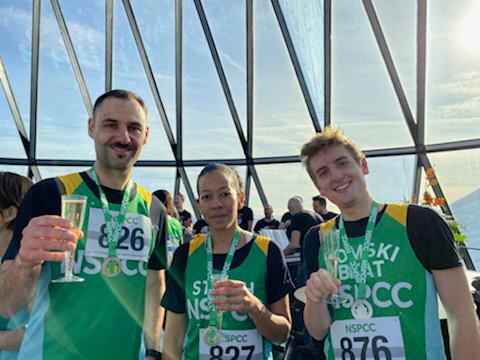
Tommy Bryant (r) and friends toast his win

Bryant relied solely on his regular runs to get in shape for his win at the Gherkin.

‘In all honesty, I did no specific training but I run to and from work almost everyday. At the weekends I do long runs around Richmond Park, depending on how I’m feeling. It was all in preparation for the [Loch Ness] marathon, but now it’s just a good excuse to weave some exercise/mileage into my normal commute.’

So, will we see Bryant back on the stairs in the near future?

‘I didn’t realise there was such an appetite for this type of racing,’ he said. ‘But I’m keen to give it another try next year.’

With some more focused preparation, Bryant should be able to chop a massive amount off his finishing time at the tower in the City of London.

In second place last Sunday was two-time winner David Harris, who reached the top of the 1,037-step course in 5:23. It was a welcome and encouraging return for the 2014 and 2018 winner, who was making his comeback after recovering from back surgery.

David Harris tower run

David Harris finishing the 2019 NSPCC Gherkin Challenge

‘I’m happy to be back competing and very pleased with the result given where I was six months ago,’ said Harris. ‘I pretty much did no exercise for four months from April due to severe back pain and had an operation in July and only started light exercise again in August.’

‘In the race, I probably went off a little too quick and then struggled to lift the pace as much as I wanted over the last ten floors or so. I’ve recovered really well from my surgery and my back is all good now.’

‘I’m happy with my training progress and looking forward to the last few races in 2019 and will be working hard over the winter to hopefully start 2020 in top shape. As for the Gherkin Challenge, I’ll just have to come back again next year to hopefully go for a hat-trick of wins!’

With his win, Tommy Bryant adds his name to the list of distinguished winners of the NSPCC Gherkin Challenge.

* Race day was beset with timing issues, with no official times available at the venue. Post-race, a lot of question marks were raised about the official times that were eventually posted. Amendments were made by the timing company, but then the listed results reverted again. The link to the official results page is below, but aside from the top two men, questions remain about several of the positions and finishing times.

NSPCC Gherkin Challenge 2019 results

jumeirah-web

Suzy Walsham and Piotr Lobodzinski smashed their course records at the Dubai Holding SkyRun this morning.

In the penultimate leg of the Vertical World Circuit, the world champions each took a massive chunk off their respective best times at Jumeirah Emirates Towers.

Walsham (AUS) completed the 1,334-step course in 8:03, taking 13 seconds off the 8:16 record she set in 2017.

The victory was the second in five days for Walsham, after she won in commanding fashion in Shanghai last Sunday.

https://www.instagram.com/p/B4CGktKHIVd/

Top five women:

1. Suzy Walsham (AUS) 8:03
2. Laura Manninen (FIN) 8:48
3. Huan Wang (CHN) 8:59
4. Lyubov Novgorodtseva (RUS) 9:15
5. Sarah Frost (GBR) 9:17

Lobodzinski bounces back

After the disappointment of having his unbeaten run in 2019 ended by Mark Bourne in Shanghai last Sunday, Piotr Lobodzinski came right back with the perfect performance to demonstrate why he is still the finest tower runner in the world.

The Polish star had said before the race that he felt in good shape and was planning a sub seven-minute finish. And he was absolutely true to his word.

His previous best time of 7:09 was smashed as he crossed the finish line in a new magnificent record of 6:55.

Top five men:

1. Piotr Lobodzinski (POL) 6:55
2. Emanuele Manzi (ITA) 7:17
3. Omar Bekkali (BEL) 7:59
4. Mickael Pourcelot (FRA) 8:04
5. Gholamreza Cheraghikavari (IRI) 9:09

Full results of Dubai Holding SkyRun 2019

Race to Hong Kong ICC cancelled

The scheduled Hong Kong leg of the Vertical World Circuit (VWC) has been cancelled due to the ongoing protests in the area.

The long-standing event, which has served as the Grand Finale of the VWC since 2013, was due to go ahead on 1 December.

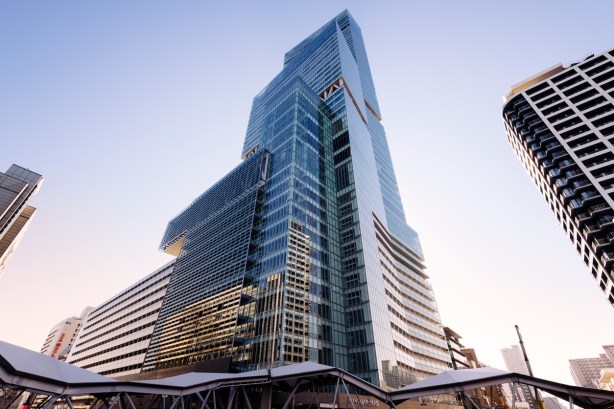
The final round of the VWC will now take place in Osaka, Japan, on 10 November, at the 1,610 step skyscraper, Abeno Harukas.

The 50% bonus points that were due to be available in Hong Kong will now be awarded in Japan, together with the crowning of the men’s and women’s overall Circuit winners.

Abeno Harukas, Osaka, Japan.

Abeno Harukas in Osaka, Japan will now host the VWC Grand Finale

Ryoji Watanabe of Japan currently tops the men’s leaderboard, with Piotr Lobodzinski (POL) in second and Mark Bourne (AUS) in third.

Only the top five results from the 10 available races on the circuit are taken into account to determine the winner, so with 50% bonus points on offer in Osaka the title is still completely up for grabs.

In the women’s division, Suzy Walsham (AUS) now tops the rankings after her win in Shanghai last week. In second place is Laura Manninen (FIN), while Sarah Frost (GBR) currently holds third place.

The next round takes place in Dubai this coming Friday (25 October), before the Grand Finale just over a fortnight later on 10 November.


NSPCC Gherkin Challenge winners final

40127437773_d51d76c9b1_b

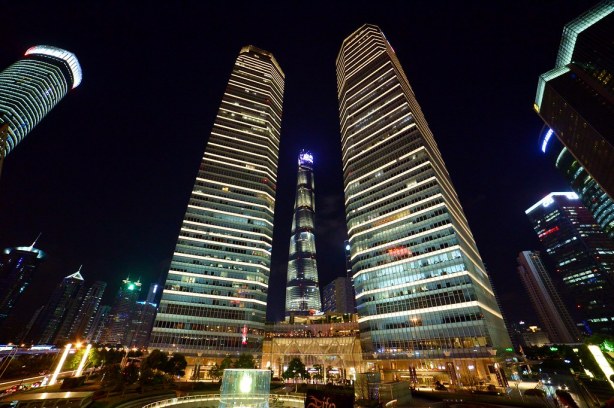
Mark Bourne won the Race to Shanghai IFC this morning to become the first person to beat world champion Piotr Lobodzinski in 2019.

The Australian mountain running star reached the top of the 1,460-step tower in 7:58, ahead of Lobodzinski, who finished in 8:05.

Bourne, who set the course record of 7:42 in 2016, was back on the tower running circuit for the first time since May. But the five month break from the stairs (albeit filled with mountain running) seems to have done the Canberra man no harm at all.

‘I’m very happy to come here and win up this building again. It’s the sixth time I’ve been here and I always enjoy coming back. I’ve won it four times now. I’m looking forward to Osaka in three weeks’ time. I’ve done some very good times there in the past so looking forward to finishing off the season strongly,’ said Bourne.

The race on Sunday morning was the fifth occasion the long-time rivals had met this season, with Lobodzinski having won each of those races.

Heading into the event, Lobodzinski was on an 11-race win streak and was hoping to maintain his unbeaten run to the end of the season.

But on this particular course, the world number one has often struggled to beat Bourne, and once again he found himself undone.

It was the first time since 2014 that Lobodzinski failed to finish in under eight minutes.

Third place on the day went to Japan’s Ryoji Watanabe who finished in 8:17.

You might also be interested in:


Mark Bourne Stairclimbing Australia

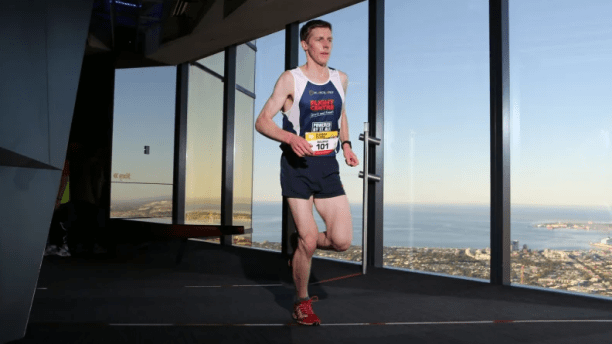
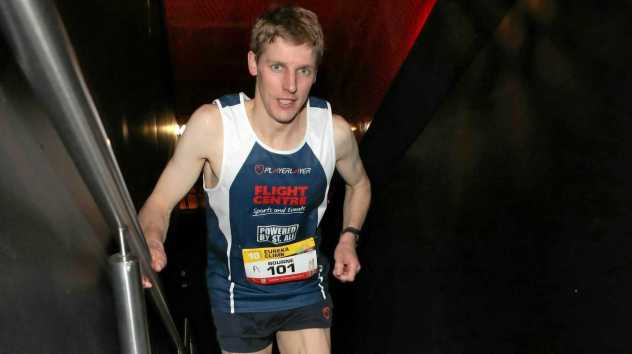
Mark Bourne – winner of the 2013 Empire State Building Run-Up, seven-time winner of Melbourne’s Eureka Tower Stair Climb, holder of numerous course records and one of the top stair climbers in the world over the past decade – is the right man to take tower running advice from.

Bourne spoke with Men’s Health (Australia) to give some expert tower running tips, including pointers on warming up, pacing yourself and establishing a rhythm during a race.

Here are some of the highlights:

The lead up to the race

‘You definitely don’t want to be training the day before the race. I might do a light jog two days before, but it won’t be anything strenuous.’

‘Have confidence in your preparation and don’t introduce new things into your training routine.’

Warming up

‘Some 10 or 20 metre sprints at about 75 per cent would be a good warm-up. If you can find a small single stairwell to run up then that will also get the blood pumping around your body.’

Eat light

‘It’s not like a marathon so you don’t need to go carb loading. The worse thing you could do is fill yourself up to the point of feeling sick.’

‘It’s a personal preference but I also have a good hit of caffeine in the morning.’

Mark Bourne towerrunning

How to run a stair race

Aim for a steady pace

‘You’re going to be tempted to race off as quickly as you can, but you need to take it steady. Start off conservatively with a pace that you think you can maintain. And don’t worry if you find yourself running parts of the race and walking other bits, it’s bound to happen.’

‘The lactic acid will build up and burn deep in your legs, if you have to slow down then just do it. Walking intensely for a few flights will serve you better than trying to run through a pain that you can’t shake.’

Two steps at a time and use the railing

‘Make use of the railing, it can assist you when you’re going around corners. The other thing professionals do is climb two steps at a time. Whether you are walking or running, always aim for a couple steps in each time you go forward.’

Establish a rhythm

‘It’s not just a physical battle but a gruelling mental slog. You need to find a zone where you can just concentrate on your stepping rhythm and tunnel your vision towards the goal of reaching the top.’

‘It’s best to ignore any progress and avoid looking at the stairwell numbers. From the word go, see how far you can get before working out how high you are, the numbers will only slow you down.’

For the full list of tips, including what to do after a race, check out Bourne’s interview with Men’s Health Australia.

You might also be interested in:


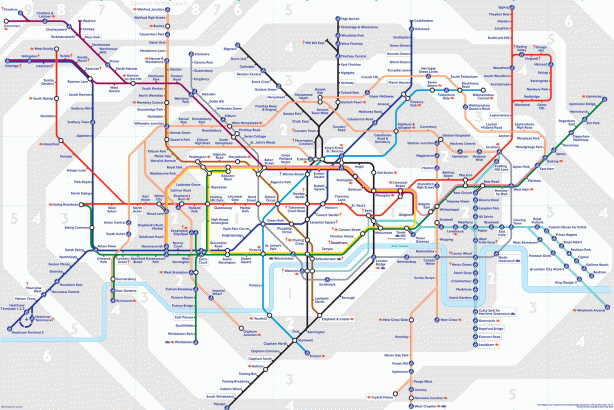
tube_map

The London Underground is still the simplest and most accessible training venue in the capital for those preparing for a stair running event.

With just an Oyster card and bottle of water in hand, you can zip around the city on the Tube to get in a solid workout on the emergency staircases at various stations.

But which Tube stations are the best for stair running? Read on to find out.

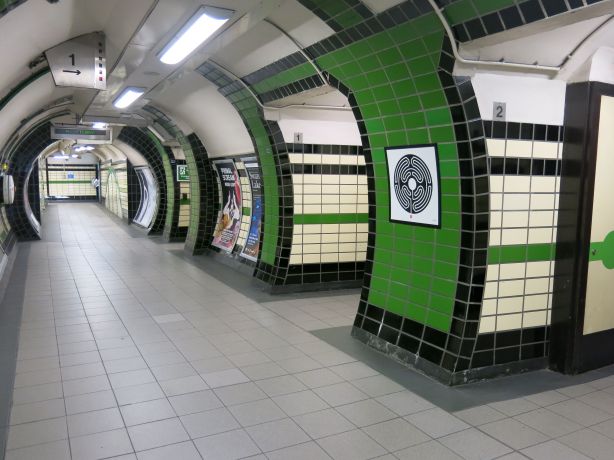
Although stair running on the Tube network is simple, it’s not without its problems.

Pros:

  • Easy access
  • Available from early morning to late evening
  • Mostly clear of other people (depending on time of day)
  • Lift back down available to start next climb


Cons:

  • Often dusty and dirty
  • Sooty rails blacken hands
  • Can’t leave bag down (security concerns)
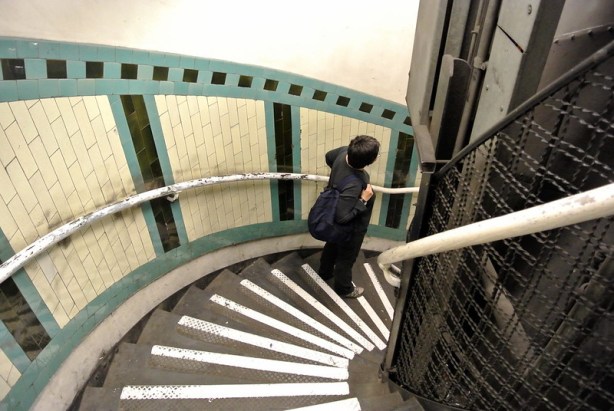
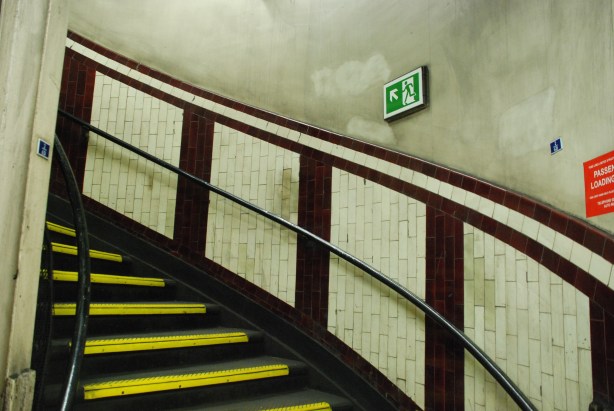
  • Spiral staircases can be awkward to run on
  • No landing turns so can’t practice techniques for actual stair race

But if you just want somewhere straightforward to add some vertical to your training routine then the Underground is hard to beat. Keep reading to find out the five Tube stations with the highest number of steps and how to get to them.

5. Goodge Street

Goodge Street station stairs

How many steps: 136
What line is it on: Northern (Charing Cross branch)
How to find it above ground?: Map

4. Russell Square

Russell Square station stairs

How many steps: 171 (claimed number is 175)
What line is it on: Piccadilly
How to find it above ground?: Map

3. Belsize Park

Belsize_Park_Station._Emergency_Stairs

How many steps: 189 (claimed number is 219)
What line is it on: Northern (Edgware branch)
How to find it above ground?: Map

2. Covent Garden

Covent Garden station stairs

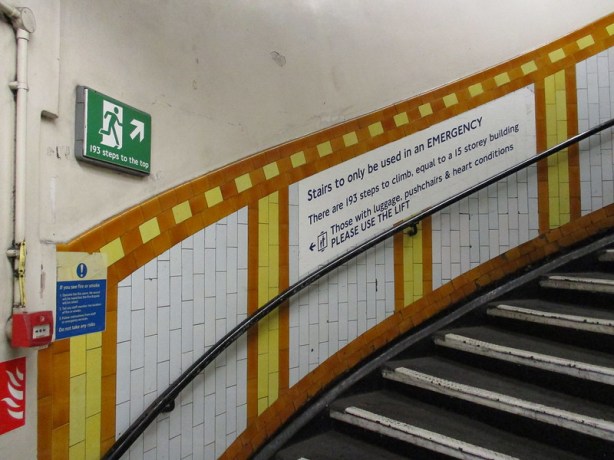
How many steps: 193
What line is it on: Piccadilly
How to find it above ground?: Map

1. Hampstead

hampstead_tube_station_emergency_staircase_-_geograph-org-uk_-_1473478 (1)

How many steps: 320
What line is it on: Northern (Edgware branch)
How to find it above ground?: Map

If you want alternative ideas for places to do stair running training, check out our guide on the best places to run stairs in London for inspiration.

You might also be interested in:

40127437773_d51d76c9b1_b

Piotr Lobodzinski and Mark Bourne renew their rivalry this coming Sunday (20 October) in the eighth round of the Vertical World Circuit series in Shanghai, China.

The pair have faced off three times in the Vertical World Circuit this year, with Lobodzinski coming out on top on each occasion.

At the 2,917-step Lotte World Tower International Sky Run in Seoul, back at the start of April, Lobodzinski set a new course record of 15:37 – a huge 16 second improvement on his previous fastest time. Bourne himself ran a magnificent race to finish just two seconds behind in 15:39.

A week later the pair went head-to-head again in Milan, at the 1,027-step Allianz Tower.

At the finish, less than a second separated them. But once again it was Lobodzinski who came out on top, setting a new course record of 5:16 in the process.

Two weeks later the Australian had another chance to attempt to beat his Polish rival. The action returned to Asia for the inaugural Vinpearl Luxury Landmark 81 – Race to the Summit in Ho Chi Minh City, Vietnam. 2,383 steps stood between the bottom and the top of the world’s 14th tallest tower.

Once again Lobodzinski took the win. His finishing time of 11:35 was a massive 50 seconds faster than Bourne’s.

VWC 2018 winner Lobodzinski

Piotr Lobodzinski won the Vertical World Circuit title in 2018

Now the action heads to Shanghai, where the pair have been swapping wins over the past few seasons.

Bourne vs Lobodzinski: Race to Shanghai IFC

2014
Winner: Mark Bourne (7:55)
Runner-up: Piotr Lobodzinski (8:10)

2015
Winner: Piotr Lobodzinski (7:54)
Runner-up: Mark Bourne (8:22)

2016
Winner: Mark Bourne (7:42 – course record)
Runner-up: Piotr Lobodzinski (7:47)

2017
Winner: Mark Bourne (7:44)
Runner-up: Piotr Lobodzinski (7:53)

2018
Winner: Piotr Lobodzinski (7:43)
Runner-up: Mark Bourne (7:59)

Heading into Sunday’s clash, Lobodzinski is confident he can maintain his unbeaten run in 2019.

‘After my win last year here, I know I can break the course record now,’ said the world number one. ‘We will see, but it should be a fast and interesting battle like always. I can’t wait!’

After recently competing at the OCR World Championships – where his Team OCRA finished 5th – Lobodzinski is refocusing on the stairs.

Although Mark Bourne has been out of the stairwells since the Taipei 101 Run-Up in May (where he also finished as runner-up to Lobodzinski), he has competed in mountain running events since then. What sort of form he’ll be in on Sunday remains to be seen.

Check back on Sunday/Monday, as we’ll have all the news from the race as results come in.

C6fEkU0WcAAP4Vg

Italy has produced a set of fantastic tower runners and Fabio Ruga is one of the very best.

Italian tower runners have been topping podiums around the world for close to 15 years. Bellotti, Bonacina, De Gasperi and Manzi have all won big races against top rivals.

With a background in mountain running, Fabio Ruga made his tower running debut in Milan in 2008.

Over the past 10 years, he’s raced against, and often beat, some of the top tower runners of this generation, including stars such as Thomas Dold and Christian Riedl.

Fabio Ruga

Fabio Ruga finishes one step behind Marco De Gasperi at the Pirelli Tower in 2009

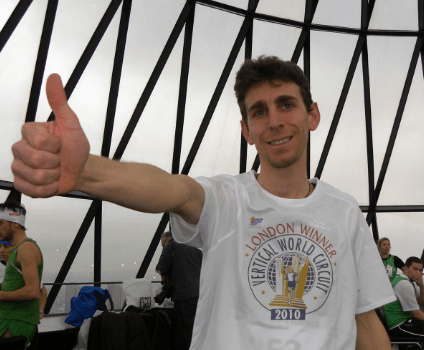
UK tower running fans should be well familiar with the Italian. The course record of 4:07 he set at the Gherkin in 2010 still stands. A year later he won Vertical Rush. Since then he’s been on the podium at Tower 42 a number of times, clocking a brilliant personal best of 4:11 in 2012.

Ruga Gherkin winner 2010

Ruga celebrates at the top of the Gherkin, after setting the course record in 2010

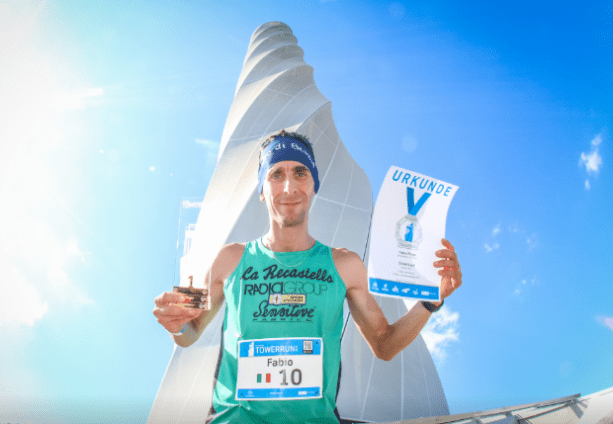
The indomitable Ruga is still winning races. His most recent victories (back in 2019) include the fourth leg of the Vertical World Circuit at Tour First in Paris, where he beat Omar Bekkali and Emanuele Manzi, and the Thyssenkrupp Tower Run in Rottweil, Germany, where he finished ahead of top Germans, Christian Riedl and Görge Heimann.

Fabio Ruga 2019

Fabio Ruga celebrates winning the Thyssenkrupp Tower Run, September 2019

Other notable performances include third-place finishes at the Empire State Building Run-Up and the Allianz Vertical Run in Milan in 2019.

The Italian star caught up with publication La Repubblica to discuss his win in Rottweil, plus how he got into stair running and what his real passion is. Click the link below for the full article.

La Repubblica interview with Fabio Ruga

He also gave another interesting interview to Atletica Pidaggia 15●28, in which he explains why he came back to tower running after some time away.

Atletica Pidaggia 15●28 interview with Fabio Ruga

You may also be interested in:

1906 eiffel tower race

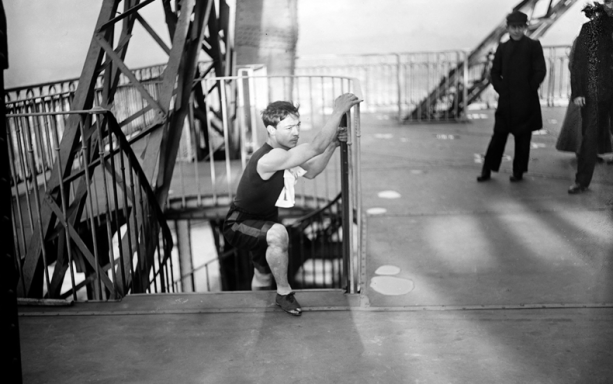
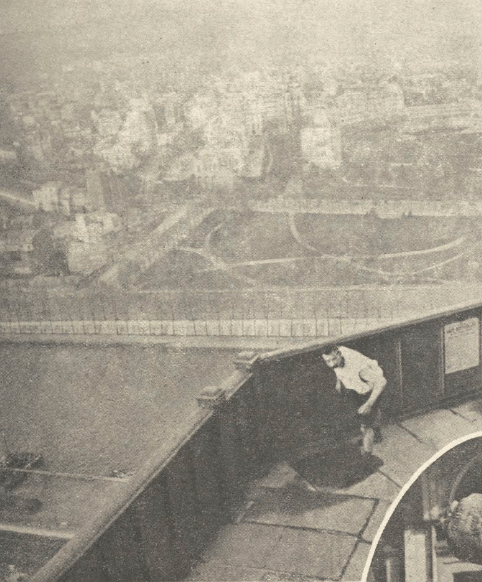
Tower running returned to the Eiffel Tower in 1906, as athletes from around France gathered to see if they could break the course record set the year before.

At the time, the Eiffel Tower was the tallest structure in the world, and on 26th November 1905 it had hosted what is believed to be the first recorded tower race in history. On that day, cyclist Eugene Forestier was the fastest up the 729 steps that led to the second platform of the tower. His winning time was 3:12.80.

A year on from that inaugural event and some of the best athletes from the French running and cycling scene arrived in Paris with one goal in mind; break Forestier’s record. Find out about the Eiffel Tower stair race of 1905, or read on for the story of the second edition.

Championnat de la tour Eiffel 1906

The second Eiffel Tower stair race took place on Sunday 18th November 1906. As it had been the year before, the event was organised by a publication called Les Sports.

Once again, the race involved running up 729 steps to the second platform (of three) of the tower. The reason they didn’t run to the top is the organisers felt the stairs on the upper levels were too narrow, and that it could have proved dangerous once the stairwell became crowded.
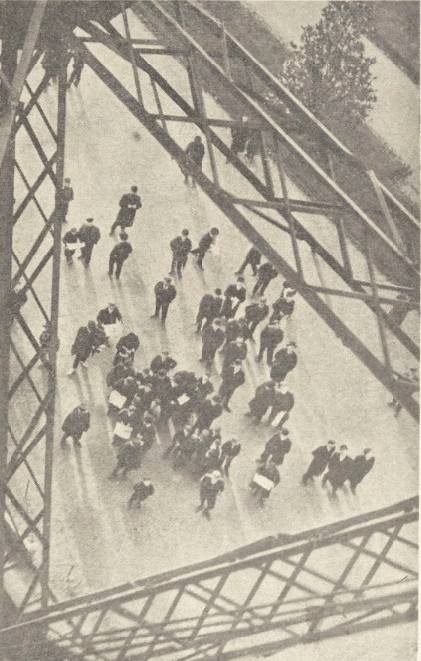
1906 crowds

Crowds of spectators gather underneath the Eiffel Tower to watch the athletes run

Far less people signed up for the second edition than had attended the debut race. In 1905, 300 people had signed up, with 283 making it to the start line. This time around, 200 people signed up but only 140 (some reports say 150) eventually lined up to race.

Although there were fewer people in attendance, the quality of athletes was stronger. Back to defend his title was Eugene Forestier, the cyclist who had won the race in 1905 in a time of 3:12.80.

Joining him were a host of ‘champions’, although newspaper reports fail to specify exactly what they had won. But, further research has revealed at least some of the accomplishments of a few of those in attendance.

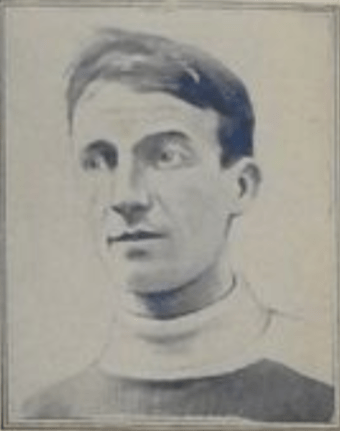
Among those listed as ‘champions of France’ were Eugene Neveu (a top long-distance runner, up to marathon distance) – L. Orphée (a cyclist), L. Mosnier and E. Fantou.

According to a report in La Liberté, the ‘Belgian champion’ Verstraete was also there. We were unable to find records relating to that name, but a François Verstraeten was a top level cyclist at the time, who had won the Paris to Ostend race in 1906 and went on to become the Belgian Road Champion in 1907 and 1908. It may be him they were referring to.

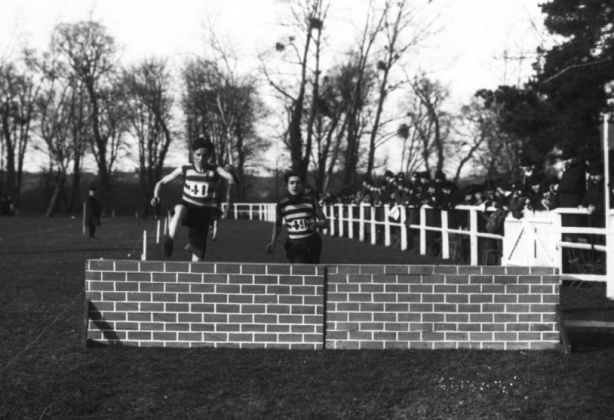
Louis Bouchard, billed as ‘champion of Paris’ was there, too. A year earlier, he had been the French record holder for the 10,000m with a time of 33:14, but that record had since been eclipsed by his great rival, Gaston Ragueneau.

Bouchard has finished second behind Ragueneau at the French Cross Country Championship in 1905 and 1906.
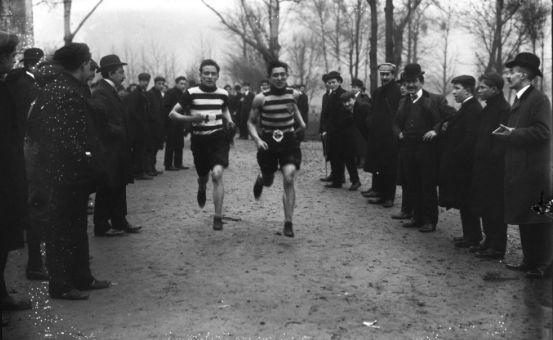
louis bouchard

Louis Bouchard (l) and Gaston Ragueneau race for the finish line at the Challenge de La Nézière in 1905
Louis bouchard 2

Louis Bouchard (41) in the lead (ahead of Ragueneau) at the Paris Cross Country Championship, 1905

Other runners and cyclists singled out for mention in the newspapers were Louis Prévôt, L. Mephisto, E. Figniez, Tonnin and Piel. Although some of these names pop up in race records from around the time, it’s been difficult to find firm details on any of these men.
L.Orphee 1905

Champion cyclist, L. Orphée

The racers were split into different waves depending on which federation or category they belonged to. Category winners would receive a gold-plated medal, while second place would take home ‘an artistic medal’.

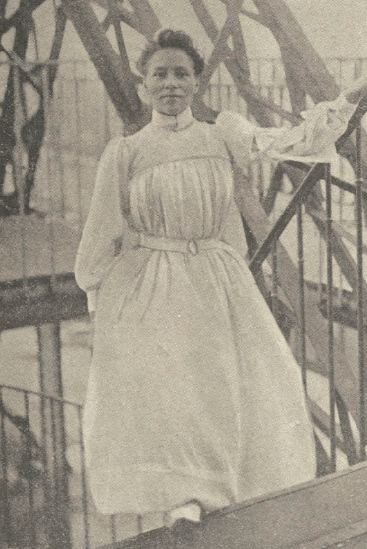
In the women’s wave, Mme. Baube was the only competitor to finish (or possibly even start) and won by default. She climbed the 739 steps in 7:44 (or 7:26 according to one report).
Mme Baube 1906

Mme. Baube, winner of the women’s division at the 1906 Eiffel Tower stair climb

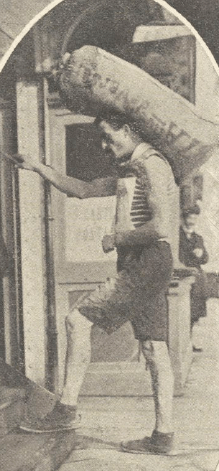
Finishing in around the same time as Mme. Baube was a Mr. Wachoru, who climbed all the steps in 7:37. The key difference being he did it while carrying a 50kg sack on his back.
1906 50kg bag climb

Wachoru

In the Union des Sociétés Françaises de Sports Athlétiques wave, L. Frederick clocked 3:25 to win bragging rights among his fellow federation members. He was followed by Agogué in 3:43 and Ceroni in 3:50.

All eyes were on the wave of runners from the Union Vélocipédique de France, as among them was the 1905 winner, Eugene Forestier.

Unfortunately for Forestier, he was unable to repeat his triumph and had to settle for second place in his wave. Thiebaut finished in 3:18.40 and Forestier in 3:19.40. In third place was Chenot in 4:01.
1906 Thiebaut

Thiebaut on his way to winning his wave

Next up were athletes from La Fédération cycliste et athlétique de France (FCAF). Fastest among them was Peuvrel, who clocked 3:56.20.

In the Indépendants category, a strong performance from J. Bielen saw him go into the overall lead, ahead of Thiebaut, with a time of 3:18.20. G. Lepage followed in 3:36.20, just ahead of Goulet in 3:37.60.

Apparently Bielen’s father was one of the people who painted the Eiffel Tower after the completion of its construction in 1889.
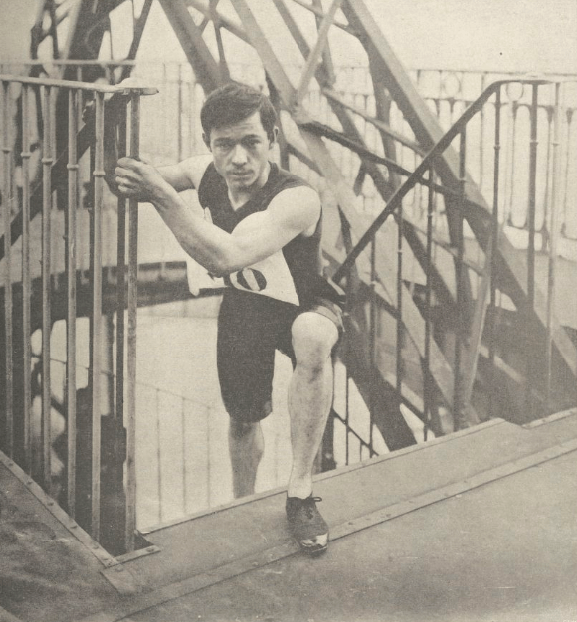
1906 J Bielen

J. Bielen finished in 3:18.20

1906 eiffel tower race

J. Bielen poses for a photo

With Forestier failing to clock the fastest time, he had to stand by and see if anyone in the Professionnels category might take the title ahead of Bielen.

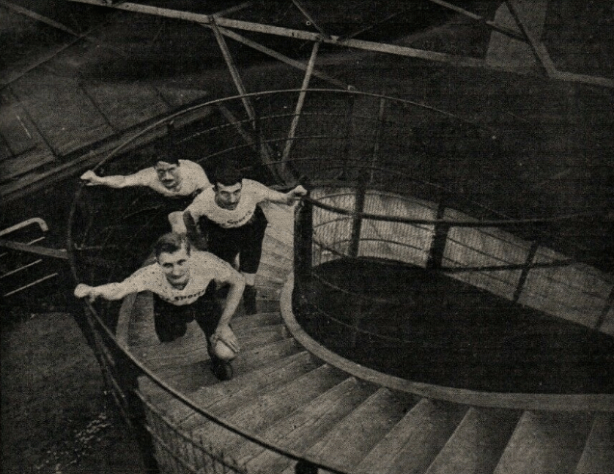
Three members of the Club des Sports – L. Prévôt , L. Mephisto and E. Neveu – all finished ahead of Bielen and beat the previous course record.

1906 Eiffel tower race 2

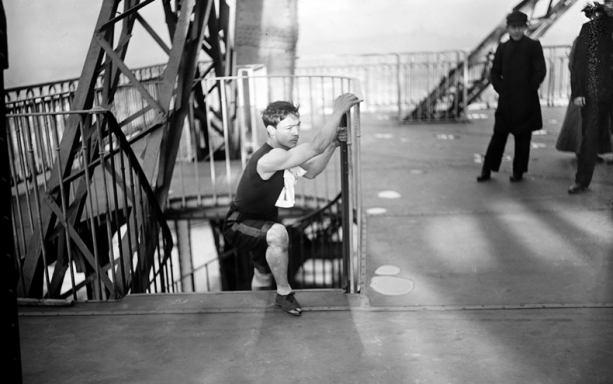
Orphée, Neveu and Mephisto (l-r) on the stairs of the Eiffel Tower
1906 climbers

Club des Sports: Orphée, Mephisto and Neveu (front to back) pose for a photo (although it seems unusual that it’s not Prévôt alongside Neveu and Mephisto, the original caption says it’s Orphée)

Louis Prévôt finished in 3:12.40, beating the existing record by less than half a second. L. Mephisto then smashed that time when he reached the top in 3:04.40.

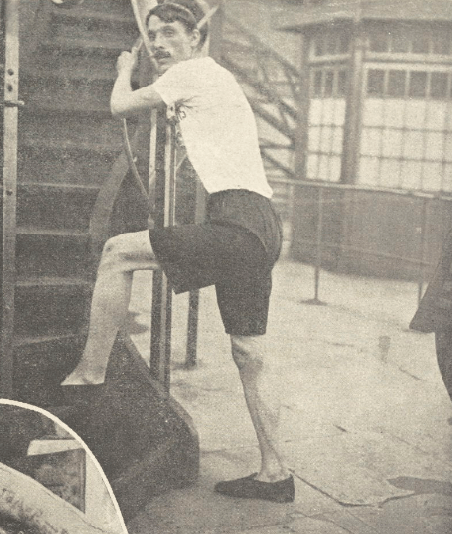
But overall victory went to the long-distance runner, Eugene Neveu. He won by the narrowest of margins with a time of 3:04 flat.
1906 Neveu winner

Eugene Neveu, winner of the Eiffel Tower stair climb 1906

‘Neveu’s time of 3:04 is simply wonderful, as it beats Forestier’s record by 8 seconds. We saw how much effort the victor had to produce to accomplish such a feat’, wrote one reporter.

Although 140-150 competitors lined up at the start, it was reported that only 93 completed the course. ‘A magnificent average’, according to one newspaper, ‘if one thinks of the effort that must be made to climb 730 steps in one go.’

If only they knew what the future held.

Championnat de la Tour Eiffel 1906 results (top six):

  • E. Neveu – 3:04
  • L. Mephisto – 3:04.40
  • L. Prévôt – 3:12.40
  • J. Bielen – 3:18.20
  • Thiebaut – 3:18.40
  • E. Forestier – 3:19.40

You may also be interested in:
Michael Sturm towerrunning (2)

Michael Sturm put in a blistering run to secure victory at the final race of the German Towerrunning Cup in Hemer.

The Saalfelder LV athlete ran the 466-step course in 2:27, beating compatriot Görge Heimann by just two seconds. Course record holder and four-time winner Jeroen Vochteloo from the Netherlands took third spot in 2:34. Andreas Fruhmann (2:35) was fourth and Jens Brundieck was fifth (2:37).

Hemeraner Treppenlauf

The outdoor staircase leading up to the Jübergturm

With Riedl already top of the rankings with an unassailable lead of 382 points, only the remaining two podium places were still up for grabs. Riedl’s dominance in earlier races had earned him his sixth German Towerrunning Cup title.

With his win in Hemer, Sturm was able to jump up the ladder into second place, finishing the series on 370 points, while Andreas Fruhmann finished the series in third on 340 points.

Full details and rankings can be found on the Towerrunning Germany website.

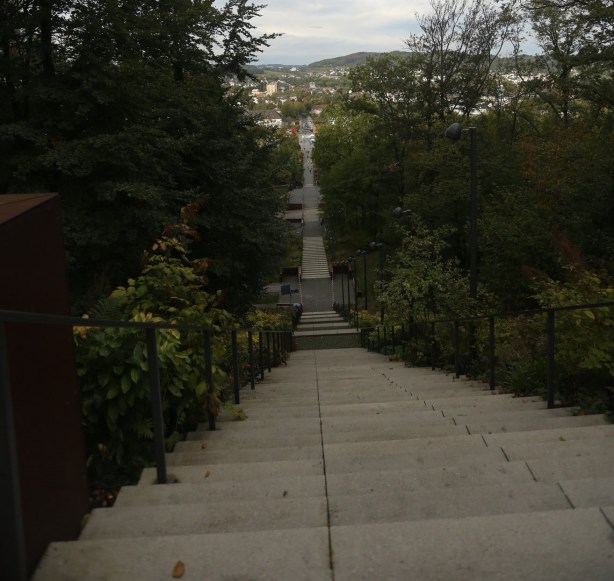
The unique Hemeran Treppenlauf starts on a straight outdoor staircase before runners head inside the Jübergturm observation tower to finish on the top platform.

stringio

The Jübergturm observation tower in Hemer

Check out the full photo gallery of action from the Hemeraner Treppenlauf.

Haus des Meeres Treppenlauf

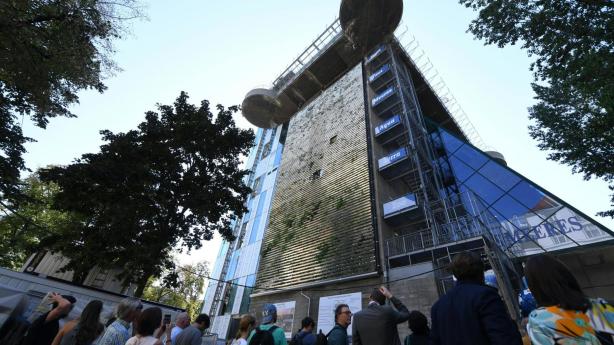
Veronika Windish took victory at the Haus des Meeres Treppenlauf to make it four wins in a row at the Vienna aquarium.

The Austrian multi-athlete remains unbeaten at the 271-step building, where she set the course record in 2016.

Windisch has been in incredible form the last few months. On 31 August she won the UFO Vertical Sprint in Bratislava, then followed this up with a narrow win over world number one, Suzy Walsham, at the Pyramidenkogel on 13 September.

Veronika Windisch treppenlauf

Windisch on her way to a fourth straight win at the Haus des Meeres, Vienna

In the men’s division in Vienna, course record holder and 2018 winner Christof Grossegger returned to defend his crown.

Full results were unavailable at the time of writing. This article will be updated.

Sproule Love stair run

Sproule Love is arguably the greatest American stair climber ever.

Since his tower running debut at the Empire State Building Run-Up in 1999, he has gone on to win numerous races and set course records around the USA. He has routinely been the highest-placed American finisher at the ESBRU over the past 20 years, including finishing third in 2018 and sixth in 2019.

You can read about his early ESBRU exploits in 2001 and 2002 where he finished in third place both times.

2002 mens start

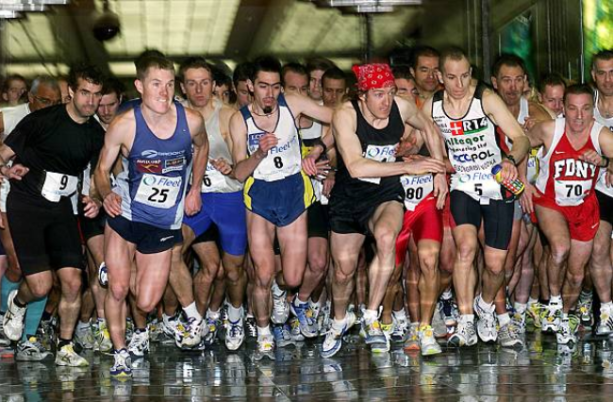
Sproule Love (in the red bandana) gets out in front at the start of the 2002 Empire State Building Run-Up

You could fill a book with the stories and exploits from Sproule Love’s fantastic 20-year stair climbing career.

The excellent video below, recorded in 2013, gives just a small insight into the mindset of this American champion. In it Love talks a little about his tower running journey and you get to see him training flat out at the 40-floor tower he lives in in New York.

Reminiscing about the good old days

Love recently caught up with his alma mater, Saint Louis Country Day School. The interesting interview with his former school’s magazine runs through his athletic journey, from becoming cross country team captain in his senior year at CDS – where he ‘discovered a talent for suffering’ – to making the US Olympic trials for biathlon in 1998, and on to his fantastic tower running career.

He also reveals his favourite stair race and says why he thinks it’s important to ‘slow down and turn your phone off every once in a while’.

Click the link below to read the full article:

Sproule Love sprints to the top

Whether you’re after training ideas from the best, or just looking to keep up with what’s happening in the global tower running community, these Instagram accounts will keep you motivated and in the know.

Suzy Walsham @suzywalsham

https://www.instagram.com/p/B3BaISSHmN_/

The Australian superstar posts regularly on the platform with pictures from her training sessions, race updates and more. Her account gives a great insight into the relentless amount of hard work the 10-time winner of the Empire State Building Run-Up puts in to stay on top.

Piotr Lobodzinski @towerrunner

If you’re going to follow any tower runner, it may as well be the best in the world, right? Lobodzinski isn’t the most consistent poster on Instagram but still, it’s good to keep up with the global travels and triumphs of one of the best stair climbers of all time. It’s worth noting, though, that many of his captions are in his native Polish so you’ll have to translate those. Dzięki!

Soh Wai Ching @mastowerrunner

In terms of followers, Wai Ching is well out in front in the tower running world (over 6,600 at the time of writing). The current world number two is a prolific poster, providing a look into his training and travels as he continues toward his goal of becoming the top stair climber in the world.

Alexis Trujillo @alexistrujillo_atl

With his chiseled good looks and winning smile, the darling of Towerrunning Mexico is easy on the eye. He’s up to third in the world, as of the most recent TWA rankings, so his posts on training are well worth a read. His often lengthy captions are all en español, though, so you’ll need your Spanish dictionary (or Google translate) to hand.

Sarah Frost @sarahchaneyfrost

Frost is the standout star of UK tower running and her account is packed full of quality shots and videos from her intense training and racing schedule. She often breaks down her training sessions in the captions, which is super useful for anyone wondering how the hell to actually train for a stair race. Frost is also a keen rock climber and horse rider, so as an added bonus you’ll occasionally get to see cool videos of her tackling some tough bouldering routes or jumping obstacles on horse back.

You might also be interested in: